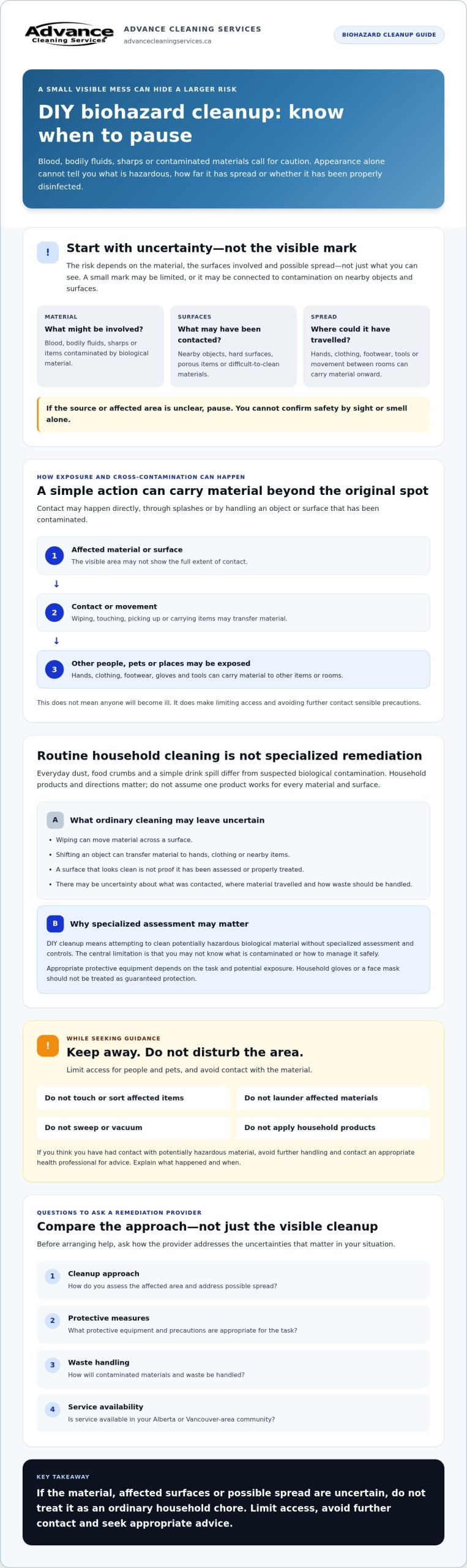
A small visible mess can hide a much larger cleanup risk. If blood, bodily fluids, sharps or contaminated materials are involved, the risks of DIY biohazard cleanup go beyond unpleasant work: you could be exposed, miss contamination on nearby surfaces or carry it into another room. Gloves and household cleaner may seem sufficient, especially when the affected area looks contained. But appearance alone can’t tell you what’s hazardous or whether it has been properly disinfected.
This guide explains when household cleaning may not be an appropriate response and outlines the health, cross-contamination and disposal risks of handling biohazards yourself. You’ll also learn what precautions to take while seeking advice, including keeping people and pets away and avoiding contact with the material. Finally, we’ll cover practical questions to ask a remediation provider about their approach, protective equipment and waste handling, so you can compare options and choose a safer next step.
Key Takeaways
- The risks of DIY biohazard cleanup depend on the material, affected surfaces and possible spread, not just what’s visible.
- Everyday movement can transfer contamination between rooms. Consider how footwear, clothing, gloves and tools could carry material elsewhere.
- Routine household cleaning isn’t the same as specialized biohazard remediation, particularly when the substance or cleanup requirements are uncertain.
- While seeking guidance, keep people and pets away. Don’t touch, sort, launder, sweep, vacuum or apply household products to the affected area.
- Before arranging help, ask about the provider’s cleanup approach, protective measures, waste handling and service availability in your Alberta or Vancouver-area community.
Risks of DIY Biohazard Cleanup: Why a Small Mess May Be More Complex
Biohazard cleanup involves assessing and addressing materials that may pose a biological risk, such as blood, bodily fluids or items contaminated by them. The term biological hazard refers broadly to biological substances that can harm living organisms. You can’t tell whether a material is safe by its appearance or smell alone. A small mark may be limited, or it may be connected to contamination on nearby objects and surfaces.
DIY biohazard cleanup means attempting to clean potentially hazardous biological material without specialized assessment and controls. Its central limitation is that you may not know what’s contaminated or how to manage it safely. The risks of DIY biohazard cleanup depend on the material, how much is present, the surfaces involved and whether it has spread. A photo or remote description can’t confirm the level of risk or the full extent of an affected area.
What makes a cleanup potentially hazardous?
Routine dust, food crumbs or a simple drink spill are different from suspected blood, bodily fluids, sharps or objects contaminated with biological material. If the source is unclear, the affected area is uncertain or contaminated items may be involved, pause rather than trying to identify a hazard by sight or smell. Uncertainty is a reason to limit access and seek appropriate advice, not to test the material yourself.
Why ordinary household cleaning may not be enough
Wiping can move material across a surface. Picking up or shifting an object may transfer it to your hands, clothing or nearby items. The cleaning product and its directions also matter. Don’t assume one household product will work for every material and surface.
Health Exposure and Cross-Contamination: The Main DIY Cleanup Risks
Contact with suspected biological material can happen in several ways. You may touch it directly, get splashed while wiping or handle an object or surface that has been contaminated. The exact risk depends on the material and circumstances, so don’t try to assess safety by appearance alone. Avoid direct contact and keep others away from the affected area.
Household gloves or a face mask shouldn’t be treated as guaranteed protection. Appropriate protective equipment depends on the task and potential exposure, and wearing one item doesn’t control every route of contact. The U.S. Occupational Safety and Health Administration’s Bloodborne Pathogens Standard describes workplace protections in the United States. It isn’t Canadian guidance, but it illustrates why selecting protective measures involves more than putting on ordinary gloves.
Exposure risks when handling contaminated materials
People can come into contact with material through their hands, clothing, footwear or objects they handle. A splash may reach skin or clothing, while touching a contaminated surface and then another item can carry material onward. Household members, workers, visitors and pets could also enter the area or contact items brought out of it. This doesn’t mean anyone will become ill, but it does make limiting access a sensible precaution.
If you think you’ve had contact with potentially hazardous material, avoid further handling and contact an appropriate health professional for advice. Explain what happened and when, without delaying to continue cleaning.
How DIY actions can spread contamination
Movement matters. Wiping, dry sweeping or vacuuming may shift material or particles beyond the visible area. Carrying affected items can transfer contamination to hands, clothing, footwear, door handles or another room. Gloves and tools can also become contaminated and spread material if used elsewhere or handled without care.
Footwear, clothing, hands or tools can carry contamination beyond the original area when they contact affected material and then touch other surfaces. An effort to make a small spot look clean can unintentionally involve a wider area. Don’t sweep, vacuum, wipe, sort or carry potentially affected items while you seek guidance.
The risks of DIY biohazard cleanup include possible exposure and uncertainty about where material may have travelled. Specialized biohazard remediation may be more appropriate than routine cleaning when suspected biological material or affected items are involved. To learn about biohazard cleanup services, contact Advance Cleaning Services Inc. and confirm whether service is available in your community.
DIY or Professional Biohazard Cleanup: How to Compare the Options
A small or visible mess isn’t automatically safe to handle. The material’s source, what it may have touched, the surface involved and the work needed to address it all matter. No article or remote description can determine whether a specific scene is safe to clean. Use the comparison below as a decision aid, not a diagnosis.
| What to consider | Routine cleaning may be suitable when… | Pause and seek specialist advice when… |
|---|---|---|
| Uncertainty | You know the source and it’s an ordinary household spill. | The source or nature of suspected biological material is unclear. |
| Affected area | The spill is clearly limited and hasn’t contacted other items. | You can’t establish the extent, or a shared space may be affected. |
| Exposure potential | There’s no suspected blood, bodily fluid or contaminated item. | Contact or splashing may occur, or other people could enter the area. |
| Cleanup complexity | Ordinary dirt or a known, uncomplicated spill is involved. | Porous materials, multiple surfaces or affected items may need assessment. |
Routine cleaning and specialized biohazard remediation aren’t interchangeable. Ordinary cleaning addresses everyday soil. Suspected biological contamination may require a planned assessment, controlled work practices, appropriate equipment and considered waste handling. The U.S. OSHA’s Bloodborne Pathogens Standard outlines workplace protections in the United States. It isn’t Canadian guidance, but it illustrates that managing exposure involves more than choosing a household cleaner or putting on gloves.
When should you stop and seek specialist advice?
Pause if you don’t know the source, extent or affected materials. Extensive contamination, potentially affected porous items or a shared area are reasons to seek an assessment rather than decide by appearance. Keep household members, visitors and pets away. Don’t touch, move or disturb items while you’re seeking guidance.
What professional remediation can add
What to Do Before Biohazard Clean-up Help Arrives
If you suspect biological contamination, focus on preventing further contact, not cleaning the scene. The risks of DIY biohazard cleanup can increase if material is disturbed or carried elsewhere. Take these steps while arranging appropriate advice:
- Pause. Don’t touch, sort, launder or move potentially affected items. Avoid wiping, sweeping, vacuuming or applying household products.
- Limit access. Keep children, pets and unnecessary visitors away from the area. Don’t use fans or other equipment that could move material.
- Contact appropriate help. Seek advice from a biohazard cleanup provider about the situation. If there’s immediate danger, contact emergency services. For a possible exposure or medical concern, contact a health professional.
- Note what you know from a safe distance. Record the location, what may have happened and which areas or items might be involved. Don’t go closer to investigate or take anything out of the area.
How to limit access without disturbing the scene
Keep people and pets out without moving objects or handling anything that may be contaminated. Avoid fans, vacuums and other equipment. If someone must enter the area, don’t improvise protection with ordinary gloves or a mask. Contact a qualified provider for specific guidance before taking that step.
If the area is shared with other residents, workers or visitors, let them know to stay clear. Don’t ask anyone to inspect or clean it. The goal is to limit access and preserve the scene for assessment.
What to ask when contacting a cleanup provider
Share the location and known circumstances, then ask whether the provider handles the type of scene and materials involved and serves your community. Before arranging work, ask how they’ll assess the situation, explain the proposed scope, address affected materials and handle waste. Requirements and service availability can vary by location, so confirm current details rather than assuming a process applies everywhere in Canada.
Clear answers can help you understand the next step without taking on a cleanup you’re not equipped to assess. For support in a confirmed service area, contact Advance Cleaning Services about biohazard cleanup and confirm whether service is available in your community.
Choosing Biohazard Cleanup Support in Alberta or the Vancouver Area
Choosing a provider involves more than confirming that biohazard cleanup is offered. Handling and disposing of affected materials can involve local requirements, and a company’s service coverage may not include every nearby community. Advance Cleaning Services provides specialized remediation, including biohazard cleanup, in Alberta and the Vancouver area. Confirm that the provider currently serves your specific community and ask how they’ll address the type of situation you’ve described.
Advance Cleaning Services lists communities including Calgary, Edmonton, Red Deer, Okotoks, Lethbridge, Strathmore, Chestermere, Airdrie, Cochrane, Vancouver, Richmond, Burnaby, Surry, New Westminster, Coquitlam and Abbotsford. Confirm current availability for your location. To assess whether a provider is suited to the job, ask about experience and training relevant to the scene, the equipment and work practices they expect to use, and how they’ll define the cleanup scope. You should also understand how they’ll communicate boundaries around the affected area and handle materials or waste. Ask for specifics rather than relying on broad claims.
Questions to ask before selecting a remediation provider
Use these questions to guide the conversation. You don’t need to determine the hazard yourself. Share what you know and ask the provider to explain what they can assess.
- Experience: What experience and training do you have for this type of cleanup?
- Scope: How will you assess the affected area, identify the work included and explain any boundaries?
- Equipment and practices: What equipment and work practices may be appropriate for the materials and surfaces involved?
- Material handling: How will affected items and waste be managed, and what local requirements apply?
- Communication: What should I expect to hear before work begins, during the process and when it’s complete?
A calm next step for property owners and managers
If the material or affected area is uncertain, don’t disturb it while you compare options. Keep access limited and request an assessment from a provider that can explain its approach in plain language. Advance Cleaning Services offers biohazard cleanup and serves communities in Alberta and the Vancouver area. Confirm current availability for your location. Practical questions can help you choose a suitable next step without relying on guesswork about the risks of DIY biohazard cleanup.
Contact Advance Cleaning Services about biohazard cleanup.
Choose a Safer Next Step
The risks of DIY biohazard cleanup aren’t always visible. Uncertainty about the material, affected surfaces or possible spread is a good reason to pause rather than rely on ordinary household cleaning. Keep people and pets away, avoid disturbing the area and seek appropriate advice, especially if anyone may have been exposed or has a medical concern.
When comparing providers, ask how they’ll assess the situation, explain the work scope and handle affected materials. Local requirements and service coverage can differ, so confirm details for your community. Advance Cleaning Services lists biohazard cleanup and remediation among its services and serves communities in Alberta and the Vancouver area. Check current local availability before arranging support.
If you’re unsure how to proceed, a clear conversation with a cleanup provider can help you understand your options. Contact Advance Cleaning Services about biohazard cleanup. Start by keeping the area undisturbed and getting informed guidance.
Frequently Asked Questions
Is it safe to clean up blood at home yourself?
Not necessarily. A small amount of blood may seem straightforward, but you can’t confirm the source, possible contamination or full affected area by appearance alone. If the source is uncertain, there may be contaminated items or the blood may have spread, avoid contact and seek professional advice. The risks of DIY biohazard cleanup include exposure and unintentionally transferring material. If anyone may have been exposed, contact a health professional for guidance.
Can household cleaners disinfect a biohazard area?
Don’t assume a household cleaner can make a suspected biohazard area safe. Product effectiveness depends on the substance, surface and how the product is used. A surface may look clean without being properly assessed or disinfected. Avoid applying household products while the material or affected area is uncertain, and don’t mix cleaning products. A cleanup provider can explain what assessment, products and work practices may be appropriate for the situation.
What happens if I vacuum or sweep a biohazard spill?
Sweeping or vacuuming may move contaminated material or particles beyond the visible spill and onto nearby surfaces, footwear or equipment. This can make it harder to understand where the material travelled. Don’t vacuum, sweep or wipe suspected biological material. Keep people and pets away, avoid disturbing the area and ask a suitable cleanup provider for advice. If someone may have been exposed, contact a health professional.
Do I need professional help for a small biohazard cleanup?
Not every small spill requires professional remediation, but size alone can’t establish that a cleanup is safe to handle yourself. Consider whether the source is known, whether other materials or surfaces may be affected, and whether anyone could be exposed. If those details are unclear, pause and seek an assessment instead of relying on appearance. Advance Cleaning Services offers biohazard cleanup; confirm current service availability for your community.
What should I do while waiting for biohazard cleanup help?
Keep the area undisturbed and limit access by children, pets and unnecessary visitors. Don’t touch, sort, move or launder affected items, and don’t wipe, sweep, vacuum or apply household products. From a safe distance, note the location and what you know about the circumstances for the provider. If there’s immediate danger, contact emergency services. For possible exposure or medical concerns, contact a health professional.
Are biohazard cleanup requirements the same in Alberta and British Columbia?
Don’t assume requirements are identical across provinces or communities. Handling and disposal expectations may depend on the material, location and situation, so confirm current local details rather than relying on general advice. This applies whether you’re in Calgary or Edmonton, or in Vancouver, Richmond or Burnaby. Advance Cleaning Services lists biohazard cleanup in communities in Alberta and the Vancouver area. Confirm service availability for your specific location and ask providers to clarify applicable handling and documentation requirements.