
What if the best cleaning schedule isn’t daily or weekly, but a plan shaped around how your business is used? A busy entrance, shared washrooms and customer-facing areas may need different attention from quieter spaces. Choosing a flexible cleaning schedule for business Edmonton operations means weighing traffic, task priorities and timing rather than relying on a one-size-fits-all calendar.
It’s understandable to want a consistently clean workplace without interrupting staff, customers or essential work. The right frequency depends on your space and daily routines, while thoughtful service timing can help reduce disruption. Some areas may need regular attention, while other tasks can be scheduled less often.
This guide explains how to match cleaning frequency to traffic and priorities, identify which areas need more frequent care, and plan service around operating needs. Advance Cleaning Services provides office cleaning and janitorial services for Edmonton businesses, with cleaning plans shaped around each space. We’ll also look at how needs can differ across office, retail and medical settings, and how day porter services can support cleanliness during the day.
Key Takeaways
- Shape a flexible cleaning schedule for business Edmonton needs by considering how each space is used and when activity peaks.
- Separate public, shared and staff-only areas to clarify which spaces need more frequent attention.
- Compare daily, weekly and customized schedules to find an approach that suits your traffic and priorities.
- Revisit the plan when staffing, business hours, renovations or seasonal entryway traffic change.
- Advance Cleaning Services provides commercial and office cleaning shaped around your space, priorities and operations.
Why Edmonton Businesses Need a Flexible Cleaning Schedule
A clean workplace matters, but fitting cleaning around staff, customers and essential work can be challenging. A cleaner moving through a busy reception area during a rush of visitors may interrupt conversations. A noisy task near a meeting room could disrupt focused work. The answer isn’t automatically to schedule more frequent service. Instead, decide what needs attention, where and when, based on how the business operates.
Business hours shape practical cleaning windows. Visitor traffic affects how quickly entrances, waiting areas and washrooms may need attention. Layout matters too: an open office, private rooms and a shop floor each have different patterns of use. Even rooms within one building vary. A staff kitchenette used throughout the day has different recurring needs from a storage room used occasionally.
Consider an Edmonton office where clients arrive throughout the workday. The reception area and shared washroom may need more regular attention than a low-traffic back office. In a retail workplace, the public floor sees customer activity, while staff-only rooms follow a different rhythm. These distinctions help direct cleaning effort to the spaces where it matters most. A general overview of Commercial cleaning describes the range of buildings and duties involved.
What makes a business cleaning schedule flexible?
Flexibility means aligning service timing and recurring tasks with the business’s operating needs. It doesn’t mean adding visits by default. Tasks can be planned at different frequencies, with timing based on when particular spaces are in use. A shared area may need regular care, for example, while a less-used room may call for a different routine. The useful measure is whether the plan reflects actual priorities.
Which Edmonton business needs a customized schedule?
Any workplace with different patterns of use can benefit from a schedule built around its spaces. In an office, a client-facing reception area sees a different flow from a staff-only back office. In a retail setting, customers and employees use the sales floor, while staff areas serve a narrower purpose. Treating every space alike can leave busy areas overlooked or give low-use areas unnecessary attention.
Start by noting where people gather, which surfaces and shared spaces see regular use, and when cleaning would be least disruptive. Then match recurring tasks to those observations instead of applying one frequency to the whole building. This gives the schedule a clear operational purpose and makes it easier to adjust as routines change. For broader context on how janitorial services support workplaces, the Alberta commercial janitorial services guide explores the role of professional care.
How to Build a Flexible Business Cleaning Schedule
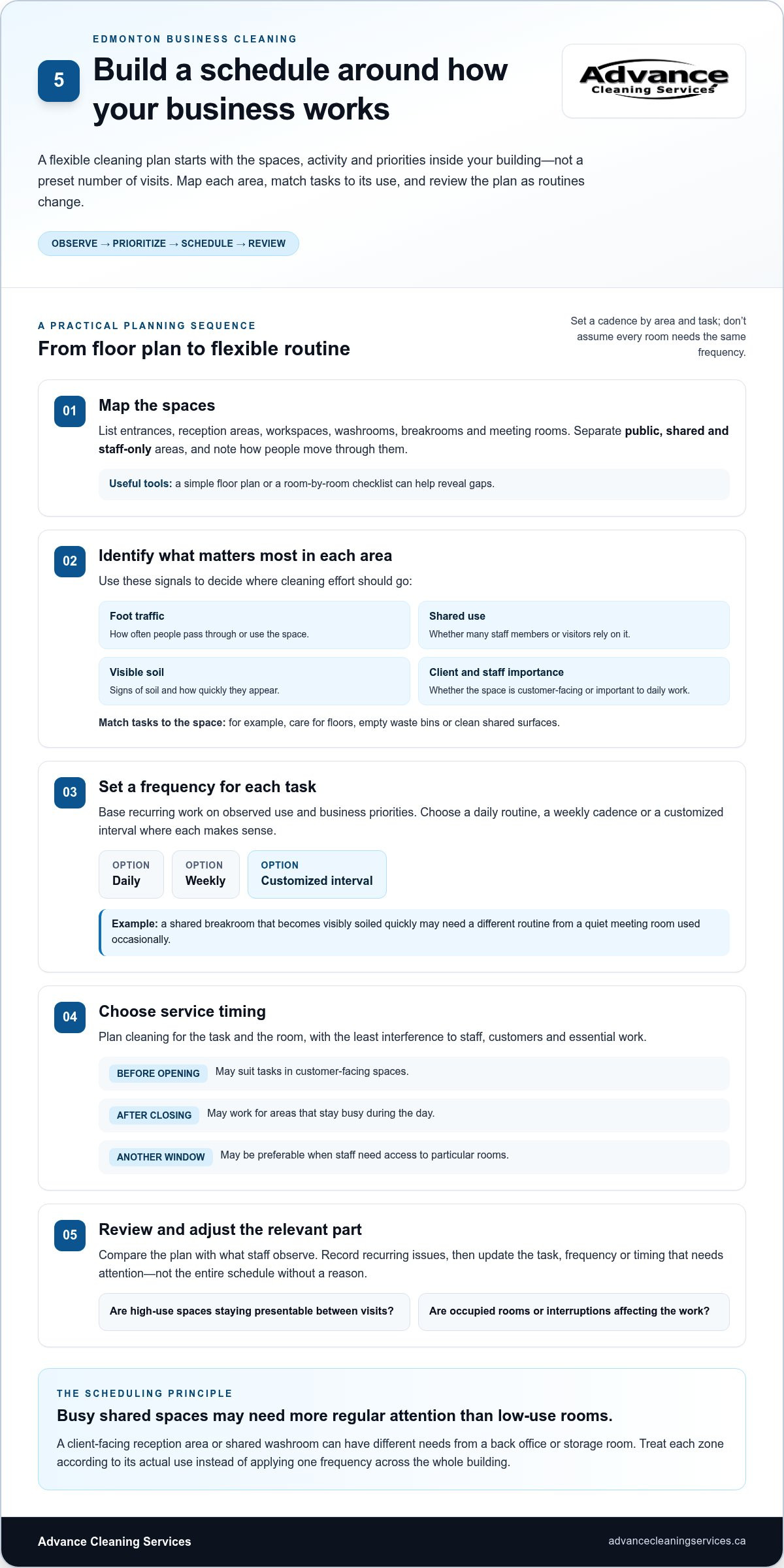
A practical schedule starts with what happens in the building, not a preset list of visits. Use this sequence to turn observations about space, activity and priorities into a plan your team can review and adjust. A flexible cleaning schedule aligns recurring tasks and service timing with how each part of a business is used.
- Map the spaces. List entrances, reception areas, workspaces, washrooms, breakrooms and meeting rooms. Separate public, shared and staff-only areas, then note how people move through them. Include rooms with different purposes rather than treating the whole building as one zone. A simple floor plan or room-by-room checklist can make gaps easier to spot.
- Identify priorities. For each area, consider foot traffic, shared use, visible soil and importance to clients or staff. An entrance used throughout the workday may need closer attention than a storage area. Note which ordinary cleaning tasks matter most in each space, such as caring for floors, emptying waste bins or cleaning shared surfaces.
- Set task frequencies. Base each recurring task on observed use and business priorities. Some work may belong in a daily routine; other tasks may fit a weekly cadence or a customized interval. Avoid applying one frequency to every room. If a shared breakroom becomes visibly soiled quickly, prioritize it differently from a quiet meeting room used occasionally.
- Choose service timing. Consider when cleaning can happen with the least interference. Before opening may suit tasks in customer-facing spaces; after closing may work for areas that stay busy during the day. Another window may be preferable if staff need access to particular rooms. Match timing to the task as well as the room.
- Review and adjust. Compare the plan with what staff observe. Are high-use spaces staying presentable between visits? Are cleaners encountering occupied rooms or interrupting work? Record recurring issues and update the relevant task, frequency or timing instead of changing the entire schedule without a reason.
Map priorities before setting the cadence
Make the assessment specific. For each zone, record how often it is used, who uses it, what signs of soil appear, and whether clients see it. This creates a useful basis for setting priorities without assuming every office or retail space needs the same routine. Keep the scope focused on ordinary commercial cleaning and the tasks relevant to your operations.
Separate routine tasks from less frequent maintenance
Build recurring tasks into the schedule, then identify maintenance that doesn’t need the same cadence. Daily, weekly and customized plans are all possible approaches, but none is right for every business. A flexible cleaning schedule for business Edmonton operations should reflect actual patterns of use and business priorities, then adapt when observations show the plan needs refinement.
Advance Cleaning Services provides Edmonton office cleaning shaped around your space and operating needs. See Edmonton office cleaning for more information.
Daily, Weekly, or Customized Cleaning: Which Schedule Fits?
Choose a cleaning pattern by looking at how often spaces are used, how quickly they become soiled and what the business needs to keep presentable. Daily service can suit consistently busy areas, but it isn’t necessary for every room or workplace. A weekly routine may fit spaces with lighter use, while a customized plan can set different frequencies for different zones.
| Schedule pattern | Suitable conditions | Potential benefit | Planning considerations |
|---|---|---|---|
| Daily | Shared or customer-facing spaces see steady use, or visible soil builds up quickly. | Provides regular attention to areas that are used often. | Prioritize high-use zones rather than assuming every room needs daily service. Consider when work can happen with minimal disruption. |
| Weekly | Areas have more limited use, or routine needs are manageable between visits. | Creates a recurring cleaning rhythm for lower-traffic spaces. | Assess how the space looks and functions across the week. Adjust the plan if actual use changes. |
| Customized | Traffic, tasks or operating patterns vary across rooms or days. | Matches service frequency and timing to different areas and priorities. | Define which tasks recur, where they’re needed and when access is most suitable. Review the plan as operations shift. |
When might daily business cleaning make sense?
Consider daily attention for busy shared spaces, such as an entrance, washroom or breakroom used frequently by staff, customers or visitors. These areas may accumulate visible soil faster than a private office or lightly used meeting room. Evaluate each space on its own: daily service may be appropriate for high-priority zones without being necessary throughout the building.
When can weekly or customized cleaning work well?
A weekly plan may suit areas with limited use and predictable needs. A customized schedule can combine more frequent care for busy zones with less frequent tasks elsewhere, and vary timing to fit operations. Businesses with specialized environments have additional considerations. For healthcare-specific context, consult the medical facility cleaning guide for Alberta.
To compare the options, track how each space is used through a typical work period. Note where soil appears, which areas staff or visitors rely on, and whether cleaning at a particular time would interrupt work. Then match the schedule to those observations. A flexible cleaning schedule for business Edmonton operations should be based on the needs of each workplace, not a fixed assumption that more frequent service is always better.
Review the pattern after it’s in place. If a weekly area begins seeing more visitors, reassess its tasks or cadence. If a daily-cleaned space remains lightly used, consider whether its routine could be adjusted. This keeps the plan responsive while maintaining attention on the areas that matter most.
How to Keep Cleaning Flexible as Edmonton Business Needs Change
A cleaning plan should reflect how the business operates now, not only the conditions that existed when the schedule was first set. Staffing, customer traffic, opening hours and workplace layout can all shift. A simple review process helps managers adjust affected areas and tasks without changing parts of the plan that still fit.
What changes should prompt a schedule review?
Look for changes that alter how spaces are used. A staffing increase may put more demand on shared areas; revised opening hours can change suitable service timing; and a renovation may create new rooms or routes through the workplace. In Edmonton, winter conditions can bring snow and slush through entrances, making it sensible to reassess entryway and floor-care priorities. No single review interval suits every business. Revisit the schedule when operations or observed needs give you a reason.
How can managers assess whether the plan is working?
Gather practical feedback from staff and note recurring cleanliness concerns by area. Record where a priority is missed, where soil returns quickly, or where a scheduled task seems unnecessary for the space’s actual use. Compare those observations with the agreed tasks and business priorities. This gives the review a clear basis: what changed, where it matters and whether the plan should change in response.
Use this sequence to guide the review:
- Identify the change. Note what has shifted, such as occupancy, business hours, customer traffic or workplace layout.
- Reassess affected spaces. Focus on the rooms, routes or shared areas directly influenced by the change. A renovation may affect one work zone, while altered hours could affect service timing across the site.
- Revisit priorities. Compare the current condition and use of each affected space with its role in daily operations. Keep urgent or client-facing needs distinct from tasks that can be scheduled less often.
- Revise the plan. Adjust the relevant task, frequency or timing, then track whether the revised arrangement fits actual operations. Avoid changing unaffected areas without a clear reason.
Seasonal changes can be a useful prompt, too. During Edmonton’s winter, managers may notice more tracked-in moisture around an entrance. Rather than automatically increasing cleaning across the whole workplace, consider whether the entrance or nearby floor-care priorities need a different approach. If a staff-only area becomes less occupied, review whether its recurring tasks still match how it’s used.
Once you’ve identified the needs and affected spaces, share the priorities, recurring tasks and suitable timing with Advance Cleaning Services. A thoughtful review can help keep a flexible cleaning schedule for business Edmonton operations aligned with changing conditions.
Advance Cleaning Services provides commercial and office cleaning for businesses adapting their routines to changing operating needs. Details are available through Advance Cleaning Services.
Plan Flexible Business Cleaning with Advance Cleaning Services in Edmonton
A schedule works best when it reflects the realities of your workplace: how the space is used, which tasks matter most, when cleaning can take place and what the business needs from day-to-day operations. Advance Cleaning Services provides commercial cleaning, office cleaning and janitorial services in Edmonton. Planning starts with your priorities, so the scope and timing can be considered in context rather than chosen from a generic template.
A flexible cleaning schedule for business Edmonton operations can account for differences between areas and changes in how a workplace runs. An office, retail space or medical facility may have distinct cleaning priorities. The aim is to build a plan around your business’s needs, not to assume one schedule fits every setting.
What to prepare before discussing a cleaning plan
A few notes can make the planning conversation more focused. Consider:
- Business hours and preferred service timing.
- Key areas, including public, shared and staff-only spaces.
- Use patterns, such as busy periods or rooms used less often.
- Priorities and changes, including tasks that matter most and any upcoming shifts in staffing, hours or layout.
How Advance Cleaning Services supports Edmonton businesses
Advance Cleaning Services provides Edmonton businesses with commercial cleaning, office cleaning and janitorial services. Day porter services are also available for businesses that need daytime support. The planning focus is straightforward: understand the space, priorities, schedule and operating needs, then shape the cleaning approach around those factors.
Bring specific observations to the discussion. If a shared area needs regular attention but a staff-only room is used occasionally, explain that difference. If cleaning during a particular period could interfere with customer service, staff work or access to a space, identify the concern. These details help shape a suitable plan around recurring tasks and timing.
It also helps to share what has changed or may change. A new layout, altered business hours or different patterns of occupancy can affect which areas need attention and when. Planning with those conditions in mind gives you a clearer basis for setting the schedule and reviewing it as operations evolve.
Advance Cleaning Services takes a professional, customer-focused approach to commercial and office cleaning in Edmonton. Bring your priorities and operating needs to the conversation to plan cleaning suited to your business.
Discuss a flexible cleaning schedule for your business.
Make Your Cleaning Plan Work for What Comes Next
The right flexible cleaning schedule for business Edmonton organizations choose should feel manageable and suited to their priorities. Needs can shift over time, and a plan that can be reviewed gives you room to adapt while keeping the workplace in view. Advance Cleaning Services works with Edmonton businesses to shape commercial cleaning around their operating needs.
Advance Cleaning Services serves businesses across Alberta and the Vancouver area, including Calgary, Edmonton, Red Deer, Okotoks, Lethbridge, Strathmore, Chestermere, Airdrie, Cochrane, Vancouver, Richmond, Burnaby, Surry, New Westminster, Coquitlam and Abbotsford. Discuss a cleaning plan for your Edmonton business and take a confident next step toward a workplace that supports the people who use it.
Frequently Asked Questions
How often should a business in Edmonton schedule professional cleaning?
Set the frequency according to how quickly areas become soiled and how the business uses them. A practical starting point is to note recurring issues, such as overflowing waste bins, marked floors or untidy shared kitchens, then record where they occur and how often. This evidence can help shape a flexible cleaning schedule for business Edmonton operations without relying on a generic frequency that may not suit the workplace.
Can commercial cleaning be scheduled outside regular business hours?
Commercial cleaning can be planned around your operating hours and site access needs. Before choosing a time, consider alarm procedures, locked areas, staff who work late and rooms that must remain accessible. If cleaning during operating hours is more practical, quieter periods between appointments or customer peaks can help limit disruption without requiring the entire workplace to close.
What should a flexible office cleaning schedule include?
A useful office schedule should identify the areas and tasks covered, their planned frequency, and preferred service timing. Include access notes for meeting rooms, shared work areas and spaces with sensitive equipment or confidential documents. It can also help to record who staff should notify about a missed task or a sudden cleaning need. Clear details make the schedule easier to follow and review.
Is daily cleaning necessary for every business?
No. A business may need daily attention in specific areas without requiring daily service throughout its premises. For example, a busy shared kitchen may need more regular care than a rarely used storage room. Consider how quickly each space shows signs of use, and whether its condition affects staff, visitors or customers. Set the cadence by area, then revise it if actual use changes.
How can Edmonton winter conditions affect a business cleaning schedule?
Snow, slush and road grit can be tracked inside during winter, changing how quickly entrance floors become dirty or damp. Pay attention to conditions at the entry and the path people take through the building. If those areas need more frequent attention during a snowy period, adjust the relevant tasks rather than automatically changing the routine for every room. Reassess as weather and tracked-in debris change.
Can a cleaning schedule change when business hours or staffing change?
Yes. A change in opening hours or staffing can affect when rooms are occupied, how shared facilities are used and which service times are practical. Note the new operating pattern and identify the areas it affects. For example, staggered shifts may extend use of a staff room beyond the previous schedule. Adjust relevant tasks or timing, and keep the rest of the plan intact if it still fits.
How do I reduce disruption when cleaners work in an active business?
Share the periods when particular areas are busiest, then plan cleaning around appointments, customer peaks or scheduled meetings where possible. Identify rooms that need uninterrupted access and agree on a clear order for handling occupied spaces. Keeping staff informed about planned cleaning periods can also help them prepare shared areas. Review recurring interruptions and refine the timing or sequence to better suit daily work.