
A hoarding cleanout is not priced like a routine tidy. The cost of hoarding support and cleaning services in Edmonton depends on the size and condition of the space, how much needs sorting and removal, and the cleaning required afterward. Clearing one room and cleaning an entire home can involve very different amounts of work.
It’s understandable to want a clear picture of the process before deciding what to do. Hoarding can affect a person’s privacy, comfort, and sense of control, so a respectful approach matters as much as practical planning. The goal is to make the space safer and more usable while treating belongings and personal circumstances with care.
This article explains what can shape the cost in Alberta and how sorting, removal, donation, and recycling can fit into a cleanout. You’ll also learn what compassionate support can involve and when professional hoarding cleanup may help you take the next step.
Key Takeaways
- Estimate the scope by considering the space, the volume of belongings, sorting needs and the cleaning required after removal.
- Plan for sorting before items leave the home, so belongings can be considered for keeping, donation, recycling or disposal.
- A single-room cleanout may take one day, while a larger home may need several days of intensive cleanup.
- Set a practical goal: make the home safer and more useful without assuming every belonging must be removed.
- Learn how accumulated items can contribute to risks such as falls, isolation, emotional distress, mould, infestation and fire.
What does hoarder cleaning cost in Alberta?
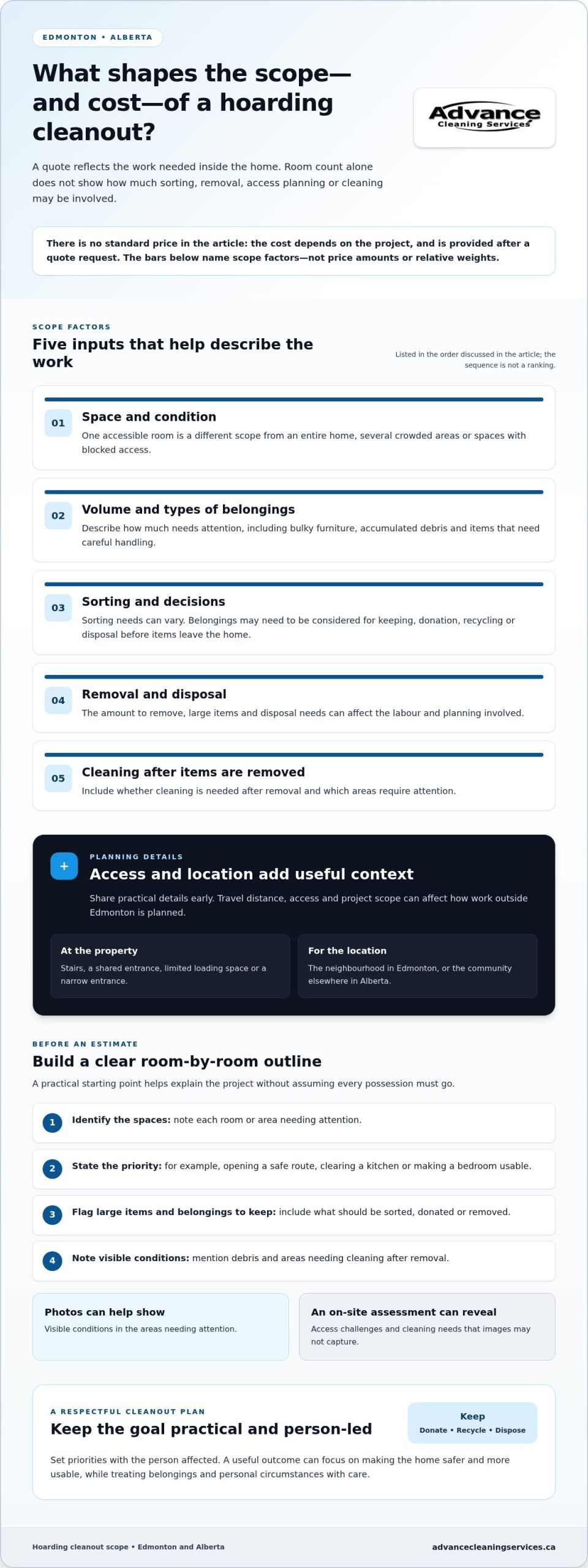
The cost of a hoarding cleanout depends on the work needed inside the home. A single room with belongings already sorted has a different scope from a full home with blocked access, heavy debris, or extensive cleaning needs. When considering hoarding support and cleaning services in Edmonton, account for the space, volume of belongings, sorting needs, removal, and cleaning. The price depends on the project and is provided after a quote request.
Look beyond the number of rooms when estimating the work. Clearing one accessible room may involve less sorting and removal than working through several crowded areas. Bulky furniture, accumulated debris, and items needing careful handling can also affect the labour and disposal involved.
Before requesting an estimate, describe the areas that need attention and the outcome you want. Identify whether the priority is opening a safe route, clearing a kitchen, or making a bedroom usable. Photos can help show visible conditions, but an on-site assessment can reveal access challenges and cleaning needs that images may not capture. These details help clarify the project’s scope.
Edmonton residents seeking hoarding cleanup and clutter removal can look for providers that handle specialized cleanouts. Compare the work described, including sorting, removal, and cleaning, with the needs of the property. Advance Cleaning Services Inc. provides Extreme Hoarding Cleanup as part of its specialized cleanup services.
To arrange a hoarding cleanup in Edmonton, start by describing the property, the areas involved, and your main concerns. Outline what should be kept, sorted, donated, or removed. An assessment and quote can reflect the work required. Clear priorities help shape a practical plan and keep everyone aligned on the intended result.
Service areas vary across Alberta, so include the property’s location when planning a cleanout. In Edmonton, provide the neighbourhood and access details, such as stairs, a shared entrance, or limited loading space. For a property elsewhere in Alberta, give its community and similar practical details. These help explain the setting and the work involved.
Travel distance, access, and project scope can affect how work outside Edmonton is planned. A narrow entrance may require a different removal approach from direct driveway access. Share those details early, along with the rooms involved and whether cleaning is needed after removal. This helps people seeking hoarding support and cleaning services in Edmonton describe the job clearly, even when the property is elsewhere in Alberta.
Prepare a simple room-by-room outline before requesting an estimate. Identify the spaces needing attention, large items that may require removal, and belongings that should remain. Note visible debris and areas that need cleaning after items are removed. This gives the assessment a practical starting point without assuming every possession must go.
These ranges reflect differences in scope and required work.
Sorting, decluttering, donation and disposal
Set a clear goal for each room, then decide how to handle belongings. Sorting works best when the person affected helps set priorities and make choices.
Personalized Decluttering Plans
A useful plan names the spaces to address, the items to keep, and what may be donated, recycled, or discarded. Choose a manageable starting point, such as clearing a path to the kitchen or making one chair usable. Review the plan with the person affected and adjust it as decisions arise. Specific, respectful goals keep the work focused without treating every possession as clutter.
In-Home Decluttering
Sorting at home lets people make decisions beside their belongings. Work through one defined area at a time, grouping items as keep, donate, recycle, or dispose. Papers, clothing, and a broken appliance each call for different decisions. Keep agreed-upon belongings separate from items marked for removal, and pause when someone needs more time to decide.
Discreet Decluttering Support
Discreet support can mean planning visits carefully, limiting unnecessary discussion, and agreeing on how workers enter and move through the home. Before work begins, clarify who may be present, which rooms are included, and how to approach neighbours or building staff. In a condominium, for example, agree on access arrangements and expectations for shared areas with the appropriate people.
Hoarding Support Services
Edmonton support can include practical cleanup, community programs, and help planning manageable changes. This Full House encourages participating seniors to attend a monthly lunch group with other program participants. Seniors can call Colleen Derksen at 780-701-9005 for information about the group or joining it. A support option should match the person’s needs, rather than assume cleanup alone resolves every concern.
Before arranging donation or disposal, sort items by their destination. Set aside usable belongings for donation only if they are suitable to pass on, and separate recyclable materials from items for disposal. Keep personal papers, medication, and valuables in a distinct, secure place while sorting. Clear categories help prevent important items from being mixed with general clutter.
People seeking financial help with decluttering can explore whether assistance options are available. This can be a useful starting point when the person meets the program’s criteria. For practical cleanup planning, professional hoarding cleanup support can help address accumulated belongings and the condition of the home.
For privacy, consent, and tenant concerns in Alberta, first establish who has authority to approve access and make decisions about belongings. In a rented home, involve the tenant and landlord in agreeing on access, work areas, and the removal plan before cleanup begins.
The aim of a hoarding cleanout is to make the home safer and more useful, not to require the removal of all belongings. Let that guide decisions: consider whether a change supports safer movement or makes a needed space more usable, while respecting the belongings the resident wants to keep.
Agree on priorities with the resident and focus on the specific areas or items chosen for attention. If an item does not need to be removed to meet the goal, it can stay in the home.
Compassionate support for people affected by hoarding behaviours
Hoarding can affect both the person living in the home and those close to them. Accumulated belongings can create risks such as falls, injury, isolation, emotional distress, mould, infestation, fire, or eviction. A compassionate response addresses immediate concerns without shaming the person or treating their belongings as meaningless.
Begin with a calm conversation about the situation. Ask which part of the home feels most urgent to address, such as a blocked entrance or an unusable bed. Listen before proposing a cleanout. A shared priority gives family members and support workers a practical starting point while respecting the person’s perspective.
During cleanup, explain each step before moving belongings. For example, make clearing a path the first goal, then agree on how to handle items in that area. Keep decisions visible by using separate spaces for belongings to keep, donate, recycle, or discard. If the person wants time to consider an item, pause rather than putting it in a removal pile.
Discretion matters, too. Agree on who will attend, which rooms are included, and how workers should enter the property. For a home in a shared building, discuss access and common areas beforehand. Avoid sharing the person’s circumstances with neighbours or anyone else outside the agreed plan.
How can families compare Edmonton hoarding support and cleaning providers? Compare the proposed work plan, communication approach, and how decisions about belongings will be handled. Look for a clear explanation of sorting, removal, cleaning, and the person’s role in each step.
Compassionate hoarding cleanup balances practical work with the person’s choices. A family member might help identify important documents while cleanup workers focus on the agreed area. Separate urgent safety concerns from longer-term goals, and avoid demanding that every item be removed. A more useful target may be restoring access to a doorway, sink, or sleeping area.
Use respectful language throughout the process. Describe the room or task, not the person, as the problem. “Let’s clear the route to the kitchen” is more specific than a judgement about the home. Keep instructions short, offer clear choices, and let the person take part in decisions about valued belongings.
Families can reduce pressure by agreeing on roles before work starts. One person can communicate priorities, another can help identify items to keep, and workers can handle the agreed cleanup tasks. If there’s disagreement about a possession, set it aside for later discussion rather than escalating the situation.
Removal of clutter, furniture, appliances, and debris
A removal plan should identify what goes, what stays, and what needs special handling. Sort belongings before loading so important items don’t get mixed with clutter.
Hoarding cleanup may include sorting, removing agreed-upon belongings, clearing debris, and cleaning affected areas. If there is a fire or immediate health risk, move to a safer place and contact emergency services.
Items Accepted for Removal
Common categories to discuss include clothing, household goods, furniture, appliances, and bagged debris. Make a clear list of items approved for removal, then separate them from belongings to keep. For example, mark a usable chair for donation and a broken chair for disposal. Batteries, chemicals, and other potentially hazardous materials need separate handling, not placement with ordinary household clutter.
What can be accepted depends on the item’s condition and the appropriate disposal route. Identify damaged, contaminated, or unusually bulky items before work begins. A refrigerator, mixed papers, and loose construction debris each raise different handling questions. A written inventory helps everyone understand the agreed scope and prevents valued belongings from being removed accidentally.
Clutter, Furniture, and Appliance Removal
Plan the route from each room to the exit before moving large items. Clear loose clutter around furniture first, then check doorways, stairs, and shared halls for obstacles. A sofa may need a different removal approach from small boxes. Keep pathways open for workers and separate items that should remain in the home.
For appliances, note whether each is intact, damaged, or connected to a utility. Don’t disconnect equipment unless it’s safe and appropriate to do so. These details help determine the handling plan. In a condominium, consider elevator bookings and access to common areas before moving furniture through the building.
Biohazard removal and decontamination call for a different response from ordinary junk removal. If waste, bodily fluids, or other potentially hazardous materials are present, keep people away from the affected area and describe the concern when arranging help. The cleanup plan should address the material and affected surfaces, not simply cover odours or move debris elsewhere.
Extreme cleaning and odour removal depend on the source. Removing contaminated items may be only one part of the work; affected surfaces may also need cleaning after contents are cleared. Describe where odours are strongest and whether they remain after items are moved. This helps distinguish a removal task from a deeper cleaning need.
Before arranging junk removal, clarify the item list, removal scope, and disposal arrangements in writing. Ask what insurance coverage and licences apply to the work being performed. Don’t assume every provider accepts every material. A suitable plan accounts for furniture, appliances, debris, and items needing specialized handling.
Donation, recycling, and disposal
Give each item a clear destination before it leaves the home. Separate belongings for donation, recycling, or disposal, and set aside personal items that still need a decision. This makes the removal plan easier to follow and helps prevent useful belongings from being discarded with unwanted clutter.
Donation starts with condition and usefulness. Set aside clean clothing, intact household goods, or usable furniture, then decide whether each item is suitable for someone else. A stained mattress or broken chair may not be appropriate to donate. Keep donation items in a separate area so they don’t get mixed with debris during cleanup.
Recycling depends on the material and local collection options. Where suitable recycling routes exist, sort cardboard, metal, and electronics separately from general waste. Keep batteries, chemicals, and other potentially hazardous materials apart from ordinary household items. Mixing these materials can complicate handling, so label or group them before removal.
Disposal is for items that are damaged, contaminated, or unsuitable for donation or recycling. Examples may include torn upholstery, unusable household goods, or debris that cannot be reused. Describe unusual materials before removal begins. Clear descriptions help plan for separate handling instead of treating everything as ordinary waste.
Use a simple sorting sequence for each area:
- Keep: Set aside belongings the resident has chosen to retain.
- Donate: Group clean, usable items intended for someone else.
- Recycle: Separate materials with an appropriate recycling route.
- Dispose: Identify items that cannot be reused or recycled.
When the removal team arrives, show them the agreed categories and point out anything needing special attention. For example, identify a box of papers that must stay, then indicate which nearby boxes are approved for removal. A quick walkthrough keeps decisions clear and supports respectful handling of belongings.
Donation and recycling can require practical staging, too. Keep sorted items away from doorways and walkways, and leave access clear for removal. If the building has shared halls or a designated loading area, plan how items will move through those spaces. In a home with limited room, sort one area at a time instead of creating piles across several rooms.
Disposal decisions can be difficult when belongings have personal meaning. Set uncertain items aside for later consideration rather than treating hesitation as permission to discard them. This protects the resident’s choices while allowing approved items to move through the planned sorting process.
For support with the cleanup portion of a project, discuss hoarding cleanup needs and the removal work required after sorting.
Advance Cleaning Services Inc.: Medical Facility Cleaning
Advance Cleaning Services provides Medical Facility Cleaning for medical, dental, and veterinary clinics. This service suits healthcare facilities, not residential hoarding cleanouts. A clinic may also need office cleaning, janitorial services, or carpet cleaning, depending on the spaces and tasks involved.
For a facility, identify which areas need attention, such as reception, offices, or carpeted rooms. A clear outline of the spaces and cleaning needs helps describe the work and select a suitable service. Advance Cleaning Services offers these services in Edmonton and other communities it serves across Alberta and the Vancouver area.
To discuss cleaning needs for a medical facility, visit advancecleaningservices.ca.
Choose a practical next step
Progress can start with one agreed priority, such as making a room usable or clearing an access route. Keep the person affected involved in decisions, and define what a helpful result looks like before work begins. A clear first step can make a difficult situation feel more manageable.
For hoarding support and cleaning services in Edmonton, consider whether the immediate need is a home cleanout or ongoing cleaning for a facility. Advance Cleaning Services provides Extreme Hoarding Cleanup, Medical Facility Cleaning, office cleaning, and janitorial services. These services suit different settings, so describe the space and the work you need done.
When you’re ready, share your main concern and the area that needs attention. A straightforward conversation can help establish a suitable next step without pressure or assumptions about what must be removed.
Contact Advance Cleaning Services Inc. to discuss your cleaning needs. A respectful, practical start can help you move forward at a pace that feels manageable.
Frequently Asked Questions
How much does hoarding cleanup cost in Edmonton?
The cost depends on the property and work required, and a price is provided after a quote request. An estimate considers the areas involved, the volume and type of belongings, access, sorting needs, removal, and cleaning after items are cleared. For example, one accessible room requires a different scope from a home needing extensive sorting and debris removal. Describe the scope and priorities to support a useful assessment.
How do Edmonton hoarding cleaners handle biohazards, pests, and sharps?
Tell the cleanup team about suspected biohazards, pest activity, or sharps before anyone enters the affected area. Don’t touch or move needles, contaminated materials, or pest waste yourself; keep others away from the immediate space. Biohazard cleanup requires specialized training and equipment for safe decontamination. Clearly identify pest concerns and sharps so the cleanup plan accounts for them rather than treating everything as ordinary household clutter.