Carpet cleaning doesn’t have to bring business to a halt. A commercial carpet maintenance program in Calgary can use low-moisture cleaning to keep disruption down, with treated areas lightly walkable within approximately 1-2 hours. The right schedule depends on traffic, carpet condition and the cleaning method.
It’s reasonable to consider noise, access and damp carpets when planning a commercial carpet maintenance program in Calgary. Scheduling work outside busy hours can help keep work areas clear during the day, while regular vacuuming and prompt spot treatment support ongoing upkeep.
This guide explains how to plan carpet care for offices, clinics, retail spaces and managed properties. You’ll learn how to prioritize areas, compare low-moisture cleaning with hot-water extraction, and schedule service around your operating hours.
Key Takeaways
- Set cleaning frequency by foot traffic: light-use areas may need professional cleaning twice a year, while moderate-traffic areas may need it 2-4 times per year.
- Plan for Calgary’s October-April salt season by paying closer attention to entrances and other high-traffic carpet areas.
- Choose between hot-water extraction and low-moisture encapsulation based on soil levels, drying needs and how quickly spaces must return to use.
- Reduce avoidable disruption by mapping carpeted zones, access needs and work priorities before scheduling service outside busy hours.
- Routine vacuuming and prompt spot cleaning help manage surface debris and stains between professional visits.
Commercial carpet cleaning for offices, clinics, retail spaces and managed properties
Plan commercial carpet cleaning around how each space is used. An office reception area collects tracked-in soil, while a private office may need less frequent attention. In clinics, retail spaces, schools and managed properties, entrances, corridors and shared waiting areas often need priority because people cross them throughout the day. Map these zones before setting a schedule.
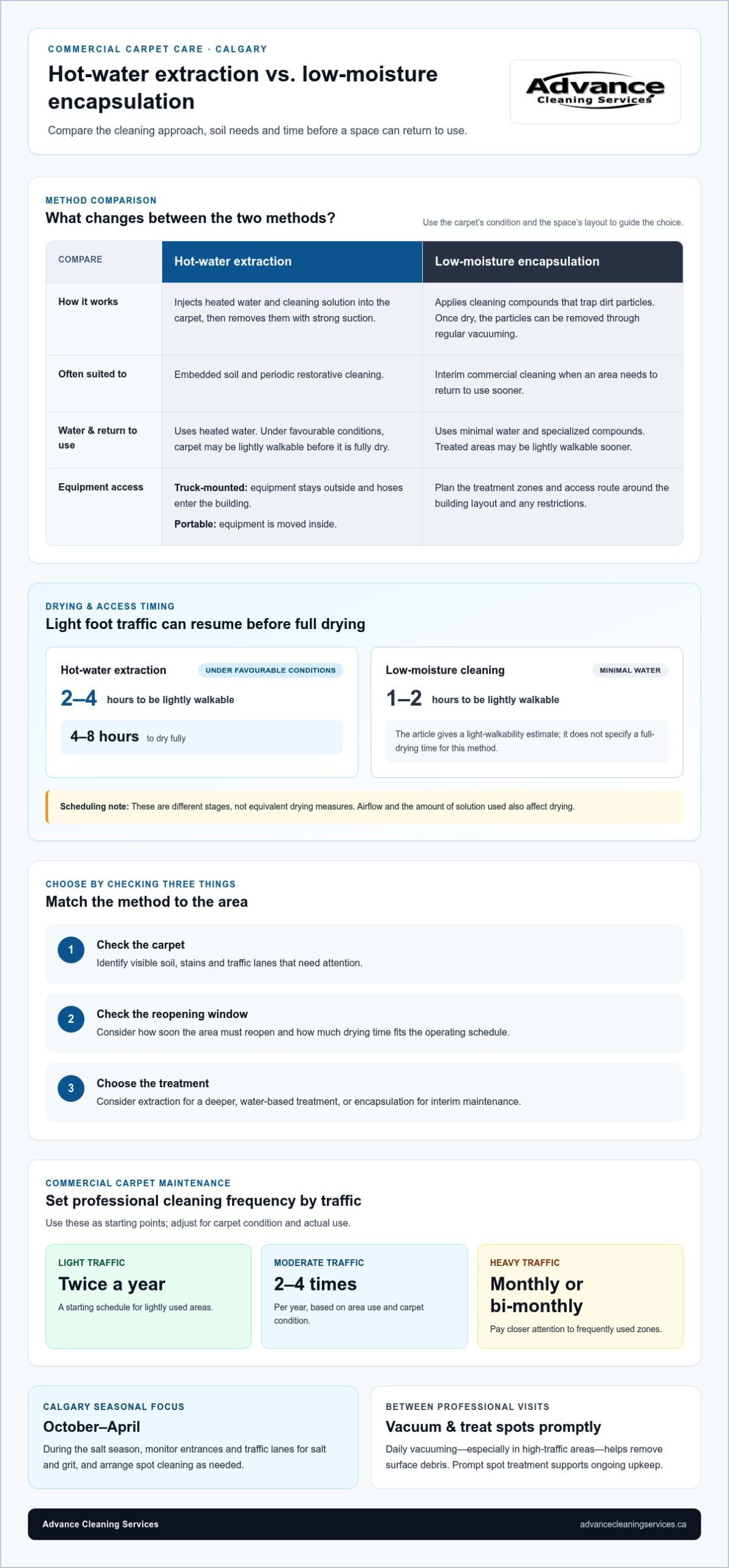
Calgary’s commercial carpet salt season runs from October through April. During those months, monitor entrances and traffic lanes for salt and grit, then arrange spot cleaning as needed. For a starting schedule, professional cleaning may be appropriate twice a year in light-traffic areas, 2-4 times per year in moderate-traffic areas, and monthly or bi-monthly in heavy-traffic areas. Carpet condition and actual use should guide adjustments.
Carpet fibres can hold pollen, dust mites and mould spores, while routine vacuuming mainly removes surface debris. Daily vacuuming is recommended for commercial carpeting, especially in high-traffic areas; it complements rather than replaces professional cleaning. Treat stains promptly, since fresh spills can be easier to remove. Track recurring spots, such as a lobby entrance or break-room walkway, to identify areas that need more frequent care.
What health, safety and environmental standards apply to commercial carpet cleaning in Alberta? Businesses should follow applicable workplace health and safety requirements and the cleaning product’s label and safety information. Practical controls include managing chemical handling, ventilation and access to damp carpet, using cleaning solutions carefully and managing wastewater responsibly.
Carpet is only one part of a facility’s floor-care plan. Upholstery and rugs may need cleaning suited to their fabric or construction, while leather requires a method appropriate to its finish. Tile and wood floors also need surface-specific care, so plan them separately from carpet work. For example, a school corridor with carpet tiles calls for a different approach than a tiled washroom.
Pairing periodic deep cleaning with janitorial services can make ongoing care easier to organize. Include daily vacuuming, monthly spot cleaning and scheduled professional work in one site plan, then review it when traffic patterns change. For a managed property, record the condition of each common area after cleaning. This creates a practical basis for prioritizing the next service and adjusting frequency by zone.
Hot water extraction and low-moisture encapsulation
Hot-water extraction and low-moisture encapsulation address carpet soil in different ways. Extraction injects heated water and cleaning solution into the carpet, then removes them with strong suction. Encapsulation applies cleaning compounds that trap dirt particles. Once dry, those particles can be removed through regular vacuuming. For embedded soil, extraction may suit periodic restorative cleaning. For an area that needs to return to use sooner, encapsulation may fit interim commercial cleaning.
Equipment access can influence the extraction setup. Truck-mounted equipment stays outside, with hoses brought into the building; portable equipment can be moved inside. A loading area near the entrance may make truck-mounted setup practical, while an upper floor or restricted access may favour portable equipment. In either case, the method should suit the carpet’s condition and the space’s layout. Discuss access routes, elevators and treatment zones when planning the work.
Drying time matters for staff, visitors and traffic flow. Under favourable conditions, extracted commercial carpet may be lightly walkable in approximately 2-4 hours and take approximately 4-8 hours to dry fully. Low-moisture cleaning uses minimal water and specialized compounds; treated areas may be lightly walkable within approximately 1-2 hours. These periods help with scheduling, but they describe different stages: light foot traffic can resume before full drying.
To compare methods for a specific area, start with three practical checks:
- Identify visible soil, stains and traffic lanes that need attention.
- Consider how soon the area must reopen and how much drying time fits.
- Choose extraction for a deeper water-based treatment, or encapsulation for interim maintenance.
Keep furniture and foot traffic away from treated carpet until it is ready for use. A reception area cleaned with extraction may need a longer access plan than a corridor receiving low-moisture treatment. Airflow and the amount of solution used also affect drying. Plan separate zones when a whole floor cannot be taken out of service at once.
Carpet and upholstery require different cleaning approaches, even when scheduled together. Note each surface, its condition and any access limits before service. For routine commercial carpet cleaning, include the cleaning method and reopening plan in the maintenance schedule. This gives staff a clear way to prepare rooms, guide visitors around work areas and return treated spaces to normal use.
After-hours and weekend scheduling
Plan carpet work for the hours when each facility has the fewest people moving through it. An office may have a quiet evening window, while a retail space may be calmer after closing. A clinic could need separate timing for reception and treatment areas. These examples help identify practical work zones without assuming every building follows the same schedule.
Start by mapping the spaces that need cleaning, then rank them by access and use. Mark entrances, corridors, meeting rooms and shared areas on a floor plan. Note which doors must remain accessible and where equipment can be brought inside. This preparation helps organize work in stages instead of taking an entire floor out of use at once.
For a weekend visit, plan around the building’s reopening time and the carpet’s drying needs. A Saturday evening treatment, for example, may leave more time before Monday’s office traffic than a Sunday night visit. The best window depends on the selected method, treated area, airflow and how the facility is used. Include these details in the schedule, not just the cleaning start time.
Before setting a recurring calendar, write down the details that can affect access:
- List the areas to clean and any rooms that need separate treatment.
- Record entry instructions, alarm procedures and restricted spaces.
- Identify furniture or equipment that needs moving before work begins.
- Set a reopening plan that accounts for drying and safe access.
Clear handoffs matter in multi-tenant buildings. A property manager can share work zones and timing with tenants, while a retail supervisor can plan around deliveries and opening routines. For a clinic, designate a staff contact to identify rooms that must remain available. These steps reduce confusion when cleaning happens outside the usual workday.
Service availability and scheduling are separate considerations. A preferred evening or weekend window must fit the building’s access rules, the work involved and the cleaning schedule. Avoid treating an after-hours request as automatic; build the maintenance calendar around confirmed arrangements and allow flexibility for seasonal changes. Calgary’s October-April salt season, for example, can make entrance-area care a more frequent planning priority.
Keep a simple service record for each visit. Note the date, treated zones, method and any areas deferred because of access. These records help facilities teams adjust the next schedule when a lobby, corridor or retail entrance shows more wear. They also give staff a clear reference for preparing spaces before the next planned cleaning window.
Will carpet cleaning be disruptive to my business?
Disruption depends on which Calgary work areas need treatment and how they’re prepared. Divide the site into zones, such as reception, corridors and private offices. Cleaning one zone at a time can keep other parts of the building available. A floor plan helps staff understand which routes remain open and where furniture needs moving.
For a Calgary office, identify busy entrances and shared walkways before setting the work sequence. Move chairs, bins and light furniture from the first treatment zone. Keep necessary items clear of equipment routes, then mark areas that should remain accessible. In retail spaces, plan around customer paths and display fixtures. This makes the work area easier to manage without treating the entire floor as unavailable.
Winter conditions can change the amount of soil tracked into Calgary facilities. Note salt marks and gritty traffic lanes near entrances, then prioritize those areas in the cleaning plan. A property manager can share the zone map with tenants before work begins. Clinic staff can identify rooms that must remain accessible, while an office coordinator can direct employees to another route.
Plan Calgary-area service site by site. List each building address, floor, carpeted area and access requirement in one service record. For multiple locations, such as an office and a nearby retail site, keep separate floor plans and work priorities. This gives the team clear information about each facility and how it operates.
A useful Calgary service history records the work completed at your site. After each visit, log the date, areas treated, method used and any stains that remained. Add notes about furniture movement, access restrictions and operational interruptions. Comparing entries helps facilities teams recognize recurring issues, such as winter soil at one entrance or repeated spills near a staff kitchenette.
Before the next visit, use that record to adjust the sequence:
- Confirm the treatment zones and the routes staff or visitors will use.
- Remove movable furniture from the first area and protect items that stay.
- Tell employees which floors or rooms are temporarily closed.
- Record any access or drying concerns for the next service plan.
These steps help limit avoidable interruptions, but the work still needs space for equipment and treated areas. A Calgary building with a narrow entrance may need a different setup than a ground-floor office. Clear access details and a staged floor plan help match the work to the facility, protect daily routines and keep remaining spaces organized.
Commercial carpet maintenance programs
A commercial carpet maintenance program in Calgary turns carpet care into a planned routine rather than a response to visible soil. Its schedule should reflect foot traffic, carpet condition, building use and cleaning access. The key is to make each task clear enough for staff to follow between professional visits.
Program Setup Steps
Start with a site walkthrough. Mark entrances, corridors, reception areas and quieter rooms on a floor plan. Note carpet type, visible wear, recurring stains and access limits. Then assign priorities by use: a busy lobby needs a different plan from a private office. This gives the maintenance schedule a practical baseline.
Set out who handles daily vacuuming, spot treatment and scheduled professional work. Include construction or renovation periods, which can bring extra dust and debris into the building. Record the method used, treated zones and preparation needed before each visit. These details help facilities teams coordinate staff, furniture movement and access.
Measure results with a consistent site record. Compare the same areas over time, noting visible soil, recurring stains, carpet appearance and completed tasks. Staff feedback can identify problem zones that need a different approach. Use those observations to refine the schedule instead of relying on a single impression after cleaning.
Risks of Inadequate Maintenance
Without planned care, soil and stains can build up in high-traffic areas, affecting carpet appearance and condition. Pollen, dust mites and mould spores can also accumulate in commercial carpeting and compromise indoor air quality. Routine vacuuming removes surface debris, but it doesn’t remove contaminants embedded in carpet fibres.
Missed spills may become harder to remove, while neglected traffic lanes can make a maintained space look uneven. During Calgary’s October to April salt season, entrances can collect tracked-in residue. Regular care, prompt attention to spills and professional cleaning suited to the carpet can help address these issues.
Companies Offering Maintenance Programs
When comparing Calgary commercial cleaning companies that provide carpet cleaning, consider how they plan maintenance around your facility’s needs. Review the proposed scope, methods, treatment zones and fit with the building’s routine. A commercial carpet maintenance program in Calgary should explain how routine care between professional cleans will be handled.
Ask for a written plan tied to the site’s foot traffic and carpet condition. A retail entrance and a low-use office suite shouldn’t automatically receive identical attention. Records of completed work help facilities teams assess whether the routine supports carpet appearance and protects their investment over time.
To put a practical plan into action, arrange commercial carpet cleaning around your facility’s use, priority areas and maintenance needs.
Advance Cleaning Services: Medical Facility Cleaning
Advance Cleaning Services Inc. provides medical facility cleaning for dental, doctor and veterinarian clinics. Its carpet cleaning service can support a planned maintenance routine for carpeted reception areas and offices, alongside office cleaning or janitorial services.
Consider professional support when tracked-in soil, recurring stains or busy shared spaces make routine upkeep harder to manage. A clear plan can identify priority areas, preferred cleaning methods and access needs, helping staff prepare rooms and coordinate carpet care with daily operations.
If your clinic or commercial facility is reviewing its cleaning routine, contact Advance Cleaning Services Inc. to discuss your carpet maintenance needs.
Make carpet care part of your facilities plan
Choose one person to coordinate carpet care across your Calgary workplace. They can keep a simple record of changing needs, such as a new tenant, a renovated room or a shift in how spaces are used. These changes can affect which areas need attention and how the work fits facility operations.
A commercial carpet maintenance program in Calgary works best with a clear owner and a practical review process. Use your next planning meeting to identify who tracks carpet condition, coordinates access and updates the schedule. That small step makes carpet care easier to manage alongside other facilities priorities.
Advance Cleaning Services Inc. offers commercial cleaning support, including Medical Facility Cleaning, Office cleaning and Janitorial Services. For a conversation about your facility’s carpet care needs, contact Advance Cleaning Services Inc. A well-organized plan gives your team a clear place to start and helps keep future decisions grounded in the needs of your space.
Frequently Asked Questions
Do you handle large-scale carpet cleaning projects?
Advance Cleaning Services provides carpet cleaning for commercial facilities, including offices, retail businesses and medical settings. For a larger site, outline the buildings, carpeted areas, access points and priority zones in the project scope. This helps organize work around how each facility operates. Separate floor plans and a site contact for each building can make coordination clearer across multiple locations.
Do you offer regular maintenance programs for commercial clients?
Advance Cleaning Services offers commercial carpet cleaning that can be incorporated into a recurring facility schedule. Professional carpet cleaning is offered once or twice a year. Businesses can pair those visits with their existing cleaning routine and keep a record of areas treated. That record helps facilities teams plan future work around changes in room use, tenant needs or carpet condition.
Which areas do you serve?
Advance Cleaning Services serves Calgary and other communities in Alberta and the Vancouver area, including Edmonton, Red Deer, Okotoks, Lethbridge, Strathmore, Chestermere, Airdrie and Cochrane, as well as Vancouver, Richmond, Burnaby, Surrey, New Westminster, Coquitlam and Abbotsford. For a multi-site organization, identifying each property’s location helps organize cleaning needs by building.
What does a commercial carpet maintenance program include?
A practical plan combines routine care with scheduled professional carpet cleaning. It can set out who handles vacuuming and spot treatment, which areas need priority, and when deeper cleaning is planned. For example, a facilities team might track spills and recurring marks in a shared meeting room, then use those records to adjust its routine. Clear zone notes also help staff prepare rooms before service.
How often should commercial carpets be cleaned in Calgary businesses?
Frequency depends on use: light-traffic areas may need professional cleaning twice per year, moderate-traffic areas 2-4 times per year, and heavy-traffic areas monthly or bi-monthly. A private office and a busy entrance therefore need different schedules. Calgary businesses can also watch for tracked-in salt and soil during October-April, then adjust attention to affected areas as conditions change.
What are the recommended commercial carpet cleaning methods for different carpet types?
Choose a method based on carpet construction, soil level and the time available before the space returns to use. Hot-water extraction injects heated water and cleaning solution, then removes them with suction. Low-moisture encapsulation traps dirt in cleaning compounds for later removal through vacuuming. Review the carpet’s care instructions and assess its condition before selecting a method for a specific area.
What factors affect commercial carpet maintenance costs and cleaning frequency?
Pricing depends on the case and is provided after a quote request. Factors include the area being cleaned, carpet condition, soil level, selected method and site access. Frequency is shaped by foot traffic, recurring spills and how the space is used. For example, a frequently used lobby may need more attention than a closed office, while difficult access can affect service planning.