A low cleaning quote can leave important work off the schedule. Commercial cleaning for a small business in Calgary is scoped around the space, the tasks required and how often they’re needed. The quote reflects the specific work requested, with the task list and schedule helping define the scope.
It’s reasonable to want a clear budget before arranging cleaning, especially when every operating cost matters. This guide explains what affects commercial cleaning in Calgary and Edmonton, and why a one-size-fits-all rate can be misleading.
You’ll also learn how commercial cleaning differs from janitorial service, how to plan a suitable schedule and which facilities can be covered. These details can help you identify the right scope for your workplace.
Key Takeaways
- Cleaning costs depend on the size and condition of the space, the tasks required and how often service is scheduled.
- Commercial cleaning and janitorial services can cover different scopes of work; identify the tasks your business needs before setting a schedule.
- Match routine cleaning and seasonal floor care to your workplace’s use, traffic and flooring needs.
- Office, retail, medical and other facilities may have different cleaning priorities, so define the spaces and tasks that matter most.
- Advance Cleaning Services Inc. offers office cleaning, janitorial services, medical facility cleaning and carpet cleaning for businesses seeking professional support.
How much does commercial cleaning cost in Calgary and Edmonton?
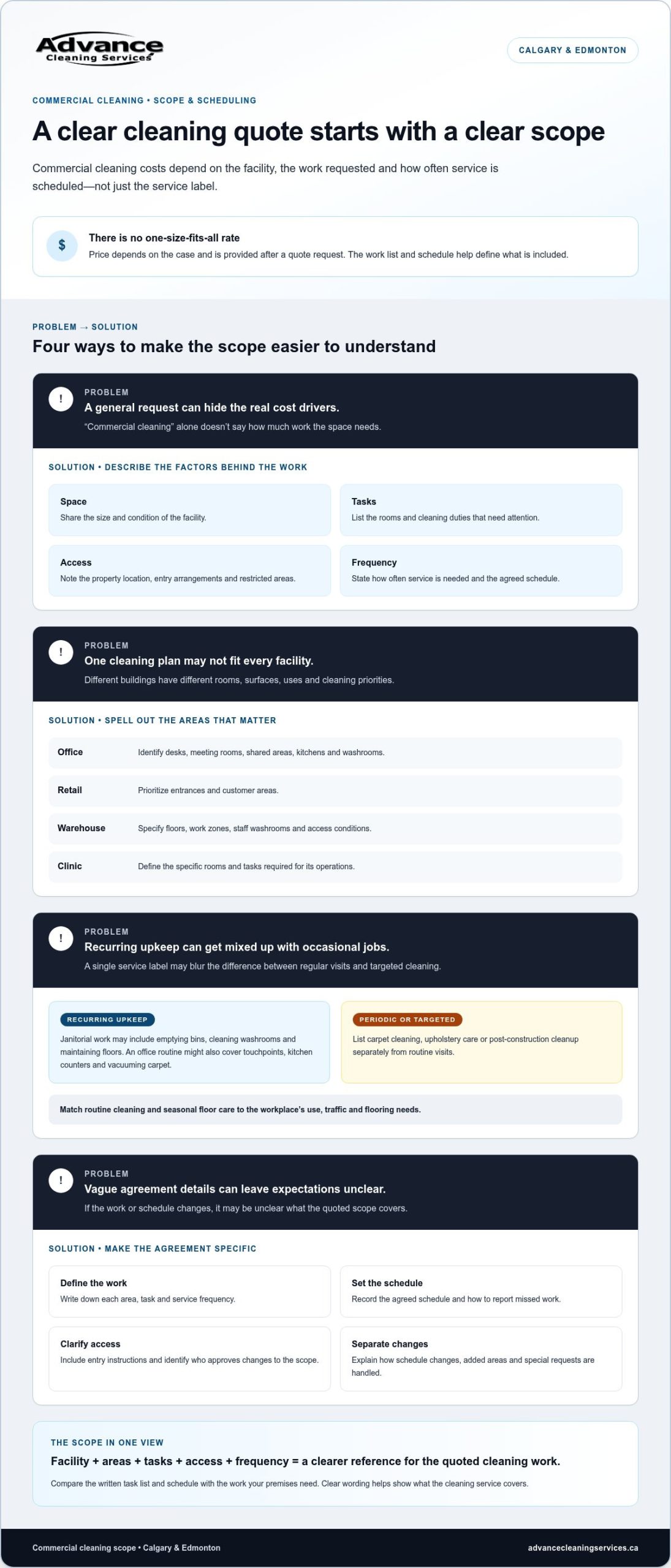
Commercial cleaning costs in Calgary and Edmonton depend on the work, facility and schedule. The price depends on the case and is given after a quote request; key factors include the space’s size and condition, cleaning tasks, access and service frequency.
For a small business, compare the requested work rather than treating “commercial cleaning” and “janitorial services” as identical. A cleaning plan might combine routine washroom and floor care with periodic carpet cleaning. The highest-cost drivers are often the scope and frequency of work, so list the rooms and tasks that need attention before seeking a quote.
Cleaning needs vary by building use. An office may need desks, meeting rooms and kitchens addressed, while a retail space needs attention to customer areas. A warehouse plan may focus on floors, work areas and access conditions. Clinics need a scope suited to their specific rooms and operations.
Are commercial cleaning expenses tax deductible for Canadian small businesses? They may qualify when incurred for business purposes. Keep invoices and records showing the cleaning work and payment, and consult a tax professional about how the expense applies to your business.
Which commercial cleaning companies serve small businesses in Calgary? Calgary businesses can look for commercial cleaners that handle their facility type, such as offices, retail spaces, clinics or warehouses. Compare the listed tasks and service schedule against the work your premises need.
Cleaning for Different Facility Types
Ask for a scope matched to the building, not just a general cleaning label. For example, an office plan can identify desks and shared areas, while a warehouse plan can specify floor care and work zones. For a clinic, define the rooms and cleaning tasks required. Retail and industrial facilities also benefit from clear area-by-area instructions.
When arranging cleaning in Calgary or a nearby community, describe the property location, entry arrangements and any areas with restricted access. These details help shape a practical schedule around the site rather than assuming every facility has the same needs.
Commercial Cleaning Contract Details
What should a Calgary business include in a commercial cleaning contract? Specify each area, task, service frequency and agreed schedule, along with how to report missed work. Include access instructions and identify who approves changes to the scope. A written task list, such as washroom cleaning and office floor care, gives everyone a clear reference.
Separate recurring janitorial work from periodic tasks such as carpet cleaning. Note how schedule changes, added areas and special requests are handled, then compare the agreement with the quoted scope. Clear wording helps a small business understand what its cleaning service covers before work begins.
What is the difference between commercial cleaning and janitorial services?
Commercial cleaning is a broad term for work in business premises. Janitorial services usually mean recurring care that keeps a workplace orderly, such as emptying bins, cleaning washrooms and maintaining floors. Depending on its rooms and operations, a business may need routine janitorial work, specialized cleaning or both.
Consider a small office with a reception area, meeting room and kitchenette. Its regular schedule might cover bins, touchpoints, washrooms and floors. Carpet cleaning, upholstery care or post-construction cleanup addresses different needs and can be arranged separately from routine visits. The task list, not the service label alone, defines the scope.
Industries served can include offices, retail businesses, clinics, dental facilities, condominiums and industrial or warehouse sites. Each setting presents different surfaces and uses. A retail manager may prioritize entrances and customer areas, while an office manager may focus on shared rooms and washrooms. A clinic’s cleaning plan should identify the specific spaces and tasks required for its operations.
Warehouse cleaning also needs a clear scope. For a site with open floor areas, staff washrooms and an office corner, distinguish each area and specify which tasks are routine. Construction work creates a separate need: post-construction cleaning focuses on the premises after building work, rather than everyday upkeep.
To choose the right service, map the facility before arranging work:
- List the rooms, work zones and shared spaces.
- Separate recurring duties from periodic tasks, such as carpet cleaning.
- Note surfaces, access points and areas that need specific attention.
- Set priorities around how employees, customers or visitors use each space.
A simple inventory helps a business describe its needs precisely. A clinic, for example, may need routine care for common areas alongside a defined plan for treatment rooms. A warehouse may need floor maintenance while its office area follows a different routine. A single service label can hide important differences in scope.
In practice, janitorial services suit ongoing workplace upkeep, while commercial cleaning can include that work and more targeted tasks. A business comparing options should match the proposed duties to its facility and operating needs. For further context on commercial cleaning services, review how different cleaning tasks fit a business setting.
Nightly cleaning schedules and seasonal floor care
A schedule can reset an office for the next working day. List the required tasks by area, such as emptying waste bins, wiping kitchen counters, cleaning washrooms and vacuuming carpet. Specify which floors need damp mopping and which surfaces need attention, so routine work reflects the building’s actual use.
An office with a shared kitchen may need its counters and sink cleaned each visit, while a lightly used meeting room may need less frequent attention. Put recurring duties in one list and periodic work in another. This helps a manager plan routine upkeep without treating every floor-care task as an everyday job.
Seasonal floor care calls for a separate plan. Calgary winter entrances can collect moisture, grit and tracked-in debris, so inspect entry mats and nearby flooring as conditions change. Position mats to catch foot traffic and include the entrance in routine floor checks. Businesses in Cochrane and Okotoks can apply the same approach, adapting it to their entrances and traffic patterns.
Floor material matters. Carpet may need scheduled vacuuming and periodic professional carpet cleaning, while hard flooring needs a suitable routine for removing soil. Stripping and waxing are more intensive than everyday mopping. Identify the floor type and current finish before adding these tasks to a seasonal plan, and keep them off a nightly checklist unless the floor’s needs call for them.
A practical schedule separates regular tasks from seasonal work:
- Each visit: address office desks, kitchen surfaces, washrooms, entrance mats and floors according to the agreed scope.
- Seasonal review: inspect entrances, mat condition and floor finish, then adjust the plan for observed wear.
- Periodic care: schedule carpet cleaning or hard-floor stripping and waxing where the surface and condition call for it.
Define how completed work is recorded. A task sheet can show whether washrooms, kitchen counters and entry floors were covered, while a note can flag a worn mat or floor area that needs attention. If your workplace requires particular products or procedures, state that clearly in the cleaning instructions. This gives the cleaning team a practical reference instead of relying on assumptions.
For offices with changing foot traffic, review the schedule when the layout or use changes. A renovated reception area, added desks or a busier entrance can shift which tasks deserve priority. Seasonal floor care should support the regular routine, not replace it.
Offices, educational facilities, government buildings and businesses
A clean reception area shapes visitors’ first impressions. For a Calgary office, focus the cleaning plan on visible areas such as the entrance, reception desk, meeting room and washroom. Clear floors and tidy shared spaces support a professional setting for employees, customers and visitors.
Office cleaning should reflect how each facility is used. A shared workspace may need attention to desks, meeting tables and kitchen surfaces, while a private office may require a different task list. Identify the spaces, surfaces and priorities, then organize cleaning around the building’s operations. A written checklist makes the scope clear.
Educational facilities and government buildings also have distinct layouts. A school may include classrooms, corridors, staff rooms and shared washrooms. A government office may have public counters, waiting areas and private workspaces. Map each area and specify its cleaning needs to distinguish public-facing spaces from employee-only rooms.
Medical office cleaning needs a clearly defined scope for each area. A clinic can identify its reception area, consultation rooms, staff spaces and washrooms, then set out the required tasks. A dental facility may have different rooms and surfaces from a general office. Document the work by room rather than relying on a broad facility label.
For a business in Airdrie or another community near Calgary, practical planning starts with the building itself. Note the entrance, floor types, shared spaces and hours of use. A cleaning partner can then work from an agreed task list that reflects the facility, rather than applying one routine to every workplace.
- Reception and customer areas: include the entrance, counter, waiting chairs and visible floors.
- Employee workspaces: identify desks, meeting rooms, kitchens and shared touchpoints.
- Specialized facilities: list clinic or dental rooms separately from general office areas.
- Public buildings: distinguish public counters and waiting spaces from staff-only rooms.
Review the checklist when the facility changes. A new meeting room, renovated reception area or updated clinic layout can alter which surfaces need regular attention. Clear instructions keep the cleaning scope aligned with the workplace, whether it serves office staff, students, patients or the public.
Calgary office and janitorial cleaning
For a Calgary office, start with a task plan, not a generic service label. Identify the duties that keep the workplace ready for staff and visitors, then separate them from occasional work. A small professional office, for example, may need routine care for shared spaces, while carpet cleaning follows a separate schedule based on floor condition and use.
Janitorial work is most useful when recurring duties are clearly assigned. Group tasks by location, such as the reception area, staff kitchen and shared washroom. Then record which work belongs to each visit and which tasks require a separate booking. This makes the service scope easier to understand.
Before setting the schedule, map the workplace and note practical access details. Include the entrance used by cleaning staff, areas that remain occupied and any rooms that should be left undisturbed. A small office with a reception desk and shared meeting room may need different instructions from a business spread across several connected work areas.
- Define the scope: name the rooms and recurring tasks, rather than relying on “general cleaning.”
- Set priorities: identify high-use spaces, such as a staff kitchen or customer-facing reception.
- Separate occasional work: list carpet cleaning apart from routine janitorial duties.
- Plan access: explain entry arrangements and areas requiring special instructions.
Calgary businesses can plan around changes in how their offices are used. A new workstation layout, busier reception area or renovated meeting room may change the task list. Review the agreed scope after a change and update the instructions so recurring work matches the current space.
Clear communication keeps the arrangement practical. Assign one point of contact, such as the office manager, for routine instructions and scope updates, and record requested changes in writing. If the office is used outside standard business hours, state which areas need access and which should remain untouched during cleaning.
The takeaway is simple: pair recurring janitorial duties with separately defined specialist tasks. That makes it easier to plan office care without assuming every service belongs in every visit. Businesses seeking support for a Calgary workplace can discuss Calgary office cleaning around their facility’s needs.
Advance Cleaning Services Inc.: Medical Facility Cleaning
Advance Cleaning Services Inc. provides Medical Facilities cleaning for dental, doctor and veterinarian clinics. Choose this service when your workplace includes clinical areas alongside reception, staff spaces or washrooms, and you need a cleaning scope organised around the facility’s layout.
For business offices, Commercial & Office Cleaning and Janitorial and Day Porter Services address workplace cleaning needs. Professional carpet cleaning can be arranged for carpeted areas as a separate task. Defining the rooms and duties that matter helps align the service with your premises, whether you manage a clinic or small office.
Share your facility type and the areas requiring attention when discussing your cleaning needs. Contact Advance Cleaning Services Inc. to discuss Medical Facilities cleaning or another suitable cleaning service.
Build a cleaning plan that can grow with your business
Cleaning needs can change as your team, workspace or operations evolve. Review the scope whenever you rearrange the office, add shared space or change how customers use the premises. This keeps the plan connected to your business and routine tasks in step with the workplace.
For commercial cleaning for a small business in Calgary, write down the rooms, priorities and schedule you want to discuss. Advance Cleaning Services offers Commercial & Office Cleaning, Janitorial and Day Porter Services, and Medical Facilities cleaning for businesses and clinics.
Choose the service that best matches your facility and outline the areas that need attention. Contact Advance Cleaning Services Inc. to discuss a cleaning plan for your business. A clear starting point can make the next conversation straightforward and help you move ahead with confidence.
Frequently Asked Questions
Do you clean offices in northeast Calgary?
Advance Cleaning Services provides office cleaning in Calgary, including for businesses in the northeast. Share your neighbourhood, building type and areas needing attention when describing the workplace. A small office suite, for example, may have different access arrangements from a street-level business. These details help shape a cleaning scope around your location and facility.
Do you use eco-friendly and unscented cleaning products?
Advance Cleaning Services uses eco-friendly cleaning products. If unscented products are important, note any scent sensitivities in your cleaning instructions and identify the rooms or work areas where fragrance matters, such as a treatment room or shared office. Discuss product choices for those spaces before cleaning begins.
How are your cleaners vetted?
Contact Advance Cleaning Services to discuss its cleaner-vetting and supervision process. Ask what screening, training and site orientation apply to your account, and how staff handle keys or alarm access. These details are especially useful for businesses with restricted rooms, client records or controlled entry. Record agreed access arrangements and the designated workplace contact in your service documents.
What commercial cleaning services do small businesses in Calgary typically need?
Small businesses often need office cleaning or recurring janitorial services, with carpet cleaning as a separate task when needed. A clinic may require medical facility cleaning, while a customer-facing shop may prioritize its sales floor and entrance. Match the service to the premises, then identify any areas or surfaces needing attention beyond routine upkeep.
How much does commercial cleaning cost for a small business in Calgary?
The scope is defined by the facility’s size and condition, the tasks required, access arrangements and service frequency. A small office with limited shared areas differs from a clinic or retail space. Describe your premises and cleaning priorities when requesting a quote so it can reflect the work you need.
What factors affect commercial cleaning prices in Calgary?
The cleaning scope, facility condition, schedule and access requirements all shape the work. Carpeted rooms, multiple washrooms or separate work zones can affect the tasks involved. Make your request precise by identifying the areas to clean, noting surfaces that need specialized attention and separating routine work from periodic tasks. The quote can then reflect that defined scope.
How often should a small business schedule professional cleaning?
Set the schedule according to daily use, customer traffic and the condition of your premises. A busy reception area or shared staff kitchen may need attention more often than a rarely used meeting room. Track which spaces become dirty fastest, then adjust the plan based on those observations. Changes in staffing, foot traffic or business hours can also affect the schedule.
What questions should Calgary businesses ask before hiring a cleaning company?
Ask for a written scope that names the rooms, tasks, schedule and any exclusions. Clarify how staff access the premises, who handles changes and how completed work or concerns are communicated. You can also ask which products will be used in scent-sensitive areas and what cleaner screening applies. These points help you understand the arrangement before service starts.