A sewage backup can send wastewater back through floor drains, tubs, or sinks when a blockage or damaged pipe stops it from flowing away. Calgary has between 7,000 and 8,000 service calls for sewage backups annually, and the water can contain bacteria and viruses even when it looks clear. Sewage backup cleanup in Calgary starts with keeping people away from the affected area and assessing what’s contaminated.
It’s understandable to want to know what caused the backup, what needs to be removed, and whether you can use your home during cleanup. This article explains common causes, the inspection and disinfection process, and what to consider when documenting damage for an insurance claim. It also explains how Additional Living Expenses may relate to the disruption, helping you decide what to do next.
Key Takeaways
- Keep people and pets away from sewage water, even if it looks clear, and avoid contact with affected materials.
- Recognize common warning signs, including wastewater returning through drains and leaks around a toilet.
- Make the sewer cleanout accessible and report a suspected backup to 311 so the source can be assessed.
- Document damage and keep receipts and inspection reports to support conversations about insurance coverage and Additional Living Expenses.
- Learn how professional cleaning can help address contamination in affected spaces and materials.
Water extraction, contaminated-material removal, and disinfection
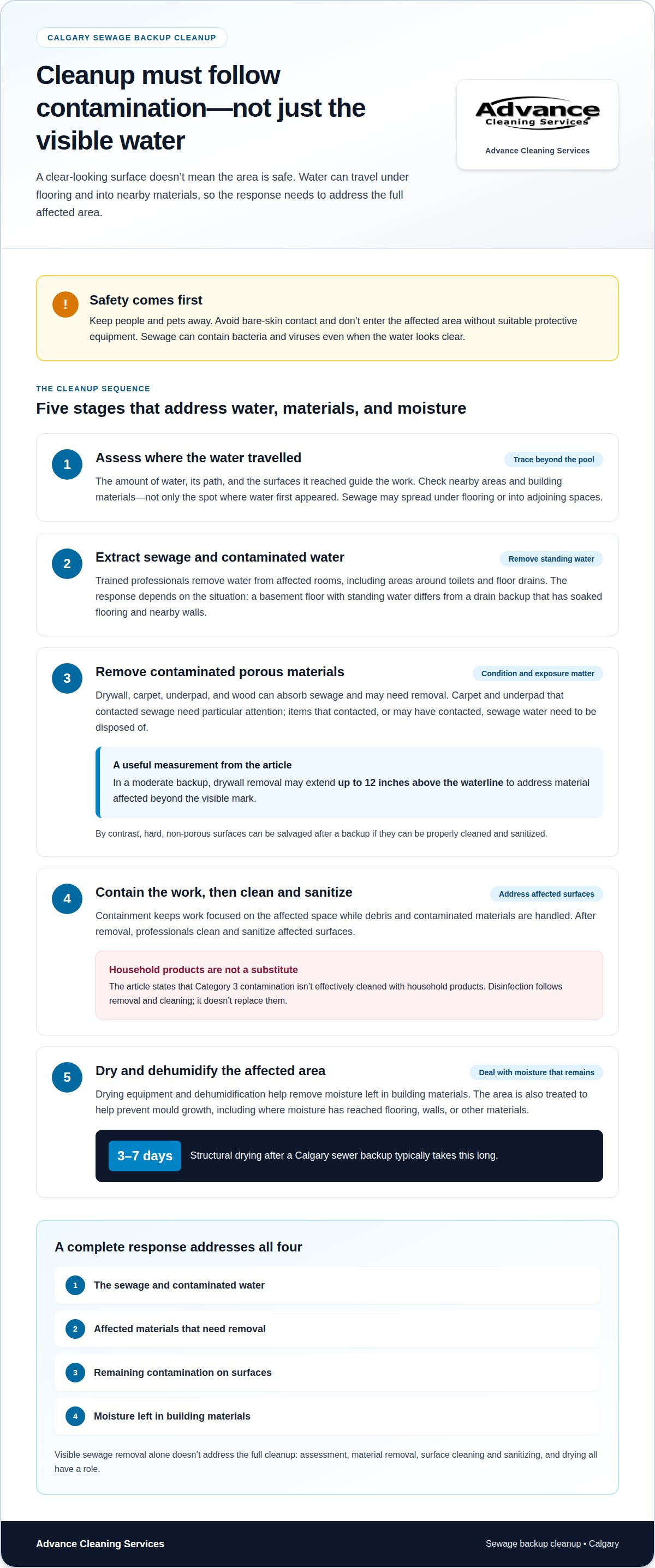
Cleanup involves more than removing visible water. Sewage can carry harmful bacteria and viruses, even when it looks clear, so extraction, removal, cleaning, and drying must address contamination beyond the wettest spot.
Sewage and Contaminated-Water Extraction
Trained professionals remove sewage and contaminated water from affected rooms, including areas around toilets and floor drains. The amount of water, its path through the property, and the surfaces it reached determine the extraction work. A basement floor with standing water needs a different response from a drain backup that has also soaked flooring and nearby walls.
Don’t enter the affected area without proper protective equipment. Avoid bare-skin contact, even if the water appears clear. During sewage backup cleanup in Calgary, the assessment needs to trace where the water travelled, not just where it pooled. Water may spread under flooring or into adjoining spaces, leaving contamination beyond the obvious wet area.
Contaminated-Material Removal
Porous materials can absorb sewage and may need removal when contaminated. This can include drywall, carpet, underpad, and wood. The affected area and the materials’ condition help determine what must be removed. In a moderate backup, drywall removal may extend up to 12 inches above the waterline to address material affected beyond the visible mark.
Carpet and underpad that have contacted sewage need particular attention because contamination can remain in the material. Items that have contacted, or may have contacted, sewage water need to be disposed of. Hard, non-porous surfaces, by contrast, can be salvaged after a backup if they can be properly cleaned and sanitized.
Containment and Drying
After contaminated materials are removed, professionals clean and sanitize affected surfaces, then dry and dehumidify the area. Containment keeps the work focused on the affected space while debris and contaminated materials are handled. The assessment should cover nearby surfaces and building materials, not only the floor where water first appeared.
Structural drying after a Calgary sewer backup typically takes 3-7 days. Drying equipment and dehumidification help remove moisture left in building materials. The area is also treated to help prevent mould growth. These steps matter because water damage can remain after visible sewage is gone, especially where moisture has reached flooring, walls, or other materials.
Sewage exposure can cause illness, and clear-looking water isn’t a reliable sign of safety. Category 3 contamination isn’t effectively cleaned with household products, and attempting cleanup without suitable protective equipment and training can create health risks. Disinfection follows removal and cleaning; it doesn’t replace them. A complete process addresses the sewage, affected materials, remaining surface contamination, and moisture, rather than relying on a household disinfectant to solve the entire situation.
What causes the sewage to back up into my fixtures?
A sewer backup happens when wastewater cannot flow through the sewer line and returns through fixtures. In Calgary homes, fats, oils, and grease commonly build up in household plumbing and restrict drainage.
Common Backup Causes
Grease can build up inside a drain when fats and oils are poured down sinks. Tree roots may enter sewer pipes, while deteriorated, damaged, or collapsed pipes can block the flow. Flushing unsuitable items can also cause a blockage, sending sewage water back through a toilet or basement drain.
Warning signs can appear before a basement fills with standing water. Wastewater rising from floor drains, a tub, or a sink can signal a backup. A leak around a toilet where it meets the floor, or a ceiling stain beneath a toilet or waste line, can also point to a sewer problem.
Calgary households can help prevent avoidable clogs by keeping dental floss, diapers, disposable towels, hair, sanitary products, and wet wipes out of drains. Wipes labelled “flushable” retain their shape and strength, so they don’t break down in pipes. They can block the line farther along, even if the toilet initially appears to flush normally.
Where the first symptom appears can help describe the situation, but it doesn’t identify the blockage by itself. For example, wastewater at a basement floor drain shows where it surfaced, not whether the obstruction is in a private line or the City sewer.
Private-Line and City-Sewer Causes
A blockage may be on private property or in the City sewer. Calgary crews use a steel snake to the sewer main to determine whether the obstruction is on private or public property. Homeowners should call 311 about a backup so an agent can help assess whether it involves internal plumbing or City infrastructure.
What are sewage backups?
A sewage backup happens when wastewater flows back into a home instead of draining away. Calgary has between 7,000 and 8,000 service calls for sewage backups annually, so the issue affects homes across the city.
The concern is more than the mess. Sewage water can contain bacteria, viruses, and other germs that cause illness, even when it looks clear. Exposure can also cause respiratory infections and allergic reactions. Avoid bare-skin contact, and keep children and pets away from affected rooms. A visible waterline doesn’t show every place contaminated water may have reached.
Calgary’s history shows how sewer systems can face added pressure during major flooding. The 2013 floods overwhelmed the Bow and Elbow river systems. That event illustrates why risk can depend on conditions affecting drainage and sewer infrastructure, not just the appearance of a basement. A neighbourhood name alone doesn’t tell you whether a particular home has been affected; the source and route of the backup require inspection.
Basement cleanup also carries risks without suitable equipment and training. Walking through sewage water can expose skin and clothing to contaminants, while moving soaked carpet or drywall can spread contamination to nearby areas. Don’t start cleanup without proper protective equipment, training, and suitable sanitizing products. Leave the affected space and arrange an assessment, especially if sewage has reached porous materials or spread beyond one room.
For Calgary households, preventing sewer clogs starts with keeping unsuitable waste out of drains. Don’t flush dental floss, diapers, disposable towels, hair, sanitary products, or wet wipes. Wipes labelled “flushable” retain their shape and strength, so they don’t break down in pipes. These items can contribute to blockages and backups that send wastewater through a toilet or basement drain.
After a backup, keep people out of contaminated areas while the cause and affected materials are assessed. The immediate priority is avoiding contact, not judging cleanliness by appearance. Drywall, carpet, and other porous materials can hold contamination after standing water is gone. A proper inspection traces where sewage travelled and what it touched, helping determine which materials need attention and how far cleanup must extend.
Emergency response and damage inspection
After a backup, prompt reporting and a clear assessment help identify the source, affected areas, and next steps. In Calgary, the response may include a municipal investigation if the City sewer could be involved.
Emergency Cleanup Services
For a suspected sewer backup, call 311 so an agent can help determine whether the issue involves internal plumbing or City infrastructure. Keep people away from affected rooms while sewage and possible pathogens remain present. If water is still rising, avoid using plumbing fixtures, since additional water can add to the damage.
Make the sewer cleanout accessible before a Calgary crew arrives. It is usually in the basement or on the lowest level. Clear approximately two metres around it, and tell the crew about known renovations or changes to the sanitary system.
Damage Inspection
Calgary crews use a steel snake to reach the sewer main and determine whether a blockage is on private or public property. They won’t move furniture, pull back carpet, remove toilets, or make holes in drywall to locate the source. Clear access and details about previous plumbing changes help the crew assess the situation.
The inspection should also establish which rooms and building materials the sewage reached. Record visible damage, affected drains, and the approximate waterline for your own claim documentation. If the blockage is on private property, the customer will be advised to call a plumber.
Cleanup and Restoration
Once the source is assessed, cleanup must address the sewage and water, contaminated materials, and affected surfaces. The restoration plan depends on the water’s path and the materials it contacted. A basement backup that reaches flooring and drywall needs attention beyond the drain where wastewater first appeared.
After the obstruction is removed, Calgary crews ask the customer to run water to verify that flow has returned. Cleanup and restoration then address remaining contamination and moisture. Keep receipts and inspection reports if you’re documenting the loss for the City or an insurance claim.
Response Availability and Timelines
The first 60 minutes after a Calgary sewer backup can affect restoration costs, and the first 24 hours are critical. Report the backup promptly and make the cleanout accessible. If it is covered by carpet, a false floor, or drywall, the homeowner is responsible for providing access.
Structural drying after a Calgary sewer backup typically takes 3-7 days. Reconstruction can add another 1-3 weeks. These stages follow initial assessment and cleanup, so the full restoration timeline includes more than the crew’s first visit. Keep inspection notes and receipts together as work progresses.
Insurance claims and Additional Living Expenses
Calgary home insurance coverage for sewage backup cleanup and property damage depends on the policy’s terms and any sewer-backup endorsement. Contact your insurer after taking initial steps, and keep records of the affected area, standing water, and damaged flooring.
Homeowner Responsibility
The homeowner’s first priority is limiting further exposure and documenting damage without entering contaminated areas. Keep receipts and inspection reports together, and note which rooms, belongings, and building materials were affected. For example, record whether sewage reached carpet, flooring, or walls, and where standing water appeared.
Report a suspected City-main backup to 311 and retain relevant inspection reports and receipts for the City. The documented source matters because a private-line blockage and a City sewer issue follow different response paths. Keep these municipal records with your insurance documents, so the cause and cleanup timeline are clear.
Insurance Coverage and Claims
Coverage for sewage backup isn’t automatic under every home policy. A sewer-backup endorsement addresses this type of loss, subject to its terms, conditions, and coverage limit.
Insurance losses are generally considered when they are sudden and accidental. Contact your insurance representative to discuss whether the cause and resulting damage fit your policy. Provide available inspection reports, cleanup records, and receipts. Describe the affected property clearly, including the backup’s source and the materials or rooms involved.
Keep cleanup and restoration records as the work progresses. A dated list can connect each expense to a specific task, such as sewage removal, flooring removal, or drying. Store photographs and reports with receipts, and note when you contacted the insurer. These records help explain the damage and support the claim review.
Additional Living Expenses, or ALE, may be relevant if sewage damage makes the home unsuitable to live in. Drying equipment can be noisy, but noise alone doesn’t typically trigger ALE coverage. The insurer assesses the circumstances under the policy, including whether the property can be occupied during cleanup.
Pro-Claim Calgary says insurance losses are generally those considered sudden and accidental. Ask your representative about coverage, and contact your insurer after taking initial steps following a sewage backup.
Advance Cleaning Services
Advance Cleaning Services Inc. can help identify the cleaning support needed after property damage. If sewage has affected a space, the priority is to identify contaminated areas and determine whether specialised biohazard cleanup is appropriate. The response depends on what was affected and the work required.
Advance Cleaning Services Inc. also provides cleaning for homes and workplaces, including carpet cleaning, janitorial services, and office cleaning. These services support routine cleaning needs, while sewage contamination calls for careful assessment and appropriate handling. Clear information about the affected space helps guide the next step.
Plan the next step for your property
Once the affected space has been assessed, keep your cleanup records and insurance correspondence organized. Clear notes about decisions, completed work, and remaining concerns can help you move through the next stage with less uncertainty. If you’re arranging sewage backup cleanup in Calgary, focus on the property’s condition and the work still required.
Advance Cleaning Services provides medical facility cleaning, office cleaning, and janitorial services. These offerings support cleaning needs in medical and workplace settings, while sewage contamination requires attention suited to the affected materials and conditions.
For a conversation about cleaning needs and appropriate next steps, contact Advance Cleaning Services Inc. A clear discussion can help you decide how to proceed with confidence.
Frequently Asked Questions
Can I get sick from a sewer backup?
Yes. Contact with sewage can expose you to bacteria, viruses, and other germs, even if the water looks clear. Exposure may cause illness, including respiratory infections or allergic reactions. Keep children and pets out of the affected space, and avoid touching wet surfaces or belongings. If you develop symptoms after exposure, contact a healthcare professional and explain that sewage may have been involved.
Can I clean up sewer water on my own?
Cleaning sewage water yourself can expose you to contamination, especially if you lack suitable protective equipment, training, and sanitizing products. Household cleaners aren’t a substitute for handling Category 3 contamination. Don’t enter the affected space to move soaked items or wipe surfaces. Keep others away and arrange appropriate cleanup, particularly if sewage reached carpet, underpad, drywall, or wood.
How long will repairs take?
Structural drying after a Calgary sewer backup typically takes 3-7 days, and reconstruction can add another 1-3 weeks. These are separate stages: drying addresses moisture in building materials, while reconstruction follows removal and cleanup where materials were damaged. The affected rooms, the materials requiring removal, and the work needed to restore them shape the sequence. Keep a record of work dates and completed repairs.
I cannot stay in my property during restoration. What should I expect?
Contact your insurer and ask how your policy addresses Additional Living Expenses if the affected property cannot be occupied. Keep records showing why you left, the restoration work underway, and related receipts. Drying-equipment noise alone isn’t typically considered a reason to trigger this coverage. The policy terms and circumstances of the loss guide the insurer’s assessment, so document how the affected area limits your use of the home.
If the City’s main line is the cause, how do I file a claim for damages?
Report a suspected City-main sewer backup to 311, then keep your receipts and inspection reports to provide to the City. Include records that identify the affected rooms, damaged belongings, and cleanup or repair work. These documents help describe the loss and its timeline. Keep copies of everything you submit, along with any response or inspection information you receive about the reported backup.
Need help now?
Leave the affected area if sewage is present, and avoid contact with water or contaminated belongings. Advance Cleaning Services Inc. provides 24 hr emergency services for flood mitigation, drain overflow, and biohazard cleanup. Explain that sewage or drain overflow is involved and describe the affected space when you contact the company. If wastewater may involve City infrastructure, report the backup to Calgary 311 as well.
What about my belongings?
What should you do immediately after a sewage backup in Calgary?
Keep people and pets away from sewage, avoid touching affected surfaces, and report a suspected City-main issue to 311. If the sewer cleanout is accessible, clear the space around it for a crew; homeowners are responsible for providing access if it’s covered. Contact your insurer after these initial steps. For sewage backup cleanup in Calgary, record visible damage and preserve receipts without entering contaminated areas.