A spotless office is only one part of dependable janitorial service. Finding local janitorial services near me means looking for a commercial cleaning plan that fits your workplace and supports the people who use it. Bonding and insurance are important questions, but they’re only part of assessing a cleaning provider.
You’re right to expect more than a tidy appearance. Consistent cleaning, discretion around staff and sensitive information, and clear customer testimonials can help you understand what working with a service may be like. An office, retail business, dental facility, and medical clinic also have different cleaning needs, so relevant experience matters.
This article explains what commercial janitorial services can include and what to consider when assessing consistency, bonding and insurance, discretion, and testimonials. You’ll also learn how cleaning plans can suit different business environments, helping you identify the professional support your workplace needs.
Key Takeaways
- Learn what to discuss about cleaner consistency so service routines fit your workplace.
- Understand how commercial janitorial plans can address the needs of offices and shared business spaces.
- See why bonding, insurance, and discretion matter when cleaning takes place around staff and business property.
- Use customer testimonials to look for useful signs of service quality and communication.
- Explore how cleaning needs can vary across offices, retail spaces, and medical facilities.
Will I Receive the Services of the Same Cleaner Each Time?
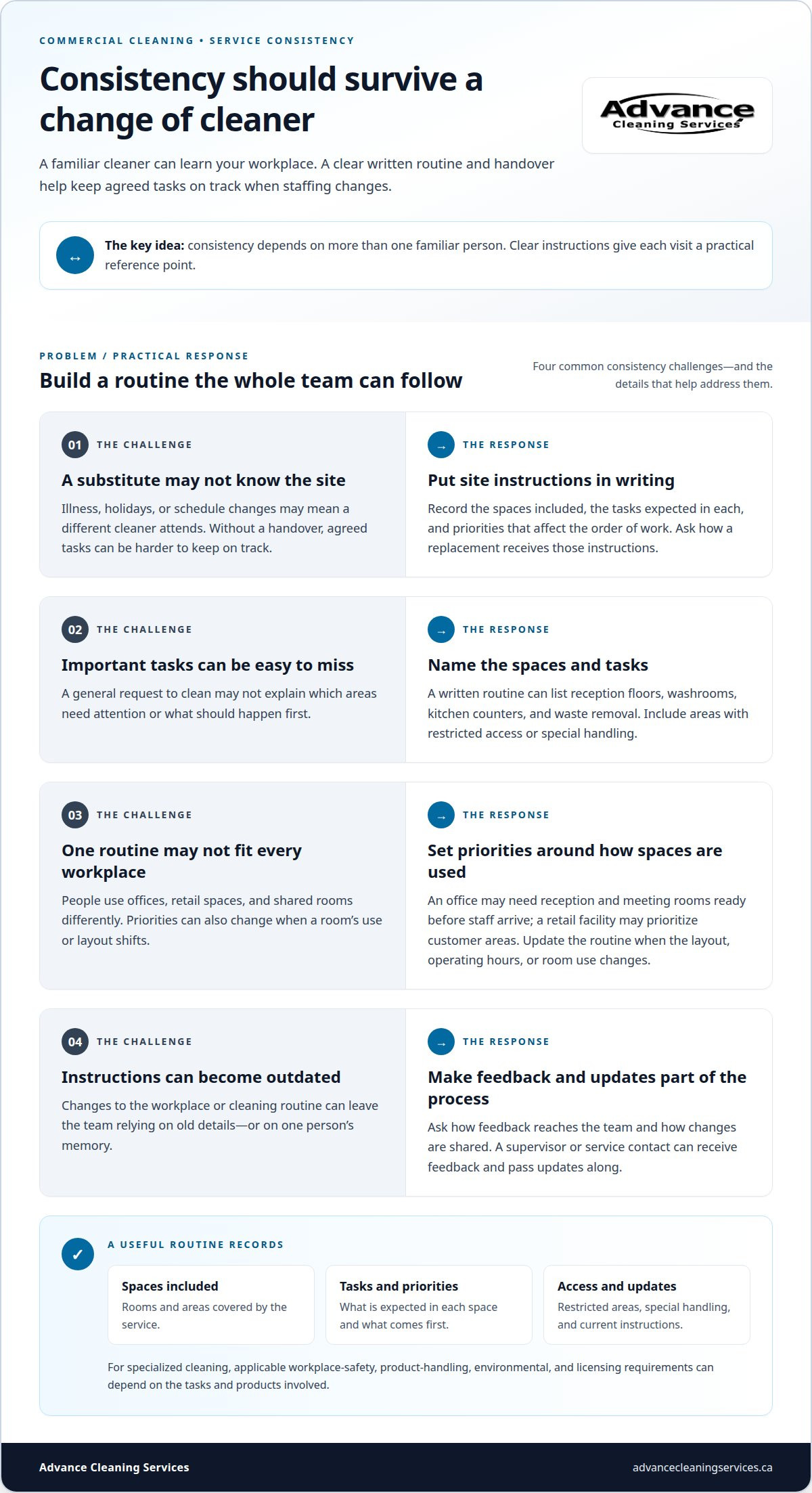
Whether the same cleaner attends each visit depends on scheduling, staffing, and the service agreement. A familiar cleaner can learn which entrances need attention, how staff use meeting rooms, and which surfaces need extra care. That familiarity can support a consistent routine. Illness, holidays, or schedule changes may require a substitute, so a clear handover helps keep agreed tasks on track.
A written routine can make commercial and janitorial cleaning more consistent. It can record priorities such as reception floors, washrooms, kitchen counters, and waste removal, as well as areas requiring restricted access or special handling. If a different cleaner attends, these details help guide the work. A supervisor or service contact can receive feedback and pass updates to the team. Clear records reduce reliance on one person’s memory.
In Lethbridge and nearby communities, residential and commercial cleaning serve different spaces and routines. A home may need attention to bedrooms and living areas, while an office may prioritize workstations, shared rooms, and washrooms. Commercial needs also vary: a retail business, professional office, and condominium common area have different traffic patterns and shared surfaces. The schedule should reflect how people use each space, rather than applying one routine everywhere.
For janitorial work in Alberta, applicable workplace-safety, product-handling, and environmental requirements depend on the tasks and cleaning products involved. Licensing requirements can also vary with the work performed. A cleaning plan should account for the facility’s activities, access rules, and product instructions, especially when specialized cleaning is involved.
To support consistent cleaning, establish the routine before service begins. Identify the spaces included, the tasks expected in each, and any priorities that affect the order of work. A business may need reception and meeting rooms ready before staff arrive, while a retail facility may prioritize customer areas. Record changes when the layout, operating hours, or use of a room shifts. Clear updates help the team follow current instructions instead of relying on outdated details.
When reviewing local janitorial services near me, ask how the service handles substitutions and communicates changes to the routine. The process should explain how a replacement receives site instructions and how feedback reaches the team. A consistent handover matters as much as having one familiar cleaner, giving each visit a practical reference point even when staffing changes.
Office and commercial janitorial services
Office and commercial cleaning plans should reflect the work happening in each facility. An office may need attention to reception, meeting rooms, washrooms, and shared kitchens. A retail business may prioritize customer areas, entryways, and checkout counters. Tasks can be organized around the spaces, how they’re used, and the site’s priorities. A clear plan helps employees understand which areas receive routine attention and what the work covers.
In Canada, janitorial services can include recurring cleaning for offices, retail spaces, condominiums, and medical facilities. Work may cover shared areas, floors, washrooms, and other agreed spaces. Because each facility has different needs, the service plan should identify the spaces and tasks involved. An office with a busy reception area, for example, may place it higher on the cleaning list than a low-traffic meeting room.
Businesses in Calgary can shape commercial cleaning around their building’s daily operations. A professional office may need meeting rooms ready for scheduled visitors, while a retail location may focus on customer-facing areas. For businesses in Alberta, a useful plan describes work by space rather than relying on a general request to clean the whole facility. It can also clarify how priorities change when a room’s use shifts.
Which local janitorial companies serve a city or postal code depends on each company’s operating area. A postal code identifies a location more precisely than a city name, particularly near a municipal boundary. In Calgary, the workplace address helps establish whether local service is a fit. This matters for a single office and for a business coordinating cleaning across multiple sites.
A commercial cleaning partner needs practical instructions to deliver a routine that suits the business. Useful details include which rooms are included, which areas need focused attention, and how access works during cleaning. A business might identify a client-facing meeting room as a priority before scheduled visits. The plan can also record changes when employees move desks or a space becomes shared.
When assessing a cleaning company, consider how its process supports the facility’s schedule and priorities. A founded date may describe a company’s history, but it doesn’t explain the cleaning routine for a particular office. A work plan provides more relevant detail: it connects each space with specific tasks and gives the cleaning team a reference when the facility changes. Businesses seeking commercial janitorial support can use those priorities to shape a service plan.
Bonding, insurance, and discretion
Bonding and insurance describe different protections, and neither phrase explains every coverage detail. A bond’s terms define the circumstances it addresses and the process for a claim. Insurance applies to covered claims under the policy’s conditions, limits, and exclusions. For a business, the key question is what protection applies to the cleaning work and who it covers. Ask for plain explanations in writing, not broad assurances.
For a janitorial service quote or contract, ask which tasks and spaces are included, how often they’re scheduled, and how changes are handled. Request clear descriptions of bonding and insurance, including coverage scope and relevant exclusions. The agreement should also identify access arrangements, points of contact, and how to report service concerns.
Commercial cleaning often involves access to work areas when employees or tenants aren’t present. A practical discretion plan covers keys, alarm codes, locked rooms, and documents left on desks. For example, a contract can specify which rooms are off-limits and how access devices are managed. These details set expectations without assuming every facility has the same security needs.
- Scope: Name the rooms, surfaces, and duties included in routine cleaning.
- Schedule: State the service days or timing agreed for the facility.
- Access: Describe how keys, codes, and restricted areas are handled.
- Coverage: Explain applicable bond and insurance terms in understandable language.
- Communication: Identify who receives feedback and records requested changes.
Dedicated staff can become familiar with a site, but a written process still matters if staffing changes. The cleaning team should know which areas require special discretion. A tenant’s private office, for instance, may need different access instructions from a shared lobby. Documenting these distinctions helps the team respect the facility’s boundaries.
Good cleaning also depends on communication when a building’s needs change. A renovation, new tenant, or change in room use can affect access and priorities. The service agreement should explain how the business communicates updates and how the cleaning plan reflects them. A clear process reduces confusion about who approved a change and which spaces it affects.
Treat the agreement as a working document, not just a signature page. If it names a contact, make sure the role is clear. If it describes coverage, check that the wording explains the relevant protections rather than relying on labels alone. This gives the business a practical reference for access, responsibilities, and service discussions.
Before work begins, align the site’s access instructions with the written scope. A locked records room, shared reception desk, and tenant workspace each require different considerations. Clear boundaries help cleaning staff work respectfully, while written terms give both parties a shared basis for discussing service and concerns.
Customer testimonials
A useful testimonial describes a specific cleaning experience, not just a positive impression. Look for details such as the facility type, work completed, and communication during service. “The reception area and washrooms were ready before our staff arrived” gives more context than “great service.” Specific comments help you judge whether professional cleaning suits your workplace.
Look for patterns across testimonials. One review might mention thorough carpet cleaning, while another describes clear communication about a missed task. Together, these comments can show what customers noticed and valued. They don’t replace a written scope, but they can suggest useful topics to discuss before service begins.
Consider whether the reviewer describes a business like yours. A retail shop’s cleaning priorities may differ from those of a medical office or shared condominium space. A detailed review might explain how the team handled public areas, staff spaces, or a change in building use. Focus on relevant details rather than assuming one customer’s experience predicts results in every facility.
Testimonials can also show how a cleaning provider responds to feedback. A review that describes a concern, the communication that followed, and the resolution offers more insight than praise alone. A customer might explain how a recurring meeting-room issue was raised and addressed. The useful information is the process described, not simply the final rating.
- Specific tasks: Notice references to floors, washrooms, windows, or carpet care.
- Communication: Look for examples of how schedule changes or concerns were handled.
- Consistency: Check whether customers describe dependable results across repeat visits.
- Relevant setting: Compare the reviewer’s workplace with your own facility.
Check the context around a testimonial, too. A review page may show a date, service type, or customer’s business category. These details help clarify what the feedback refers to. A footer stating “All rights reserved” identifies a page-content notice, not the scope or quality of cleaning, so focus on the customer’s account.
Testimonials are most useful alongside clear service information. If a reviewer praises carpet cleaning, check whether the comment describes the result, areas treated, or experience during the visit. If it only says “excellent,” it offers little detail for comparing needs. Treat feedback as context, then consider whether the work described aligns with your facility’s priorities.
Keep a short note of recurring themes as you read. Record mentions of timely communication, attention to shared spaces, and follow-through on reported concerns. These points can guide a conversation about the cleaning plan without relying on broad claims. A specific, relevant testimonial offers a clearer picture than a long collection of unqualified praise.
Janitorial services for local business industries
A cleaning routine should reflect the work performed in each facility. A dental clinic, retail shop, condominium, and industrial site don’t share the same priorities. Layouts, visitors, equipment, and staff routines all shape the plan. In Canada, industry-aware service starts by identifying which spaces need routine attention and how cleaning fits daily operations.
A retail business has a different pattern. Customer entrances, sales floors, fitting rooms, and checkout areas may need attention based on how the store operates. A grocery shop, for example, has different surfaces and traffic from a clothing boutique. A practical plan identifies the specific areas and tasks rather than applying one generic checklist to every store.
Condominium common areas serve residents, visitors, and building staff. A routine might include lobbies, corridors, elevators, and shared rooms. The property’s layout and use help set priorities. In a building with a shared lounge, for instance, that room may need a different approach from a quiet corridor. Clear task boundaries also distinguish common spaces from private suites.
Industrial facilities require attention to their specific work areas and operating routines. A warehouse, workshop, and production facility differ in layout and equipment. Cleaning methods should suit the surfaces and tasks involved, and the facility’s safety and access procedures matter. A plan can separate office areas from operational zones so the work reflects each space’s use.
- Identify the setting: Note whether the site is a clinic, shop, condominium, or industrial facility.
- Map the spaces: Separate public, staff, shared, and restricted areas.
- Set priorities: Name tasks tied to customer access, daily operations, or shared use.
- Allow for changes: Update the plan when rooms, schedules, or facility use change.
Flexible service means adapting the routine to a business’s priorities, not including every possible task in every plan. A retail store preparing a new display may need different attention from its usual schedule. A clinic may change how certain rooms are accessed. Recording each change gives the cleaning team clear direction and keeps agreed responsibilities understandable.
The key takeaway is simple: match the cleaning plan to the industry and each space’s function. For a tailored discussion about industry-specific cleaning needs, outline the facility type, spaces, and priorities that matter most.
Advance Cleaning Services Inc.
Advance Cleaning Services Inc. can arrange professional cleaning around your facility’s needs. Turn to the team for workplace cleaning, medical facility cleaning, or related carpet care. Clear priorities, such as shared areas, reception spaces, or carpets, help shape a suitable plan. The scope depends on the building and work required, so outline the spaces and tasks that matter to your business. Advance Cleaning Services provides office cleaning, janitorial services, medical facility cleaning, and carpet cleaning. If you’re ready to discuss cleaning for your workplace in Calgary, Edmonton, Red Deer, Okotoks, Lethbridge, Strathmore, Chestermere, Airdrie, Vancouver, Richmond, Burnaby, Surrey, New Westminster, Coquitlam, Abbotsford, or Cochrane, contact Advance Cleaning Services Inc.
Set a Clear Direction for Your Workplace
Choosing local janitorial services near me is a practical step toward a workplace routine that supports your business. Before arranging service, decide what a well-maintained facility should make easier for employees, visitors, or tenants. That priority gives the cleaning plan a useful purpose beyond simply completing a task list.
Advance Cleaning Services provides medical facility cleaning, office cleaning, and janitorial services. Share the type of workplace, the areas requiring attention, and your main priorities. Those details create a helpful starting point for discussing a suitable service approach. The goal is a plan that fits the setting and supports the way your business operates.
To discuss cleaning for your workplace, contact Advance Cleaning Services Inc. A clear first conversation can help you move toward a cleaner, more welcoming space with confidence.
Frequently Asked Questions
Are You Bonded and Insured?
Bonding and insurance are separate protections, each with specific terms. A general “yes” doesn’t explain what a policy or bond covers. Ask for written details describing the applicable coverage, exclusions, and claim process for the work. The service agreement should also clarify responsibilities if property is damaged or a key goes missing. Clear wording gives you a more useful basis for understanding the protections involved.
Do I Have to Provide the Cleaning Supplies?
No. Advance Cleaning Services can supply chemical and paper products for a facility. The service arrangement can also include inventory management, with ordering and restocking as needed. For example, a building can include soap and paper dispensers in its routine so essential supplies are considered alongside cleaning tasks. Confirm which products and restocking duties are part of the agreed scope so responsibilities are clear.
Do I Have to be There at the Time of my Appointment?
Not necessarily. Businesses can arrange access without having a manager present during each visit, provided the access plan is clear. A site may establish how staff enter, which rooms remain locked, and where cleaning equipment is stored. Share relevant instructions before service begins, including alarm procedures and restricted areas. A designated contact can communicate changes if access arrangements shift.
What Can I Expect From My Cleaners Regular Cleaning Visit?
A regular visit follows the agreed work plan for the spaces included. Tasks may include vacuuming carpeted areas, mopping floors, emptying garbage, and cleaning restrooms. A shared office kitchen, for example, may have counters wiped and waste removed, while a carpeted meeting room is vacuumed. The exact visit depends on the service scope, so the written plan should name the spaces and tasks covered.
What cleaning tasks are included in standard janitorial services?
Standard janitorial work can include low dusting, sweeping, mopping, restroom cleaning, glass spot cleaning, and touch-point sanitation. The team may also refill soap and paper dispensers or maintain the janitorial area. An office routine might cover washrooms, entry floors, and shared tables. Tasks vary by facility and agreement, so a detailed scope helps distinguish recurring cleaning from add-on work such as carpet stain removal.
Are janitorial providers insured, bonded, and covered by workers’ compensation?
These terms describe different matters, so one doesn’t automatically establish the others. Insurance relates to policy-defined coverage, bonding has its own terms, and workers’ compensation concerns workplace injury coverage. Ask for written information identifying what applies to the cleaning arrangement and who is covered. The contract should clarify how incidents are reported and which party handles each step, rather than relying on a broad assurance.
How can I check reviews and references for local janitorial companies?
Look for detailed comments tied to a specific setting or task. A review mentioning a retail floor, clinic reception area, or communication after a missed task offers more context than general praise. Compare accounts for recurring themes, such as follow-through or clear updates. References can add useful detail about a similar facility, but consider them alongside the written service scope and your own priorities.