
What if clearing a home could begin with care, not pressure? Compassionate hoarding assistance in Edmonton can help individuals and families plan a respectful cleanout, including sorting and removing belongings. Some materials need careful handling, so start by identifying the conditions in the home and the work required.
It’s understandable to worry about safety, heavy lifting and what will happen to the items in the home. A professional hoarding cleanup can help organize the work, manage disposal and identify items that may be suitable for recycling or donation, while keeping the person affected part of the process.
This article explains how Edmonton hoarding support can address hazardous materials, clearing and heavy lifting, and what can shape the cleanup plan. You’ll also learn how disposal, recycling and donations may fit into the work, and when a specialized cleanup service can help move the process forward.
Key Takeaways
- A respectful cleanup plan keeps the person affected involved and treats their belongings with care.
- Hazardous materials require attention during a cleanout, alongside decisions about lifting, loading and disposal.
- Sorting items by their condition and suitability can help identify what may be recycled or donated.
- Edmonton community supports, including 211 Alberta, can help people find local hoarding-related assistance.
- Professional extreme hoarding cleanup can help when the volume of belongings or condition of the home makes clearing difficult to manage alone.
Compassionate, collaborative support for people affected by hoarding
Compassionate hoarding assistance in Edmonton starts by involving the person affected in decisions about their home. A respectful plan can address practical concerns without treating belongings or personal choices as a source of blame.
Collaborative Hoarding Cleanup
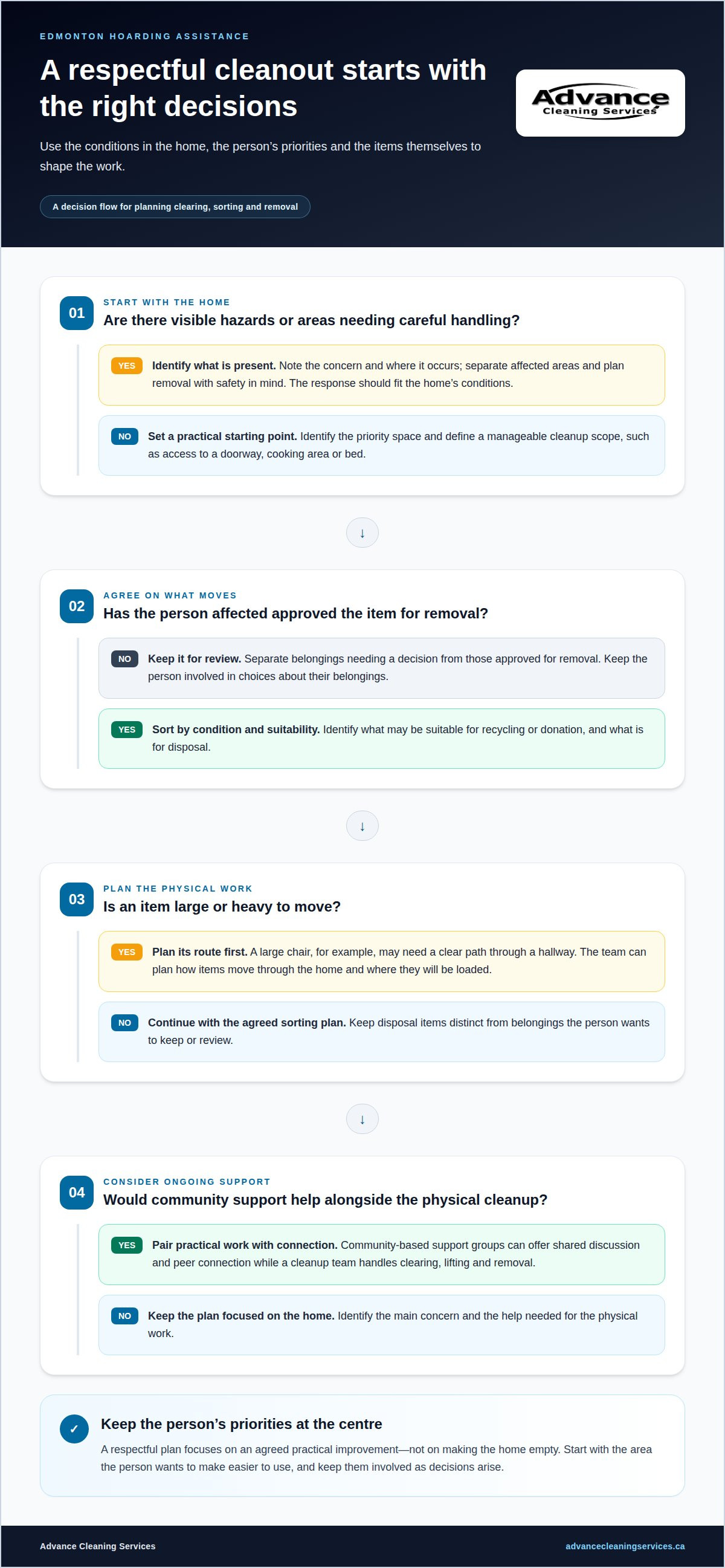
Professional hoarding cleanup differs from junk removal and standard house cleaning because it requires planning, sorting and clearing. A collaborative approach considers the person’s priorities and separates belongings approved for removal from those needing review. When choosing a service, consider whether its process accounts for personal decisions and the home’s specific needs, rather than treating every item as unwanted clutter.
Family Support Without Distress
Families can help by listening, describing specific concerns and agreeing with the person affected on a manageable priority. For example, they might focus on access to a frequently used area instead of demanding a whole-home cleanout. A professional cleanup team can keep the work focused on agreed priorities, helping relatives support practical change without taking over decisions about personal belongings.
The International OCD Foundation estimates that hoarding affects approximately 3% of the population. The estimate for Alberta is roughly 150,000 people. These figures describe the scope of hoarding, but they do not explain an individual’s circumstances. Families benefit from discussing the person’s own concerns and goals rather than assuming that the same approach suits every household.
The American Psychiatric Association recognized hoarding as a distinct mental condition in 2013. That context matters during cleanup planning because removing possessions can involve difficult decisions. A family can ask which part of daily life the person wants to make easier, then use that answer to set a specific first priority. This keeps the conversation grounded in the person’s needs.
Past interventions have sometimes caused harm. The Hoarding Disorder Foundation of Alberta says these include damaged relationships, isolation, eviction and homelessness. Compassionate hoarding assistance in Edmonton should avoid surprise cleanouts and coercive demands. Families can discuss the area to address, belongings needing review and what the person feels comfortable tackling. Clear, agreed priorities give everyone a shared basis for the work.
Measure progress by a practical improvement the person values, not by whether the home becomes empty. They might choose to make a route to a frequently used room easier to access or regain space for a particular activity. Families can keep that goal central in cleanup discussions, allowing the person affected to remain involved as decisions arise.
Edmonton hoarding support services
Support in Edmonton can include community groups, professional cleanup and practical help with home safety. The right combination depends on the person’s priorities and the conditions in the home.
Fire safety, pest, waste disposal and unsafe-housing requirements in Edmonton and Alberta depend on the conditions and applicable local rules. A support plan should identify each concern, where it occurs and the appropriate response, rather than treating every home alike.
Severe accumulation can make rooms and walkways difficult to use. Belongings might obstruct access to a doorway, cooking area or bed. A professional assessment can identify which spaces need attention first and help define a manageable cleanup scope. This gives families and support workers clear priorities to discuss.
Some home conditions may also involve pests, dust, spoiled materials or items requiring careful handling. These concerns can affect how a cleanup is organized and what should be moved first. The cleanup team can identify visible hazards, separate affected areas and plan removal with safety in mind. Conditions vary, so the response should fit what is present.
Community-based support can complement physical cleanup. This year, Edmonton Community Foundation provided $9,300 to the Hoarding Disorder Foundation of Alberta to host virtual and in-person weekly hoarding support groups. Groups offer a setting for connection and shared discussion, while a cleanup team addresses the physical work in the home.
When arranging support, describe the main concern in practical terms. A blocked hallway, a room that can no longer be used or waste that needs removal gives the service a clear starting point. Also note whether the person affected wants to participate in decisions. These details help shape a plan around safety and daily needs.
Community supports and cleanup services in Edmonton address different parts of the situation. A support group can provide ongoing peer connection; a professional cleanup team can manage clearing, lifting and removal. Both types of help can work together when a household needs practical work as well as continued support.
Keep the next step focused: identify the most pressing concern at home, describe it clearly and discuss the help needed. A family might prioritize access to a bedroom before addressing other rooms. A defined first priority makes it easier to coordinate community support and cleanup without turning every concern into an immediate demand.
Heavy lifting, loading and disposal
The work usually starts with identifying the priority area and the items to remove. The team can separate belongings for disposal from items the person wants to keep or review. This distinction matters when a pile includes everyday items, damaged furniture and personal papers that need a decision before removal.
Loading is more organized when items are grouped by their intended destination. Bagged waste, bulky furniture and items for possible recycling should not be treated as one mixed load. Sorting during removal helps keep the work orderly and gives the person affected a clearer view of what is leaving.
The time required depends on the home’s size, the amount and type of material, and access to the rooms. A single-room hoarding cleanout in Edmonton may take one day. A larger home affected by years of hoarding may require several days of intensive cleanup. The amount of lifting and the pace of decisions also shape the work.
Before removing an item, consider its condition and intended destination. A damaged mattress, a usable table and a box of personal documents call for different decisions. Identify items that may be hazardous separately so they are not handled as ordinary household waste.
- Furniture: Assess large pieces and plan a practical route out of the room.
- Household waste: Keep discarded material organized for removal and disposal.
- Personal belongings: Set aside papers or keepsakes that need the person’s decision.
- Potentially hazardous items: Separate them for appropriate handling rather than mixing them with general waste.
Disposal depends on the material and its condition. A load of mixed household items may need different handling from one made up mainly of damaged furniture. Clear sorting supports better decisions about what can be removed as waste and what may be suitable for recycling or donation.
For the person affected, a steady sequence can make the physical work easier to follow: identify the agreed area, sort items, carry and load approved removals, then clarify the next priority. This keeps lifting and disposal connected to the cleanup plan instead of turning the home into a rushed, unstructured removal job.
Recycling and donations
Sorting belongings for reuse takes more than separating everything into “keep” and “discard” piles. A hoarding cleanout may involve clothing, small appliances, furniture, paper and household goods, each with different conditions and possible destinations. The team can sort items with the person’s direction, keeping donation and recycling decisions separate from general disposal.
For donations, condition is a practical starting point. A clean, intact winter coat differs from clothing that is wet, soiled or badly damaged. A working lamp differs from one with broken parts. Set items aside for donation only when their condition and type suit the intended recipient’s needs.
Recycling also depends on material and condition. Clean, dry cardboard differs from paper mixed with food residue. A metal object differs from a broken composite item made of several materials. Separating these examples during sorting helps keep recyclable materials apart from household waste.
- Potential donations: Set aside usable clothing, furniture or household goods for review.
- Potential recycling: Group materials by type, such as paper, cardboard or metal.
- General disposal: Keep damaged or unusable items separate from reusable goods.
- Personal items: Pause for the person’s decision on photographs, letters and keepsakes.
A clear sorting sequence can reduce confusion during a room cleanout. First, identify the items the person wants to keep. Next, separate possible donations and recyclable materials. Then distinguish these from items requiring disposal. A usable chair, flattened cardboard and a damaged cushion, for example, should not be treated as one group.
Donation decisions should also respect the person’s wishes. A household item may have family meaning even if it appears ordinary to others. A box of books, a set of dishes or a chair inherited from a relative may need discussion before removal. The person affected should have a practical way to identify items for review.
Some belongings may be unsuitable for donation or recycling because of their condition, contamination or mixed materials. Keep those items in a separate disposal category. This helps prevent a stained mattress or broken appliance from being set aside as if it were ready for reuse. The team can focus sorting on what each item is and how it can be handled.
When a home contains many different belongings, organized sorting gives each category a clear purpose. A marked area for clothing, another for paper and a separate space for items awaiting a decision can help the person follow the process. This creates a clearer path through the work, with donation and recycling considered where appropriate rather than assumed for every item.
How can someone access hoarding support through 211 Alberta or Edmonton community services?
Start by contacting 211 Alberta and describing the Edmonton support needed. Explain whether the priority is community support, help with a home’s condition, or both. This gives the conversation a clear focus without requiring a family to describe every room or belonging at once.
Before contacting a service, write down a few useful details. A brief description can explain the situation clearly and keep the conversation manageable.
- Location: Identify that the household is in Edmonton.
- Main concern: Describe a practical issue, such as a blocked hallway or unusable room.
- Type of help sought: Clarify whether the need is peer support, community services, or physical cleanup.
- Person’s involvement: Explain whether the person affected wants to participate in planning.
For example, a caller might say that a family member wants support and that access to a bedroom doorway is difficult. This identifies a current concern and the kind of help needed, without framing the person as the problem.
Ask 211 Alberta about Edmonton community services related to hoarding support. A useful next step is to clarify what each referral addresses. Peer support, practical assistance and home cleanup serve different purposes. Knowing the difference helps a family understand whether a suggested service matches the immediate need.
The Hoarding Disorder Foundation of Alberta is a community organization connected to hoarding support in Edmonton. Families seeking group or community connection can ask about local options. For physical clearing, describe the specific work required, such as removing household items from one room or clearing a route through a hallway.
Keep notes after each conversation. Record the service name, the type of support discussed and any next step offered. One conversation might focus on peer support, while another addresses cleanup needs. Notes make it easier to coordinate assistance without asking the person affected to repeat the same explanation each time.
Accessing support can involve more than one conversation. A family might begin with 211 Alberta, then follow up with an Edmonton community service that matches the stated need. Keep the first priority specific, such as making a frequently used room accessible. A clear goal helps each discussion stay practical and gives the person affected a defined role.
Choose the next step based on the need identified. If the person wants connection with others, ask about community or group support. If the concern is physical accumulation, describe the cleanup required. Separating these needs helps families seek relevant assistance while keeping conversations focused and respectful.
Advance Cleaning Services: Extreme Hoarding Cleanup
Advance Cleaning Services Inc. provides Extreme Hoarding Cleanup for homes where accumulated belongings make clearing difficult to manage. The service can help with heavy lifting, loading and organised removal. Plan the cleanup around the areas that matter most, such as restoring access to a room or clearing a walkway.
Share the main priorities for the work, including items to keep or set aside for review. This helps shape a practical cleanup plan around the household’s needs. For professional support clearing a hoarded home, contact Advance Cleaning Services Inc. to discuss the work.
Choose a manageable first step
Compassionate hoarding assistance in Edmonton can begin with one clear priority, such as making a room usable or arranging help with accumulated belongings. Naming that goal gives the person affected and their family a practical place to start. It keeps decisions focused on what would make daily life easier, rather than expecting every concern to be resolved at once.
When physical clearing is the next step, Advance Cleaning Services offers Extreme Hoarding Cleanup. Other services include Medical Facility Cleaning, office cleaning and janitorial services. Share the main cleanup priorities and the areas requiring attention so the conversation can focus on the work needed.
Contact Advance Cleaning Services Inc. to discuss Extreme Hoarding Cleanup. A respectful first step can help make the path forward feel more manageable.
Frequently Asked Questions
Can you handle hazardous materials during a hoarding cleaning?
Advance Cleaning Services offers Biohazard Cleanup and Extreme Hoarding Cleanup. These specialized services address different cleanup situations, and the materials present shape the work required. Describe visible concerns, such as biological material or discarded items that may require special handling, when discussing the cleanup. This helps define the scope and distinguish biohazard concerns from ordinary household belongings that can be sorted for removal.
Do you handle sensitive or confidential situations?
Sensitive situations call for respectful, focused communication. Keep cleanup discussions centred on the property, the areas requiring attention and who should participate in decisions. Share only the personal information needed to arrange the work. For example, identify the appropriate family contact or representative, then clarify how belongings needing review should be handled. This keeps the conversation practical and considerate.
Do you work with landlords, property managers, and estates?
Extreme Hoarding Cleanup addresses physical clearing needs in residential properties, including rental homes and estates. Identify who can authorize removal and how belongings requiring review should be handled. For example, an estate representative may need to distinguish items approved for removal from documents or keepsakes requiring a decision. Clear authority and scope help keep property cleanup organized.
How much does a hoarding cleanout cost in Edmonton?
The cost depends on the property and the cleanup required, and is provided after a quote request. Factors include the volume and type of material, the number of areas involved, access for removal, and any sorting or specialized handling needed. A single room with mostly household belongings differs from a full home with mixed materials. Sharing the requested scope helps establish what the estimate covers.
What happens to items removed during hoarding cleanouts?
Removed belongings are handled according to their condition, material and agreed instructions. Usable items may be separated for possible donation, recyclable materials kept apart, and damaged or unsuitable belongings directed toward disposal. Not every item is appropriate for reuse. A clean, intact household item differs from one that is broken or soiled, so sorting helps determine its suitable destination.
Will you help sort through items, or just haul everything away?
Extreme Hoarding Cleanup is more than hauling away a mixed load. Sorting separates belongings approved for removal from items the person wants to keep or review. A box of family photographs, for example, should not be treated like damaged furniture. Identifying categories and decision points before removal helps organize the work and reduces the chance of personal belongings being mixed with general waste.
What compassionate hoarding cleanup and support services are available in Edmonton?
Edmonton support can include community connections and professional help with physical clearing. Advance Cleaning Services offers Extreme Hoarding Cleanup for homes needing organized removal. The Hoarding Disorder Foundation of Alberta has hosted virtual and in-person weekly support groups, while 211 Alberta can help people explore community-service options. These supports address different needs: peer connection and local services complement the practical work of clearing a property.
Which Edmonton organizations offer non-judgmental hoarding assistance and case management?
211 Alberta, the Hoarding Disorder Foundation of Alberta, Sage Seniors Association and the Canadian Mental Health Association are relevant Edmonton-area organizations to explore. The Hoarding Disorder Foundation of Alberta has partnered with Sage Seniors Association and the Canadian Mental Health Association on a trauma-informed response strategy. Ask 211 Alberta about current local support and whether a service offers case management, peer groups or another form of assistance.