A gym’s cleaning schedule shouldn’t compete with its class schedule. Fitness center cleaning services in Vancouver can be arranged around quieter hours, helping minimize disruption while staff clean equipment, shared spaces and change areas.
A clean facility matters, but so does uninterrupted access for members. The right schedule depends on how each area is used, which surfaces need regular attention and when detailed cleaning can happen. A tailored plan can balance routine tasks with periodic deep cleaning.
This article explains how off-hours scheduling can fit into a fitness facility’s operations, how to plan for disinfectants and surface care, and how to cover weight rooms, cardio areas, studios, locker rooms and front desks. You’ll also learn how routine and deep cleaning differ, what shapes a service plan, and when professional cleaning may be useful for your Vancouver facility.
Key Takeaways
- Coordinate cleaning with peak periods so work can be completed with less disruption to members and classes.
- Use appropriate disinfectants on shared equipment and high-touch surfaces as part of a consistent cleaning routine.
- Include weight rooms, cardio areas, studios, locker rooms and front desks in a plan shaped around how the facility is used.
- Separate routine cleaning from deeper detail work to keep recurring needs and less frequent tasks organized.
- Professional janitorial services can help fitness facilities maintain shared spaces through a cleaning plan tailored to their needs.
Do Gym Cleaners Use Disinfectants for Equipment?
Yes. Fitness facilities use disinfectants on shared equipment and frequently touched surfaces, alongside cleaning that removes visible soil.
In British Columbia, facilities should follow applicable public-health requirements and product-label directions. This article does not establish a specific numeric standard.
Equipment and Mat Cleaning
Cleaning gym equipment means addressing both the parts members touch and the surrounding exercise area. On a treadmill, that includes handrails, controls and the console. On a weight bench, it includes the pad and adjustment points. Mats need attention on both sides, especially where hands, feet or faces make contact.
Cleaning and disinfecting are related, but they are not the same step. A cleaner removes soil from surfaces; a disinfectant is used as directed for disinfection. If an EPA-approved disinfectant is unavailable, U.S. Environmental Protection Agency guidance gives a dilution of 1/3 cup of bleach in 1 gallon of water, or 70% alcohol solutions, for disinfection.
Product directions matter. Equipment materials vary, so the cleaning method should suit the surface and follow label instructions, including the required contact time. Applying a product without allowing that time can undermine the intended process. A clear task list helps ensure machine controls, grips, benches and mats aren’t overlooked.
What products and methods are used on equipment, mats, showers and locker rooms? Choose cleaning products and disinfectants for the surface, then use them according to their directions. Shower and locker-room cleaning should also cover floors, fixtures and shared touchpoints.
High-Touch and Shared-Space Cleaning
Shared spaces extend beyond workout equipment. Door handles, railings, payment terminals and locker-room fixtures are touched repeatedly. A practical cleaning sequence identifies these surfaces and addresses them alongside equipment, rather than focusing only on visible workout areas. The White House advises disinfecting frequently used items and surfaces as much as possible.
Members use fitness spaces throughout the day, so traffic can quickly return to cleaned surfaces. A routine can prioritize high-touch points while covering floors and rest areas. In showers, attention to wet floors helps manage slip risks; leave surfaces ready for safe use. Schedules can also address odour sources, including damp mats and locker-room areas.
What should Vancouver gyms do between scheduled cleanings? Keep high-touch areas and shared equipment in the cleaning plan, and respond promptly to spills and wet floors using facility procedures. This supports infection, odour and slip-risk management without treating disinfection as a substitute for regular cleaning.
Are Vancouver gym cleaning providers insured, bonded and trained in workplace safety? These are distinct provider qualifications, not one standard that applies to every provider. The service arrangement should clearly describe assigned cleaning tasks and safe product use.
Can Gym Cleaning Be Done During Off-Hours?
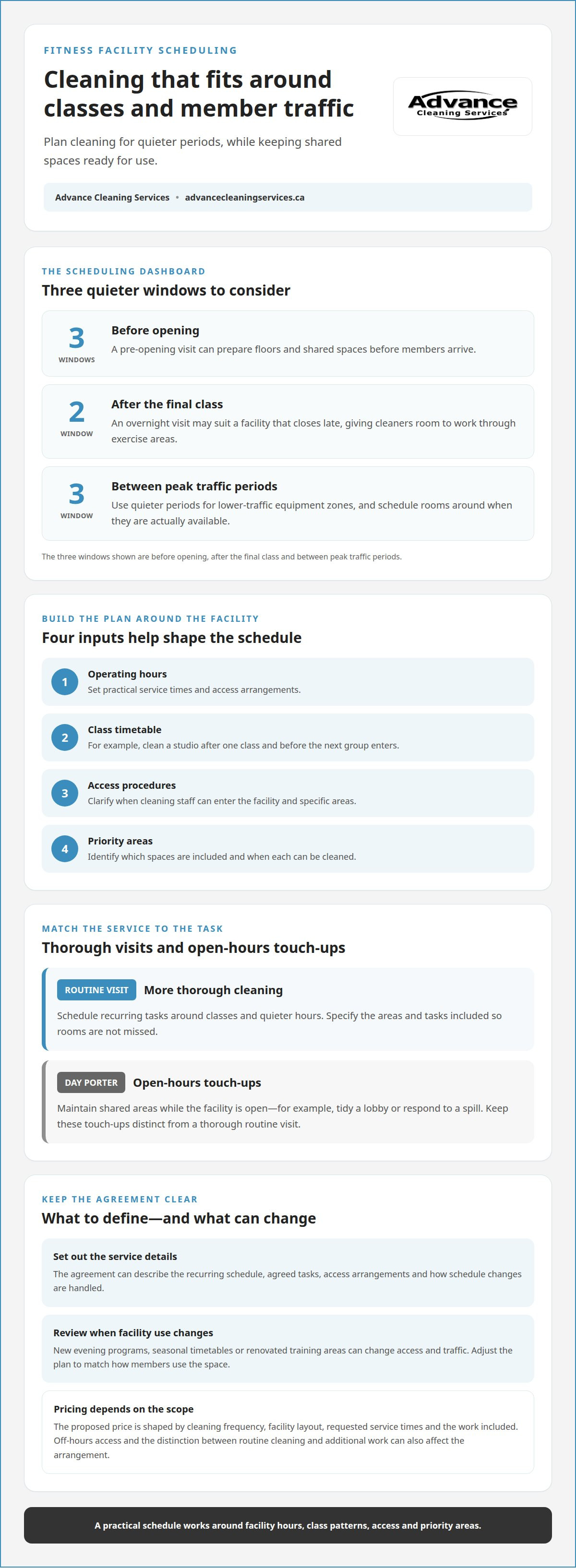
Yes. Schedule thorough cleaning during quieter periods, such as before opening, after the final class or between peak traffic windows. Fitness center cleaning services in Vancouver can be planned around operating hours, so the routine fits how the facility is used.
For Vancouver gyms, studios and recreation facilities, choose commercial cleaning schedules and plans that fit the facility’s hours. A useful plan identifies which areas are cleaned, when staff can access them and how routine tasks fit around classes and member traffic. Fitness center cleaning services in Vancouver should account for these practical details rather than assume every room is available at once.
Schedules Around Facility Hours
Off-peak service gives cleaners room to work through exercise areas without crossing busy class changeovers. An overnight visit may suit a facility that closes late, while a pre-opening visit can prepare floors and shared spaces before members arrive. The schedule should specify access times and included areas.
Some tasks need attention while a facility is open. Day porter service can maintain shared areas, such as tidying a lobby or responding to a spill. Distinguish these touch-ups from a more thorough routine visit so responsibilities and timing stay clear.
Class timetables help determine when specific rooms are available. For example, clean a studio after one class ends and before the next group enters, while scheduling quieter equipment zones during lower-traffic periods. This fits cleaning into operations instead of treating every space as available at once.
Flexible Scheduling and Contracts
A service agreement can set out the recurring schedule, agreed tasks, access arrangements and how schedule changes are handled. For example, it can define which areas receive routine cleaning and how a change in facility hours affects service timing. Clear terms help prevent missed rooms and uncertainty about responsibilities.
Pricing depends on the scope, cleaning frequency, facility layout and requested service times. The price is provided after a quote request, with those factors shaping the proposed plan. Off-hours access, the number of areas and the distinction between routine cleaning and additional work can all affect the arrangement.
Review the schedule when operating hours or class patterns change. A new evening program, seasonal timetable or renovated training area can alter access and traffic. Adjusting the cleaning plan keeps the routine aligned with how members use the facility.
To make scheduling practical, the facility’s operating hours, class timetable, access procedures and priority areas should inform the plan. Explore professional cleaning support as a next step for organizing a schedule around your space and its day-to-day use.
Cleaning weight rooms, cardio areas, locker rooms, studios, and front desks
A fitness facility needs a cleaning plan for each area, from treadmill consoles to shower floors. Routine sanitization can cover cardio touchpoints, free weights, benches, mats, locker rooms and front-desk surfaces.
Weight Rooms and Cardio Areas
In a weight room, cleaning covers bench pads, rack contact points, dumbbell grips and the floor around equipment. These surfaces see repeated contact, while dust and debris can settle beneath benches and racks. A thorough routine includes accessible touchpoints and surrounding floors, rather than stopping at equipment users can see.
Cardio equipment has its own touchpoints. A treadmill has handrails, buttons and a screen; a stationary bike has handlebars and adjustment controls. Cleaning can cover each machine’s contact surfaces, then nearby floors and stretching areas. This room-by-room approach accounts for different equipment without treating every surface alike.
Locker Rooms, Showers and Washrooms
A locker room combines benches, locker handles, counters and floors. Shower areas add walls, fixtures and wet flooring, while washrooms include sinks, taps, dispensers and toilet surfaces. Treat each area as a distinct space, with attention to member touchpoints and floor conditions that affect safe passage.
Cleaning and disinfecting serve different purposes. Remove visible soil before applying disinfectant as directed to appropriate surfaces. For example, clean sink residue, then disinfect tap handles and counter touchpoints. Shower floors and drains also need attention as part of the room’s overall sanitation.
In a studio, include mats, shared props, storage points and the floor where members exercise. Clean both sides of mats, including the side that contacts the floor. Shared props such as blocks or resistance bands also belong in the routine.
The front desk is another distinct zone. Cleaning can cover the counter, payment terminal, door handles and nearby floor, as well as the waiting area. Organize tasks by space, such as weight room, cardio area, studio, locker room and reception, so each zone has defined coverage.
For consistent results, clean equipment and shared touchpoints before floors and room details. This helps avoid repeatedly crossing freshly cleaned floors during equipment work. A written scope should name the included spaces and key surfaces, so the routine matches the facility’s layout and member use.
Customized cleaning plans based on facility needs
A customized plan matches cleaning tasks to a facility’s layout, operating schedule and member traffic. A compact studio with shared mats has different priorities from a gym with weight rooms, cardio equipment, locker rooms and washrooms.
Owners can define which spaces need routine attention, which surfaces need disinfecting and when cleaners can access each area. For example, a plan might prioritize the studio floor and shared props after classes, while scheduling locker-room and washroom cleaning for a separate visit.
What commercial fitness-centre cleaning services are available in Vancouver, BC? Plans can cover routine janitorial cleaning of fitness spaces, shared surfaces, floors and washrooms. The scope depends on the facility’s rooms, operating needs and requested tasks.
A customized scope distinguishes recurring work from occasional tasks. A gym might need ongoing attention to common areas, with carpet cleaning scheduled separately for a carpeted reception space. A studio might prioritize mats and floors. Clear task descriptions make consistent coverage easier and help address soil, odours and bacteria concerns appropriately.
Owners can also organize tasks by room and priority. A cleaning plan may specify which areas are included, what surfaces receive attention and how work fits around facility hours. This proper level of detail reduces ambiguity between routine cleaning and additional work, while helping the proposed service reflect the facility rather than a generic checklist.
How can a fitness centre compare cleaning service quotes and assess provider quality? Compare the scope, visit frequency, timing and included tasks line by line, then look for a clear description of how each area will be cleaned. A proposal should make differences in coverage understandable, not rely on a single total alone.
Quote pricing depends on the facility, requested work, cleaning frequency and schedule; the price is provided after a quote request. An on-site assessment can help establish the layout and priorities when needed, but it should not be assumed to be free. A useful proposal connects those details to specific tasks, such as cleaning studio floors, shared equipment surfaces or locker-room fixtures.
Before work begins, the facility’s representative can identify access arrangements, sensitive areas and operational changes. A renovation, new class schedule or added room may change the scope. Updating the task list when those details shift helps keep the service consistent and the customized plan aligned with daily use.
Cleaning frequency and deep cleaning
Most fitness facilities benefit from daily professional cleaning because machines and shared areas see use throughout the day. A daily routine can cover equipment touchpoints, floors, washrooms and locker rooms, while a separate deep-cleaning scope addresses areas needing more detailed attention. The right balance depends on traffic, facility layout and how members use each space.
Equipment frequency can be specific. A machine, bench and rack should be wiped with disinfectant at least once a day. A busy facility may also schedule attention to shared items between classes or during operating hours. That adds focused upkeep to the daily visit, rather than relying on one cleaning period to cover every change in use.
Cleaning frequency should follow actual use. Cardio machines used throughout the day, shared mats and frequently handled weights may need more regular attention than a staff-only storage room. A customized plan can assign tasks by area, clearly distinguishing routine work from periodic detail cleaning.
- Daily: address frequently used machines, benches, racks and shared surfaces.
- Routine visits: cover floors, locker rooms, washrooms and other facility spaces.
- Deep cleaning: schedule detailed work around the building’s condition and cleaning priorities.
Deep cleaning complements routine cleaning; it doesn’t replace recurring care. It can focus on details that regular visits may not fully cover, such as edges around equipment, hard-to-reach floor areas or buildup in changing spaces. Carpeted reception areas can also be included in a separate carpet-cleaning scope when needed.
Facility owners can set deep-cleaning priorities by reviewing how each space is used and where soil accumulates. For example, a studio with shared props may need detailed attention to storage areas, while a weight room may need work around racks and equipment bases. Name the areas and tasks in the scope instead of simply labelling a visit “deep cleaning.”
A consistent schedule supports hygiene and helps manage infection concerns, but disinfection must remain part of a wider cleaning routine. Product directions and surface compatibility shape the method, while member traffic helps determine which areas need attention most often. Adjust the plan when equipment use, room access or facility operations change.
Set up a cleaning schedule that reflects your facility’s daily use. Request help planning routine and deep cleaning for your fitness space.
Advance Cleaning Services Inc.
Advance Cleaning Services Inc. can help fitness facility operators organise janitorial cleaning around their space and priorities. If shared areas, floors or other agreed spaces need attention, its commercial cleaning support can be a practical next step. Discuss the facility’s needs to shape a clear scope and set priorities.
Advance Cleaning Services Inc. also provides office and carpet cleaning, which can suit facilities with office areas or carpeted reception spaces. To discuss cleaning support for your fitness facility, contact Advance Cleaning Services Inc.
Build a Cleaning Plan That Fits Your Facility
Start by identifying the cleaning priorities that matter most to your facility’s daily operations. Consider which spaces need steady attention, what access times suit your schedule, and whether routine janitorial support should include office areas or other shared spaces. A focused scope gives the cleaning plan a clear starting point and aligns service with how members use the facility.
Advance Cleaning Services Inc. provides Janitorial Services, Office cleaning and Medical Facility Cleaning. Its team can discuss how professional cleaning support may fit your facility’s needs. If you’re ready to plan the next step, contact Advance Cleaning Services Inc. to discuss fitness centre cleaning services in Vancouver.
A well-organized plan makes cleaning easier to coordinate with your operations. When you’re ready to shape a dependable approach for your space, contact Advance Cleaning Services to discuss your priorities.
Frequently Asked Questions
What is fitness centre cleaning?
Fitness centre cleaning is professional care for workout rooms and the shared spaces that support them. It can address dust, spills, waste and frequently handled surfaces, as well as floors and washrooms. A written scope might specify reception counters, storage areas or staff spaces alongside member areas. This clarifies the service and aligns tasks with the facility’s day-to-day needs.
How Often Should a Gym Be Professionally Cleaned?
Professional cleaning is generally scheduled daily for fitness facilities with regular member use. The service plan can also account for rooms that need attention at different times. For instance, an operator might arrange for a studio to be addressed after scheduled classes, while administrative areas fit into the regular visit. Changing class schedules, access hours and use patterns can all affect the timetable.
Is COVID-19 Cleaning Available for Gyms?
Cleaning and disinfecting services can address gym spaces as part of a facility’s regular maintenance plan. Advance Cleaning Services Inc. lists fogging sanitization monthly or weekly for high-traffic locations or larger facilities. This service option does not guarantee prevention or removal of COVID-19. The work plan should define the areas being treated and use products according to their directions.
Ready to Book Gym Cleaning in Vancouver?
To discuss cleaning for a Vancouver fitness facility, contact Advance Cleaning Services Inc. Details such as the facility’s operating hours, room uses and access arrangements can help frame the conversation. For example, let the team know if the facility includes public reception space, staff offices or member-only areas. That context helps clarify what cleaning support may suit the operation.
WHY IS GYM SANITATION IMPORTANT?
Gym sanitation supports clean, usable spaces for members and staff. Attention to waste, spills and surfaces helps keep rooms orderly and address sources of odour. A practical plan also clarifies responsibilities across member areas and staff spaces. Cleaning is one part of facility upkeep, and no cleaning routine can guarantee that illness or infection will be prevented.
What cleaning tasks are included in gym and fitness studio cleaning packages?
The included work depends on the agreed scope. A facility may request waste removal, spot cleaning, floor care, restroom sanitation or attention to touchpoints. Some operators also include staff rooms, entry areas or storage spaces. A clear task list distinguishes regular work from separately requested services, so the facility knows which rooms and duties are covered during scheduled visits.
How much does fitness center cleaning cost in Vancouver, and what affects pricing?
The price depends on the facility and requested scope, and is provided after a quote request. Factors include the areas involved, cleaning frequency, schedule and specific tasks. For example, a plan that includes office areas differs from one focused on member spaces. A written proposal can make the scope and included tasks clear, helping facility operators understand what the quoted service covers.
How often should a gym schedule professional cleaning and disinfection?
Set the schedule according to how the facility operates and which areas receive the most use. Review the timetable when adding classes, changing access hours or opening new spaces. For example, a new group program may affect the cleaning plan for its studio and shared storage areas. Revisiting the schedule helps keep assigned tasks aligned with facility operations.