A longer cleaning checklist doesn’t guarantee a cleaner office. If no one knows who owns each task or how to confirm it’s done, high-touch surfaces, washrooms and shared spaces can still be missed. A useful office cleaning checklist for managers connects each task to a clear frequency, a responsible person and a simple way to review the result.
It’s understandable to want one practical system that works across busy workstations, meeting rooms and break rooms. The key is to make expectations clear without making the checklist difficult to use. When routine upkeep is documented and reviewed consistently, managers can spot gaps and decide whether in-house cleaning is meeting the office’s needs.
This guide provides an adaptable checklist organized by area and frequency, from daily attention to periodic deeper cleaning. You’ll also find ways to assign responsibilities, record completed work and inspect cleaning quality. Use it to set a consistent standard, then compare your current coverage with the support a professional office cleaning or janitorial service could provide.
Key Takeaways
- Build an office cleaning checklist for managers around clear tasks, frequencies, owners and completion records.
- Map the office by area, then use a simple sequence to assign and review cleaning responsibilities.
- Separate reasonable staff upkeep from cleaning tasks that may call for consistent professional coverage.
- Use brief inspections and staff feedback to document missed tasks, recurring concerns and follow-up.
- Turn your checklist into a practical scope for comparing in-house upkeep with professional office cleaning or janitorial support.
What Should an Office Cleaning Checklist for Managers Cover?
A manager’s goal is consistent cleanliness, not a longer list of vague expectations. An effective office cleaning checklist for managers is a working record that states what needs attention, how often, who is responsible and whether the task was completed. That clarity helps prevent routine duties from being overlooked and gives managers a practical way to review standards.
Keep cleaning tasks distinct from work that requires another provider. Routine upkeep may include wiping shared surfaces, emptying bins and caring for floors. Periodic deep cleaning covers less frequent, more thorough work. Repairs, such as a leaking tap or damaged flooring, should be recorded and directed to the appropriate maintenance contact rather than treated as cleaning tasks. For a broad overview of the scope and common tasks involved in commercial cleaning, consult this reference.
Which office areas belong on the checklist?
Walk through the office and record every space people use, including areas that are easy to miss. Consider reception and client-facing spaces, workstations, meeting rooms, kitchens or break rooms, washrooms and shared touchpoints such as door handles and switches. For each applicable area, identify relevant surfaces and tasks:
- Floors: Note sweeping, vacuuming or mopping as appropriate to the surface and its condition.
- Waste and recycling: Include emptying bins and keeping collection areas tidy.
- Glass and visible dust: List interior glass, counters, ledges and other surfaces that collect dust or show marks.
- Shared touchpoints: Specify commonly handled surfaces in shared spaces.
Adapt the list to your site. A break room, reception area or client-facing space may need its own task lines rather than being grouped under “general cleaning.”
How should managers set cleaning frequencies?
Use daily, weekly and periodic categories as a starting framework, not a universal schedule. For example, a manager might list washroom checks and shared touchpoints as daily priorities, while assigning broader dusting or floor care to a weekly routine. Reserve periodic tasks for work needed less often, such as deeper cleaning. Set the actual frequency by considering traffic, shared use and visible conditions.
Review the schedule when occupancy or operations change, or when seasonal conditions affect how quickly floors and entrances collect dirt. If an area repeatedly looks untidy between scheduled tasks, adjust its frequency or clarify ownership. The checklist should reflect how the office is used and be updated when that use changes.
How to Organize Office Cleaning Tasks by Area and Frequency
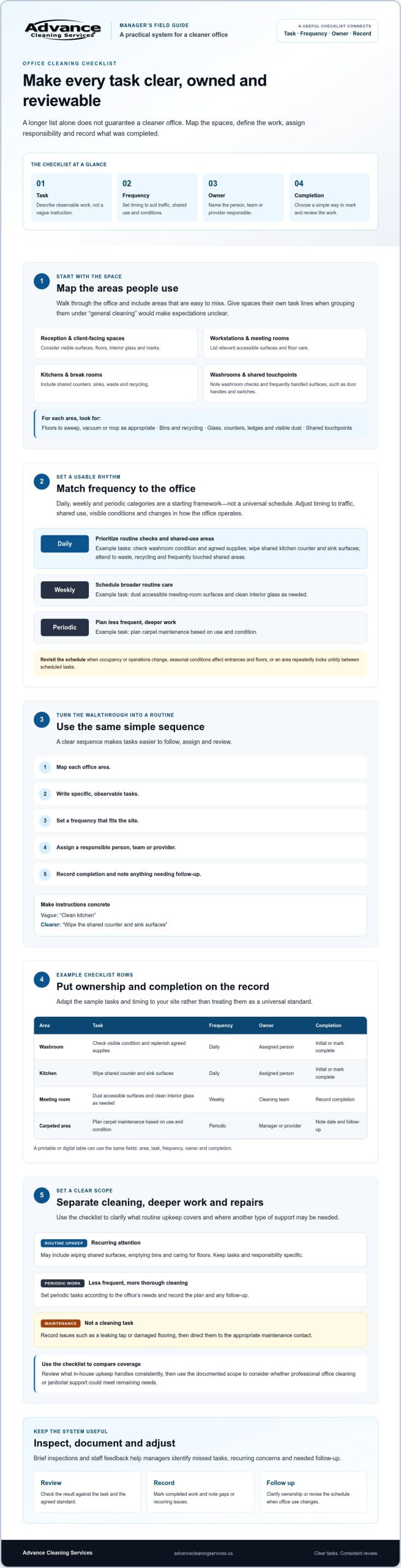
Turn the office walkthrough into a routine people can follow. Map each area, list observable tasks, assign an owner, set a frequency and decide how completion will be recorded. This sequence makes an office cleaning checklist for managers easier to use and review. Avoid vague entries such as “clean kitchen.” Specify the work, such as wiping the counter and sink, and how the responsible person should mark it complete.
Use a table that can be printed or maintained digitally. Adjust the sample tasks and timing to your site rather than treating these frequencies as a universal standard.
| Area | Task | Frequency | Owner | Completion |
|---|---|---|---|---|
| Washroom | Check visible condition and replenish agreed supplies | Daily | Assigned person | Initial or mark complete |
| Kitchen | Wipe shared counter and sink surfaces | Daily | Assigned person | Initial or mark complete |
| Meeting room | Dust accessible surfaces and clean interior glass as needed | Weekly | Cleaning team | Record completion |
| Carpeted area | Plan carpet maintenance based on use and condition | Periodic | Manager or provider | Note date and follow-up |
What belongs on a daily office cleaning checklist?
Focus daily attention on washrooms, kitchen surfaces, waste and recycling, and frequently touched shared areas. Write each task so completion is visible: “empty kitchen waste bin” is clearer than “check kitchen.” Add prompt-response items too. A spill or debris in a walkway should be reported and addressed when noticed, not left until the next scheduled cleaning round. Record completion consistently and flag anything that needs follow-up.
For cleaning products, follow the current label directions. Before assigning product-related work, verify the workplace’s procedures for handling products and accessing or using Safety Data Sheets (SDS). Make sure the checklist reflects the site’s current instructions rather than assuming one procedure applies everywhere.
Which weekly and periodic tasks should managers plan?
Consider more detailed floor care, low-touch dusting and interior glass on a weekly or periodic basis, depending on traffic, materials and visible condition. For less frequent work, consult relevant manufacturer recommendations and review the surface before setting a schedule. Planned carpet maintenance can be considered separately. See this commercial carpet cleaning guide for facility planning considerations.
As conditions change, revise the task list and ownership so scheduled work stays practical. If you’re comparing your in-house plan with professional coverage, review office cleaning services as one option for defining a consistent scope.
Should Staff or Professional Office Cleaners Handle Each Task?
Decide task by task rather than assuming employees can cover the full cleaning programme. Staff upkeep may work for simple personal-area habits, while shared spaces and recurring cleaning need clear ownership, dependable coverage and a way to check completion. Consider the scope of work, how consistently it can be completed, who oversees it and what happens when a task is missed. An office cleaning checklist for managers helps make responsibilities visible without making every employee responsible for the entire office.
What cleaning tasks can office staff reasonably manage?
Agree on modest, practical habits that fit employees’ roles. For example, staff can keep personal work areas orderly, remove their own dishes and report a spill or other concern through the agreed process. These habits support a tidy workplace, but they shouldn’t replace an assigned cleaning plan.
Keep washroom sanitation, waste handling and shared-space standards under designated responsibility. Don’t ask untrained employees to manage specialized or potentially hazardous cleanup, such as emergency plumbing leaks or building moisture issues where specialized providers like EcoPlanet Property Services are needed. Instead, document who should be notified and how the issue will be escalated. Clear boundaries help prevent essential work from becoming an informal duty that no one reliably owns.
When is professional office cleaning worth considering?
Professional support may be worth exploring if in-house coverage is inconsistent, staff responsibilities are unclear, or managers have difficulty maintaining oversight. Compare options by looking at the work included, not just the general label of a service. Ask prospective providers to define:
- Areas covered: Which rooms and shared spaces are included?
- Task frequency: How often is each agreed task scheduled?
- Exclusions: What falls outside the cleaning scope?
- Escalation: How are missed tasks, damage or other concerns reported?
These details give you a fair basis for comparing professional coverage with your current arrangement. They don’t guarantee a particular outcome or mean outsourcing will always cost less. Use the checklist to identify where coverage is dependable and where clearer expectations or added support may help.
Workplaces that need attention to shared areas during operating hours may also ask whether day porter support is suitable. Confirm the provider’s actual availability, duties and coverage rather than assuming a particular schedule. For broader planning considerations, review this guide to professional janitorial services in Alberta. It can help managers frame questions about service scope and expectations.
Advance Cleaning Services offers office cleaning, routine janitorial services and day porter support. The company serves clients in Alberta and the Vancouver area, including Calgary, Edmonton, Red Deer, Okotoks, Lethbridge, Strathmore, Chestermere, Airdrie, Cochrane, Vancouver, Richmond, Burnaby, Surry, New Westminster, Coquitlam and Abbotsford. Confirm current availability for your location. You can also consider professional office cleaning from Advance Cleaning Services alongside your in-house plan.
How Can Managers Inspect, Document, and Improve Office Cleaning?
A cleaning checklist is most useful when managers review it consistently and turn observations into clear follow-up. Use a brief walkthrough to compare completed tasks with visible conditions, then record any gaps. The office cleaning checklist for managers should support a fair review, not rely on a general impression that an area “looks clean.”
What should a manager check during a cleaning walkthrough?
Follow the same route and criteria each time. Review reception, shared rooms, kitchens, washrooms and work areas against the agreed task list. Note specific observations, such as a missed bin, a visible spill, an odour, a surface that needs attention or a supply gap. Record staff feedback when it points to a recurring concern, while avoiding assumptions about its cause or health effects.
Compare each observation with the documented service scope. If an expected task appears incomplete, note the area, task and date, then report the discrepancy through the agreed contact. This creates a clear record for discussion and helps distinguish a missed task from work that wasn’t included in the scope.
How can managers make checklist results actionable?
Give each follow-up item a responsible role and a practical due date. Keep notes specific and easy to review. For example, “meeting-room table not wiped, notify cleaning contact, review at next inspection” is more useful than “meeting room needs work.” Track repeat issues to see whether instructions, timing or the agreed scope need adjustment.
Use a consistent status for each item, such as completed, follow-up required or not applicable. Over time, this makes recurring patterns easier to identify and gives managers a grounded basis for updating procedures or discussing expectations with a provider.
Product handling and workplace requirements can vary by site. Verify the relevant provincial workplace guidance and your organization’s current procedures for cleaning products and Safety Data Sheets. For a clinic, keep routine office upkeep separate from specialist cleaning protocols. Consult this medical facility cleaning guide when reviewing requirements for a medical setting.
If you need help establishing clear cleaning coverage and review expectations, explore professional office cleaning support as an option for your workplace.
Choosing a Cleaning Partner and Using the Checklist
Your completed checklist can do more than organize in-house work. It gives you a clear scope for comparing your current arrangement with professional office cleaning or janitorial support. Use the same task list and expectations for each option so you can assess coverage, communication and oversight consistently.
What should managers ask before selecting an office cleaning service?
Ask prospective providers to explain how their proposed service fits the actual needs of your building. Clarify which areas and tasks are included, how frequencies are agreed upon and what falls outside the scope. A task on your checklist shouldn’t be assumed to be included unless it’s confirmed.
Discuss practical arrangements before making a decision. Confirm the points of contact, how building access will be handled, how concerns or missed tasks should be reported, and how service expectations will be reviewed. Share relevant operating-hour constraints and site-specific cleaning requirements, then ask how the provider would account for them. Clear answers help you compare proposals fairly and identify assumptions that need to be resolved.
Also confirm that the provider currently serves your location before arranging a site discussion or requesting a proposal. Availability and coverage can vary, so verify directly rather than relying on a general service-area statement.
How can a manager start with a practical cleaning plan?
Begin with a workplace walkthrough. Note high-use areas, flooring and surfaces, along with access or operating constraints that could affect the plan. Then use your office cleaning checklist for managers to identify essential tasks, assign ownership and record how you’ll review whether the arrangement is working. Start with a manageable scope and make adjustments based on documented observations and feedback.
A short review period can help reveal whether tasks are appropriately assigned and scheduled. Look for unclear responsibilities, coverage gaps or items that need a different frequency. If you’re evaluating professional support, bring those observations to the conversation. They help turn a general request for cleaning into a useful discussion about your office’s particular needs.
Advance Cleaning Services provides commercial office cleaning and routine janitorial services, including day porter support. If consistent coverage is a priority, discuss office cleaning services with Advance Cleaning Services and confirm whether service is available for your location.
Put Your Office Cleaning Plan Into Practice
A well-managed cleaning plan gives your team clear expectations and a reliable way to review how the work is going. Use your checklist to guide decisions as your office needs evolve.
If professional support is part of your plan, Advance Cleaning Services offers office cleaning, routine janitorial services and day porter support. Discuss your office cleaning requirements with Advance Cleaning Services and take a practical next step toward the coverage your workplace needs.
With clear communication and a plan that fits your space, you can keep office cleaning organized and manageable.
Frequently Asked Questions
What should be included in an office cleaning checklist for managers?
Include each area, its cleaning tasks, frequency, owner and a way to record completion. An office cleaning checklist for managers might cover reception, workstations, meeting rooms, kitchens, washrooms, floors, waste and recycling, visible dust, glass and shared touchpoints. Separate routine tasks from periodic deep cleaning, repairs and work that needs another provider. Tailor the list to how people use your office, then review it when conditions change.
How often should an office be professionally cleaned?
Set professional cleaning frequency according to office traffic, shared use, observed conditions and the tasks included in the service scope. A busy washroom or kitchen may need more frequent attention than a low-use meeting room, while some floor or detailed cleaning can be scheduled periodically. There’s no single schedule that suits every workplace. Review the arrangement if occupancy, operations or seasonal conditions change, and confirm the proposed frequency with the provider.
Can office employees be responsible for cleaning shared spaces?
Employees can follow agreed habits, such as clearing personal work areas, putting away dishes and reporting spills. That doesn’t mean they should own the full cleaning programme. Assign responsibility for washroom sanitation, waste handling and shared-space standards so those tasks aren’t left to informal expectations. Avoid asking untrained employees to handle specialized or potentially hazardous cleanup. Clear roles help staff understand what they can do and whom to contact when an issue needs attention.
What should managers inspect after office cleaning is completed?
Review the agreed tasks and visible condition of reception, shared rooms, kitchens, washrooms and work areas. Look for specific issues such as an unemptied bin, a missed surface, visible debris, odours or supply gaps. Record observations against the service scope rather than relying on a general impression. Note the area, task and date, then report discrepancies through the agreed contact. Consistent criteria make follow-up clearer and help reveal recurring concerns.
How do you create a daily office cleaning checklist?
Walk through the office and identify tasks that need routine attention, such as checking washrooms, wiping shared kitchen surfaces, emptying waste and attending to frequently touched areas. Write each task so completion can be observed and recorded. Assign an owner, specify how to mark the work complete, and include a way to report spills or debris when noticed. Confirm that any product use follows current label directions and workplace procedures.
What is the difference between janitorial services and office cleaning?
The terms can overlap, so compare the specific tasks and coverage rather than relying on the service name alone. Office cleaning describes cleaning for an office setting, while janitorial services often refers to routine upkeep across a facility. The actual scope may vary by provider. Ask which areas, tasks and frequencies are included, what falls outside the agreement, and how concerns are reported. Advance Cleaning Services lists both office cleaning and routine janitorial services.
When should a manager hire a professional office cleaning company?
Consider professional support when in-house coverage is inconsistent, responsibilities are unclear or managers can’t reliably oversee recurring tasks. Compare the proposed scope, communication process and review practices with your checklist, and confirm service availability for your location. Advance Cleaning Services serves clients in Alberta and the Vancouver area, including Calgary, Edmonton, Red Deer, Okotoks, Lethbridge, Strathmore, Chestermere, Airdrie, Cochrane, Vancouver, Richmond, Burnaby, Surry, New Westminster, Coquitlam and Abbotsford. Confirm current availability directly.