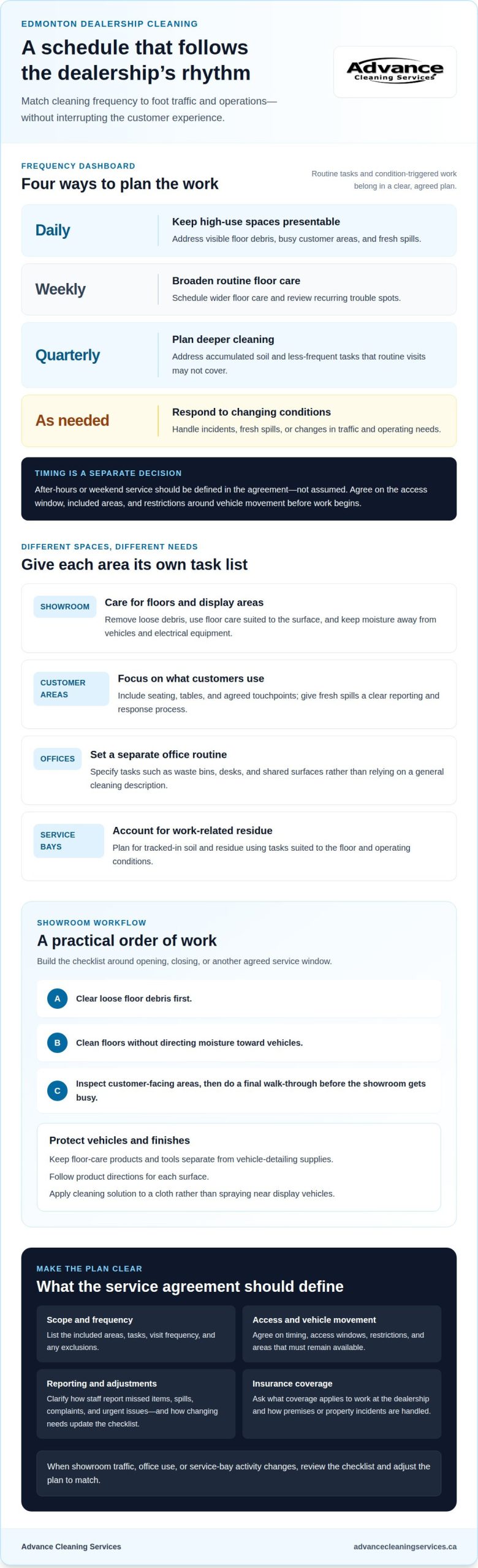
A dealership’s cleaning schedule should support the customer experience, not interrupt it. Car dealership cleaning services in Edmonton can be scheduled daily or weekly, with quarterly deep cleaning, based on foot traffic and operational requirements. After-hours or weekend timing is a separate part of planning, not something to assume.
A clean showroom matters, but it is only one part of a dealership. Customer areas, offices, washrooms, and service spaces each have different cleaning needs. A practical plan reflects how people use those areas throughout the day.
This article explains which dealership areas can be cleaned, how daily, weekly and deeper cleaning schedules work, and what to ask when hiring a cleaning service. You’ll also learn how to think about service scope, insurance coverage, and how complaints or urgent issues are handled, so you can make a practical decision for your Edmonton dealership.
Key Takeaways
- Match routine cleaning frequency to dealership traffic and operations, and consider quarterly deep cleaning for tasks that need a less frequent schedule.
- Define which areas and tasks are included, then clarify how insurance coverage and complaints or urgent issues are handled.
- Identify the carpet and upholstery areas that need attention so cleaning can be planned around their use and condition.
- Consider how interior vacuuming and wipe-downs fit into a broader cleaning plan for dealership spaces.
- Learn how office cleaning, janitorial services and carpet cleaning from Advance Cleaning Services can support relevant dealership cleaning needs.
Daily, weekly, monthly, and as-needed cleaning schedules
Edmonton businesses can schedule commercial cleaning daily or weekly, depending on foot traffic and operational requirements. Quarterly deep cleaning can cover buildup that routine visits may not address. The right plan separates repeatable daily tasks from work triggered by condition, such as a spill in a customer lounge or winter residue near an entrance.
Do Edmonton cleaners offer daily, weekly, and after-hours dealership cleaning? Daily and weekly schedules are options for Edmonton businesses, while after-hours or weekend timing should be defined in the service agreement. Set the access window, areas included, and any restrictions around vehicle movement before work begins.
A useful schedule assigns each task a frequency and location. A showroom checklist might include removing visible floor debris, wiping agreed touchpoints, and tidying customer seating. Offices may need a separate routine for waste bins, desks, and shared surfaces. Schedule less frequent tasks separately, and make clear how staff should report spills or unexpected messes.
What cleaning do showroom floors, service bays, and customer areas need? Showroom floors need regular debris removal and care suited to the surface. Customer areas need attention to seating, tables, and touchpoints. Service bays require a distinct plan for tracked-in soil and work-related residue, with tasks suited to the floor and operating conditions.
What products and methods are used to clean vehicle showrooms without damaging cars or finishes? Keep floor-care products and tools separate from vehicle detailing supplies, and follow product directions for each surface. Apply cleaning solution to a cloth rather than spraying near display vehicles, and control moisture around cars and electrical equipment.
Build the showroom checklist around opening, closing, or another agreed service window. The sequence matters: clear loose debris first, clean floors without directing moisture toward vehicles, then inspect customer-facing areas. A final walk-through can catch missed spots before the showroom becomes busy. “Spotless” should describe a visible standard, not replace task descriptions.
- Daily: address visible debris, high-use customer areas, and fresh spills.
- Weekly: schedule broader floor care and review recurring trouble spots.
- Quarterly: plan deeper cleaning for accumulated soil and less-frequent tasks.
- As needed: respond to specific incidents or changes in traffic.
A cleaning agreement should spell out the scope, frequency, access arrangements, and process for adjusting tasks. Staff need to know which areas are covered and how to report a missed item. When showroom traffic, office use, or service-bay activity changes, review the checklist and update the plan to match.
What questions should I ask before hiring a cleaning service?
Dealership carpets and upholstery can collect tracked-in soil, dust, and spills, especially near entrances, reception desks, and customer seating. Start by identifying the rooms, surfaces, and traffic patterns that need attention. Request a written scope listing included areas, routine tasks, specialty work, and exclusions. Clear details make it easier to understand what each visit covers.
Carpet shampooing and steam cleaning are different approaches. Ask which method suits each area, considering the carpet material, soil, stains, and drying requirements. Clarify how furniture, edges, and corners will be handled, and how the space will stay clear during cleaning. A busy customer lounge may need a different plan from a lightly used office.
Use these questions to make the scope practical:
- Which areas are included? Name the showroom entrance, offices, customer lounge, and any carpeted service reception space.
- What does the upholstery work cover? Specify seating, fabric surfaces, and visible spots that need attention.
- Which cleaning method is planned? Ask how shampooing or steam cleaning suits the particular carpet and its condition.
- How is disinfection handled? Clarify whether it is a separate task from soil removal and which surfaces it applies to.
- What happens after a concern or urgent issue? Understand the process for reporting missed work, complaints, or an unexpected spill.
Insurance coverage also belongs in the conversation. Ask what coverage applies to work at the dealership and how incidents involving premises or property are handled. A clear answer should explain the relevant scope without relying on a general assurance. Discuss access, vehicle movement, and areas that must remain available to customers or staff during the visit.
Plan carpet and upholstery care around appearance and use, not just a calendar. A traffic lane near the showroom entrance may need focused attention, while a private office may need less frequent restorative work. Ask how the plan distinguishes routine maintenance from deeper treatment and how the method changes for upholstery. The suitable process depends on the surface and the cleaning product’s directions.
Record the agreed areas, methods, schedule, access arrangements, and complaint process in the service agreement. For a dealership reviewing commercial carpet cleaning, a clearly defined scope helps connect the requested work with the spaces that need care.
Interior vacuuming and wipe-down
“Interior cleaning” can mean two different jobs at a dealership: preparing vehicles for presentation and cleaning the building’s interior. Keep those scopes separate. Vehicle seats, dashboards, and controls need care suited to their materials, while reception desks and offices follow a commercial cleaning routine. Clear boundaries prevent facility cleaning from being mistaken for vehicle detailing.
For vehicle interiors, a practical sequence starts by removing loose rubbish and vacuuming accessible carpet and upholstery. Then wipe agreed hard surfaces, such as door panels or dashboard areas, using a method suited to each finish. Take care around screens, buttons, switches, and seams. Follow product directions and use an appropriate cloth rather than applying products directly to sensitive components.
Before vehicle-interior work begins, define which vehicles and surfaces are included. A showroom may contain display models, customer trade-ins, and vehicles awaiting service, each with different access needs. Specify whether the work covers empty vehicles only or includes areas with personal belongings. Also identify who authorizes access and how keys are handled.
- Vacuuming: Remove loose debris from accessible floor areas, mats, and seat seams without forcing tools against delicate trim.
- Wipe-down: Clean only the agreed hard surfaces, following product directions for the material.
- Final review: Check for visible debris, missed touchpoints, and any moisture left on cleaned surfaces.
For building interiors, vacuum carpeted offices, waiting areas, and customer lounges. A separate wipe-down can cover desks, counters, and shared touchpoints included in the scope. Restrooms need their own task list and cleaning tools, rather than being treated as an extension of vehicle-interior work. Keeping tasks distinct makes completed work easier to review.
Exterior vehicle washing is separate from interior vacuuming. Specify whether the request covers the building, vehicle cabins, or both, then define the areas and access arrangements. For example, a facility plan might include vacuuming the customer lounge carpet, while vehicle detailing remains a separate service.
Use a checklist that names each area, surface, and task. For a vehicle cabin, record vacuuming and approved hard-surface wipe-down separately. For the building, list office, customer-seating, and restroom tasks individually. This helps staff understand what was completed and identify missed items without confusing facility cleaning with vehicle preparation.
Car dealership cleaning
Dealership facility cleaning can include floor care, restroom cleaning and sanitation, waste removal, and wiping agreed surfaces. A service plan can cover the showroom, customer lounge, offices, and service reception, with specific tasks assigned to each area. Vehicle detailing is separate from cleaning the dealership building.
Map the customer journey from the entrance to the sales desk to identify the surfaces customers see first, such as entry mats, counters, seating, and interior windows. A cleaning plan can include removing visible debris, wiping agreed touchpoints, and tidying the lounge. Distinguish customer-facing areas from staff-only spaces, such as offices or a lunch area.
Service reception has different cleaning needs from a showroom. Soil may collect near the service counter, while customer seating needs attention between busy periods. A written scope can name each space and task, such as wiping counters, emptying waste bins, and cleaning accessible floor areas. Clear descriptions make completed work easier to review.
Cleaning should follow a deliberate sequence: clear loose debris, clean surfaces, then finish the floors. This helps prevent dust from settling on a freshly cleaned floor. Separate tools for restrooms and other spaces keep tasks organized. The service plan can also specify who handles access and which rooms must remain available during operating hours.
- Showroom: Address visible floor debris, entry areas, counters, and approved touchpoints.
- Customer lounge: Clean tables, seating surfaces, and nearby floors.
- Offices: Follow the agreed scope for desks, shared surfaces, and waste bins.
- Washrooms: Specify fixtures, counters, floors, and waste removal as separate tasks.
- Service reception: Include the counter, customer seating, and accessible floor surfaces.
Interior windows can be included as an agreed task when they are accessible and within scope. Specify which glass surfaces need attention, such as the showroom entrance or a partition beside the sales desk. This distinguishes reachable interior glass from other window work and avoids assuming every pane is part of routine cleaning.
Clarify how staff should report a missed task or new spill. For example, a team member might spot a spill beside the customer entrance during the day. An agreed reporting process directs the issue to the appropriate cleaning task without confusing routine facility care with vehicle preparation.
Treat “pristine” as a visual goal, then define it through observable tasks. A clean entrance, tidy customer seating, and clear counters give staff practical points to review. This makes the cleaning plan specific to the dealership’s surfaces and daily use.
Which companies provide car dealership cleaning services in Edmonton?
Edmonton businesses can look to commercial cleaning companies and janitorial providers for dealership facility cleaning. The right fit depends on whether the requested work covers a showroom, offices, customer areas, or carpeted spaces. Vehicle detailing is a separate service from cleaning a dealership’s premises, so define which job you need before comparing scopes.
Start with the work itself. A written scope should identify dealership areas and tasks rather than relying on a broad label such as “full service.” Specify whether it includes the showroom floor, service reception, customer seating, offices, and washrooms. Clarify whether the agreement covers regular maintenance, carpet cleaning, upholstery care, or selected tasks only.
Set the cleaning schedule according to foot traffic and operational requirements. Consider customer access, staff routines, and areas that need less frequent attention. If the work must happen outside public hours, discuss the access window and responsibilities in the agreement. A practical plan makes timing and boundaries clear.
Use these points to assess whether a provider’s proposal suits your dealership:
- Scope: Are the listed spaces and tasks specific enough to review after each visit?
- Insurance: What insurance coverage applies to the cleaning work and dealership premises?
- Communication: How are complaints, missed tasks, or urgent cleaning needs reported and handled?
- Methods: Does the proposal distinguish facility cleaning from vehicle detailing and identify appropriate care for carpet or upholstery?
- Scheduling: Does the plan account for customer traffic and the dealership’s operating routine?
Ask for the proposed tasks and schedule in writing. Consider a customer lounge with carpet, upholstered seating, and shared tables: the scope should identify which surfaces receive attention, how often each task occurs, and how staff communicate concerns. This detail is more useful than a general claim of dealership experience.
Car dealership cleaning services in Edmonton can come from commercial cleaners with different scopes, so compare the actual tasks rather than relying on a provider label. A clear service agreement helps align the cleaning plan with the showroom, offices, and customer areas that need care. Explore commercial cleaning support to discuss a facility-focused cleaning plan.
Advance Cleaning Services: Medical Facility Cleaning
Advance Cleaning Services Inc. provides commercial and office cleaning, janitorial and day porter services, and carpet cleaning for commercial spaces. These services can support dealership offices, shared areas, and carpeted customer spaces through a clearly defined cleaning scope. The company also cleans medical, dental, and veterinary facilities, where cleaning needs differ from those of dealership spaces.
For a dealership, identify the areas needing routine care, such as offices or carpeted reception areas, and list the requested tasks. This helps shape a cleaning plan around the building’s use without confusing facility cleaning with vehicle detailing.
Contact Advance Cleaning Services Inc. to discuss a cleaning plan for your dealership facility.
Set a clear next step for your dealership
Before arranging cleaning, identify where a consistent facility-care plan would help staff and visitors. Car dealership cleaning services in Edmonton should be scoped around the building’s actual needs, keeping vehicle detailing distinct from office and janitorial work. This gives you a practical starting point for discussing the spaces and tasks to include.
Advance Cleaning Services Inc. offers Office cleaning and Janitorial Services for commercial spaces, as well as Medical Facility Cleaning for clinics. If your dealership needs support with its office or shared facility areas, start a conversation about the scope that fits those spaces. Contact Advance Cleaning Services Inc. today to discuss your cleaning needs. A clear conversation is a useful first step towards a well-organized plan.
Frequently Asked Questions
Can cleaning be done after business hours or on weekends?
Cleaning times can be arranged around dealership operations when the service agreement defines the access window. Daily and weekly schedules are available to Edmonton businesses, while after-hours or weekend timing should be agreed as part of the plan. For example, set out when staff can provide access, which areas must remain open, and whether vehicles or equipment need to be moved before cleaners arrive.
Why Choose Professional Car Dealership Cleaning in Edmonton?
Professional cleaning gives a dealership a defined way to care for its facility while staff focus on customers and sales operations. A clear scope can cover offices, customer seating, and shared surfaces without confusing facility cleaning with vehicle detailing. For car dealership cleaning services in Edmonton, match the plan to the spaces customers and employees use, then review completed tasks against the agreed scope.
How much does dealership cleaning cost in Edmonton?
The cost depends on the dealership’s needs and is provided after a quote request. Factors include the areas involved, requested tasks, cleaning frequency, floor and upholstery surfaces, and access arrangements. A plan covering carpeted offices and customer spaces differs from one limited to shared areas. Describing the requested work helps shape a quote around the facility rather than a generic package.
Are Edmonton dealership cleaning companies insured, bonded, and WHMIS-trained?
Insurance, bonding, and WHMIS training are separate matters and should not be treated as interchangeable. Ask what insurance coverage applies, whether bonding is part of the arrangement, and what training relates to the work. Service documentation can identify tasks involving cleaning products and explain how incidents on the premises are handled, rather than relying on a general label.
What should dealerships include in a cleaning contract or service checklist?
Include operational details that help staff coordinate visits, such as key or alarm procedures, supply responsibilities, vehicle-movement boundaries, and who signs off on completed work. Record approved changes so a one-time request does not become an assumed recurring task. If a sales event changes showroom access, for example, document the adjustment and its effect on the agreed plan.
How can an Edmonton dealership get a cleaning quote and prepare for a site assessment?
To request a quote, describe the dealership layout, requested tasks, preferred frequency, operating hours, and any access restrictions. A simple floor plan can help identify areas such as offices, customer reception, and carpeted spaces. Also note surfaces needing special attention and any restrictions on moving vehicles or equipment. This preparation gives the assessment a practical focus and helps shape a scope that reflects the facility.