Is the cleaning provider insured? It’s a sensible first question, but the right fit also depends on what needs cleaning and how often. Commercial cleaning for strata buildings in Vancouver can cover shared spaces and amenities, with a schedule and checklist tailored to the building.
The quote depends on the work involved, including the areas and amenities, building layout and cleaning frequency. A clear scope should explain what the service covers, while insurance is an important consideration when cleaning shared property.
This article explains how scheduled strata cleaning works, which common areas and amenities may be included, how custom checklists set expectations, and what affects the quote. It also addresses insurance, so you know what to consider when arranging professional cleaning for your building.
Key Takeaways
- Match the cleaning schedule to the building’s size, traffic and shared-space needs.
- Set clear expectations for amenity rooms and gyms by defining the areas and tasks in the cleaning scope.
- Use a custom checklist to make coverage for lobbies, hallways, elevators and stairwells clear.
- Understand which building features and service requirements can affect a cleaning quote.
- Know what to look for when assessing a cleaning provider’s insurance for work in shared spaces.
Scheduled cleaning for strata and residential complexes
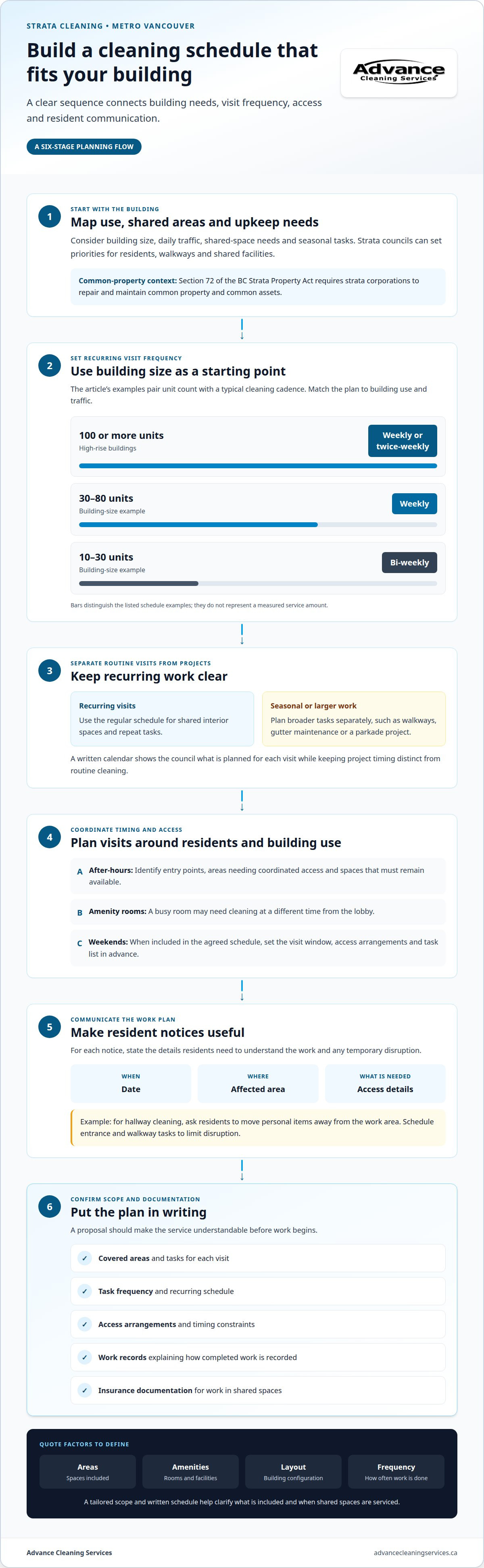
A reliable schedule matches building use, shared areas and seasonal tasks across Metro Vancouver. Section 72 of the BC Strata Property Act requires strata corporations to repair and maintain common property and common assets.
A cleaning plan turns building upkeep into defined visits, recurring tasks and clear timing. Strata councils can set priorities for residents, walkways and shared facilities.
Recurring Cleaning Schedules
Choose visit frequency based on building size and daily traffic. High-rise buildings with 100 or more units typically need weekly or twice-weekly professional cleaning. Buildings with 30-80 units typically do well with weekly cleaning, while 10-30-unit buildings can maintain quality with bi-weekly visits.
After-Hours and Weekend Visits
After-hours cleaning can be planned around building access and resident activity. The schedule should identify entry points, areas needing coordinated access and spaces that must remain available during a visit. For example, a busy amenity room may need cleaning at a different time from the lobby.
Weekend work can also be included when it is part of the agreed schedule. Set the visit window, access arrangements and task list in advance. This gives residents and building staff a consistent reference for cleaning in shared areas.
Resident Notices and Work Timing
Resident notices are most useful when they state the date, affected area and access needs. For example, a notice can explain that hallway cleaning is scheduled and ask residents to move personal items away from the work area. The strata council can coordinate notices through the building’s usual communication channels.
For work near entrances or busy walkways, schedule tasks to limit disruption to residents. Include a contact route for building-related questions and update notices if the work plan changes. Clear timing helps residents understand which areas may be temporarily affected.
When comparing Vancouver cleaning companies, look for a written scope, recurring schedule, clear communication and insurance documentation. The proposal should identify covered areas, task frequency, access arrangements and how completed work is recorded.
Eco-friendly cleaning products can be part of a strata cleaning plan. Advance Cleaning Services Inc. uses eco-friendly products, and the scope can identify the tasks and shared spaces to be cleaned.
Plan larger projects by listing the areas, access requirements and timing constraints. A parkade, multiple floors or seasonal walkway work may need a separate plan from routine interior cleaning. The council can keep the recurring schedule intact while coordinating project work around resident notices and building access.
Amenity room and gym cleaning
A strata gym brings shared equipment, floor space and touchpoints together in one common area. A useful scope names each zone, such as the weights area, cardio machines, mirrors and entrance. This makes it easier to define what gets cleaned during each visit and what needs separate scheduling.
For amenity rooms, the checklist can cover tables, counters, seating, appliance exteriors and floors. For a bookable lounge, the scope might also include visible marks on doors and cleaning around furniture. Clear task descriptions align the work with how residents use each room, rather than treating every amenity as identical.
Gym equipment needs cleaning suited to its surfaces. The plan can identify which machine surfaces are included, how visible dust is handled and which areas need care around controls. For example, a checklist can distinguish equipment touchpoints from nearby mirrors and floors. Respect residents’ personal items and equipment instructions during service.
Lobby and hallway work connects with amenity cleaning because residents move between these spaces. A defined route can cover the lobby floor, reachable entrance glass, hallway edges and elevator touchpoints. The work order should say which floors or sections are included, especially in buildings with several amenity levels. Ask the provider to explain its insurance coverage in relation to the scheduled work.
Parkades need a specific scope, not a vague reference to “common areas.” Identify the included levels, access points and tasks, such as removing loose debris or addressing visible marks. Parkade washing is separate from routine interior cleaning, so state its timing, access needs and boundaries clearly. Describe exterior entry areas separately too, including whether the scope covers debris around doors or washing accessible surfaces.
Before work begins, the checklist should be checked against the building’s actual layout. Note rooms that require keys, spaces with booking schedules and surfaces with specific care instructions. If a gym or lounge is temporarily occupied, the work plan can identify an alternate sequence or return point without leaving the task undefined.
For a practical scope, group tasks by location: gym, amenity room, lobby, elevator, hallways and parkade. Then record the work included in each area and any access limits. This gives the strata council a clearer basis for reviewing service details and setting resident expectations. A strata cleaning service scope can help frame those shared-space requirements.
Cleaning strata and condo common property
A clear common-area scope helps owners and property managers understand what cleaning covers. In British Columbia, responsibilities for common property also shape how strata councils plan upkeep.
High-Rise Common-Area Coverage
In high-rise buildings, define the scope by location rather than using a broad “common areas” label. A list might cover entrance floors, shared corridors, mail areas, stairwells and accessible interior glass. Property managers can then specify which floors, doors and shared spaces are included, and which tasks need separate planning.
For example, a Vancouver building may have a lobby, multiple corridor sections and a shared laundry room. Naming each area shows how the cleaning scope fits the property’s layout. It also gives the strata council a practical basis for reviewing completed work and noting missed locations.
Applicable Cleaning Standards
Section 72 of the BC Strata Property Act requires strata corporations to repair and maintain common property and common assets. This sets a maintenance responsibility, but it does not specify a cleaning frequency in the fact presented here. Strata councils can translate the broader duty into a written scope that identifies locations, tasks and how service is reviewed.
Clear standards can describe the expected result for each space. For example, the lobby scope might specify floors, reachable surfaces and visible debris. Property managers can record exceptions, such as a blocked hallway section, so follow-up refers to a specific location and task.
Separate routine interior cleaning from work requiring different access or equipment. For example, list an indoor entrance floor separately from exterior walkways, and identify whether a storage room is included. These distinctions prevent assumptions about nearby areas that need different work plans.
Owners also benefit from clear boundaries between private and shared spaces. A corridor outside a suite is different from the suite interior, while a shared laundry room belongs on the common-area list if it is included in the agreed scope. A location-by-location description shows residents where cleaning applies without implying access to private homes.
For multi-level properties, organize the scope by floor, then by room or feature. A property manager can record the lobby, elevator entrances and shared rooms as separate locations. If a renovation temporarily blocks access, the service record can note the affected area separately from work completed elsewhere.
Strata councils can review the scope when building use changes. Adding a shared lounge, changing storage access or opening a common room may change which locations need attention. A written update keeps owners, residents and cleaning staff aligned on current boundaries and expected tasks.
Lobbies, hallways, elevators, and stairwells
The cleaning scope should follow the building’s layout. A location-by-location plan helps managers define what each visit covers.
Lobby and Elevator Upkeep
In the lobby, a checklist can cover floors, entrance mats, reachable surfaces and visible marks on doors. Elevator tasks can include floors, accessible wall surfaces and high-touch buttons. High-touch surfaces in strata buildings should be sanitized at least weekly. Listing each task is clearer than a general “lobby cleaning” instruction.
For a Metro Vancouver building with several elevator banks, record which elevators and landings are included. This helps managers match the scope to resident traffic and building access. A friendly greeting from cleaning staff can also make brief interactions with residents more comfortable.
Hallway and Stairwell Cleaning
Hallway cleaning can include floor care, reachable ledges and visible marks on shared doors. Stairwell tasks may cover landings, handrails and debris on steps. Specify whether every floor is included, rather than leaving cleaners to infer the route from the building layout.
For example, a Burnaby property with multiple stairwells can list each one by location. Managers can also note access limits or areas temporarily blocked by maintenance. This makes it easier to record completed spaces and identify where follow-up is needed.
Elevator lobbies connect several cleaning zones. A planned route can run from the main entrance to elevator doors, then through each floor’s landing and corridor. For a Richmond building, the checklist might distinguish a service entrance from a resident entrance. That helps staff follow the correct route without overlooking a shared access point.
Wet-floor work needs clear sequencing in occupied buildings. The plan can identify which section is handled first and how residents can move around active work. For instance, staff can clean one corridor section while keeping another route available. The approach depends on the layout and access arrangements.
Managers can review completed work against the written scope. A missed handrail, lobby mat or elevator landing can then be recorded as a specific item. That is more useful than a general note that a floor needs attention, because it identifies the space and task.
Across Metro Vancouver, older buildings and newer towers may have different layouts, finishes and access points. A practical scope names the surfaces and spaces instead of assuming one routine fits every property. Strata councils can update the list when shared areas change, such as after a lobby renovation or when a new entrance opens.
Custom cleaning checklists and pricing
A custom checklist connects the quote to the building’s actual needs. It should name each included area, task, surface and visit frequency. For example, listing the lobby floor, elevator buttons and shared laundry room is clearer than saying “general cleaning.” This detail helps strata councils compare the proposed scope with the work residents expect.
The quote depends on the building’s layout, included spaces, cleaning frequency and task requirements. The building’s needs and agreed scope shape the quote. A Burnaby property with several entrances, varied floor finishes and a large shared room may need a different plan from a simpler layout.
Review checklist items by location. The lobby list might cover floors and reachable surfaces; the elevator list might specify floors, doors and buttons. If a window is included, name it separately and identify the accessible area. Clear boundaries prevent a general task label from implying work that was never described.
- Areas: name each lobby, hallway, amenity room and other included space.
- Tasks: describe the work for floors, touchpoints and visible surfaces.
- Frequency: connect each task to the planned recurring visits.
- Access: note entrances, restricted rooms and relevant scheduling needs.
These details also support consistent service records. If a task is missed, the checklist points to the specific space and work item. If the building adds a room or changes access, update the scope rather than relying on an outdated general description.
Give insurance a clear place in the service documentation. The phrase “fully insured” is less useful than documentation explaining relevant coverage and liability for the work. Strata councils can keep that information with the scope, so the agreement and insurance details are easy to review together.
Additional charges may apply for elevators, amenity rooms, parkade access and multi-level buildings. Naming these features in the scope makes their effect on the quoted work easier to understand. It also separates routine cleaning from tasks requiring distinct access or arrangements.
For a building-specific scope, request a custom cleaning quote with the areas, surfaces and schedule you need covered.
Advance Cleaning Services
Advance Cleaning Services provides janitorial services for strata buildings, including condominium services and building cleaning. When shared spaces need regular attention, a clearly defined scope is a useful starting point. Outline the areas, access arrangements and tasks to be covered, so the service plan reflects your property’s requirements rather than assuming every building has the same layout or priorities.
For related commercial settings, Advance Cleaning Services also provides office cleaning, carpet and tile cleaning, and medical facility cleaning. These services suit different environments and needs, while strata councils can focus on the shared-space requirements of their building.
To discuss cleaning needs for your building, contact Advance Cleaning Services.
Set a Clear Path for Your Building
A well-defined cleaning plan gives your strata council a practical starting point for ongoing building care. Outline the shared spaces, access needs and priorities that matter most to residents. This gives Advance Cleaning Services a clear basis for discussing commercial cleaning for strata buildings in Vancouver and shaping a suitable scope for your property.
Advance Cleaning Services provides janitorial services, office cleaning and medical facility cleaning. For commercial cleaning for strata buildings in Vancouver, outline your building’s requirements to discuss a service plan suited to its layout and priorities.
Share your strata property’s priorities and take the next step with contact Advance Cleaning Services Inc. A clear conversation can help your council move forward with confidence.
Frequently Asked Questions
Are you insured?
Ask Advance Cleaning Services for insurance documentation relevant to the work. For a strata agreement, records should identify the insured business, coverage period and relevant liability protection. Keep the documentation with the contract and ensure it corresponds to the work being arranged. This makes it easier to distinguish documented coverage from a general statement that a provider is insured.
How is the work scheduled?
Cleaning is scheduled around the agreed scope, building access and residents’ use of shared spaces. A practical plan identifies visit timing, entry arrangements, areas to be serviced and rooms needing separate access. For example, cleaning a booked amenity room may need to fit the building’s reservation schedule. Clear communication helps residents know which spaces may be affected during a visit.
What commercial cleaning services do strata buildings in Vancouver typically need?
Strata buildings commonly need recurring janitorial work for shared interior spaces, with the scope based on the property. Depending on the agreement, a plan may cover shared floors, washrooms, entrance areas or amenities. Advance Cleaning Services also provides carpet and tile cleaning for shared flooring. The service plan should distinguish routine tasks from separate, occasional work so the scope stays clear.
How much does strata building cleaning cost in Vancouver?
The price depends on the building’s requirements and is provided after a quote request. Relevant factors include the number and type of areas, building layout, cleaning frequency, access needs and any additional tasks. A quote should connect the proposed amount to a defined scope, so the strata council can understand what work it covers. Avoid comparing totals without considering differences in included tasks.
What factors affect the price of cleaning a Vancouver strata building?
Building size is only one consideration. The number of floors, layout, shared amenities, access arrangements and requested cleaning frequency can also shape the work involved. For example, a property with separate entrances and bookable rooms may need a different scope from one with fewer shared spaces. Describe additional tasks and special access requirements alongside routine needs so the quote reflects the work.
How often should strata common areas be cleaned?
Cleaning frequency should reflect how residents use each space and the building’s priorities. An entrance used throughout the day may need more attention than a room with occasional bookings. The strata council can set a recurring schedule for routine tasks and identify spaces needing separate attention. Reviewing resident feedback and service records helps the council adjust the schedule as building use or conditions change.
Do Vancouver strata cleaning companies need liability insurance and WorkSafeBC coverage?
Liability insurance and WorkSafeBC coverage are separate matters, and this answer does not establish a universal legal requirement for every cleaning arrangement. A strata council can request relevant documentation and review how it applies to the business and contracted work. WorkSafeBC coverage relates to workplace coverage, while liability insurance addresses potential liability risks. Keep the records with the agreement for easy reference.
How can a Vancouver strata council request and compare cleaning quotes?
Prepare one written scope for each quote request. Include the building’s shared areas, access arrangements, requested schedule and additional tasks. Then compare each response against the same details, noting exclusions, visit timing and how completed work is recorded. For example, check whether each quote includes the same amenity spaces and floor areas. Comparing scopes makes differences easier to see than comparing totals alone.