Daytime upkeep works best when it complements, rather than replaces, routine janitorial cleaning. Commercial day porter services in Edmonton provide on-site cleaning and facility support during business hours, with an 8-hour-per-day coverage option. Schedules and responsibilities can be tailored to a building’s size, traffic and daytime needs. Full janitorial cleaning is usually performed after hours.
For busy facilities, a clean lobby is only part of the picture. Restrooms, shared spaces and high-traffic areas also need attention while people are using them. The right coverage keeps these spaces presentable throughout the day without confusing porter duties with a full cleaning schedule.
This guide explains what day porter service can include, how coverage and shared-site rotations can be arranged, and when restroom, common-area and janitorial cleaning can take place. You’ll also see how daytime support fits alongside routine cleaning, so you can plan a schedule around your facility’s daily activity.
Key Takeaways
- Identify whether your office, retail centre, medical facility, school or other busy property would benefit from on-site daytime support.
- Plan coverage and shared-site rotations around building layout, traffic patterns and the areas that need attention most.
- Use regular rounds to help keep restrooms, lobbies and shared spaces presentable as people move through the facility.
- Clarify how spill response and high-traffic upkeep fit alongside scheduled janitorial cleaning.
- Match cleaning tasks to the right schedule, from daytime touch-ups to broader routine office cleaning.
What is a day porter service?
A day porter provides on-site cleaning and facility support during business hours. In Edmonton, duties can include monitoring busy spaces, responding to spills, removing trash and restocking supplies. Porters may also receive packages, distribute mail, or provide directions to visitors. The work helps address the changing needs of an occupied building while regular janitorial cleaning follows its own schedule.
Office buildings, retail centres, medical facilities, schools and other high-traffic commercial properties commonly use day porters. An office lobby, for example, may need frequent attention as employees and visitors pass through. A retail centre may need shared areas kept orderly during customer activity. In a medical facility, daytime coverage can help keep public spaces clean and presentable while staff continue their work. The right tasks depend on the facility’s activity and layout.
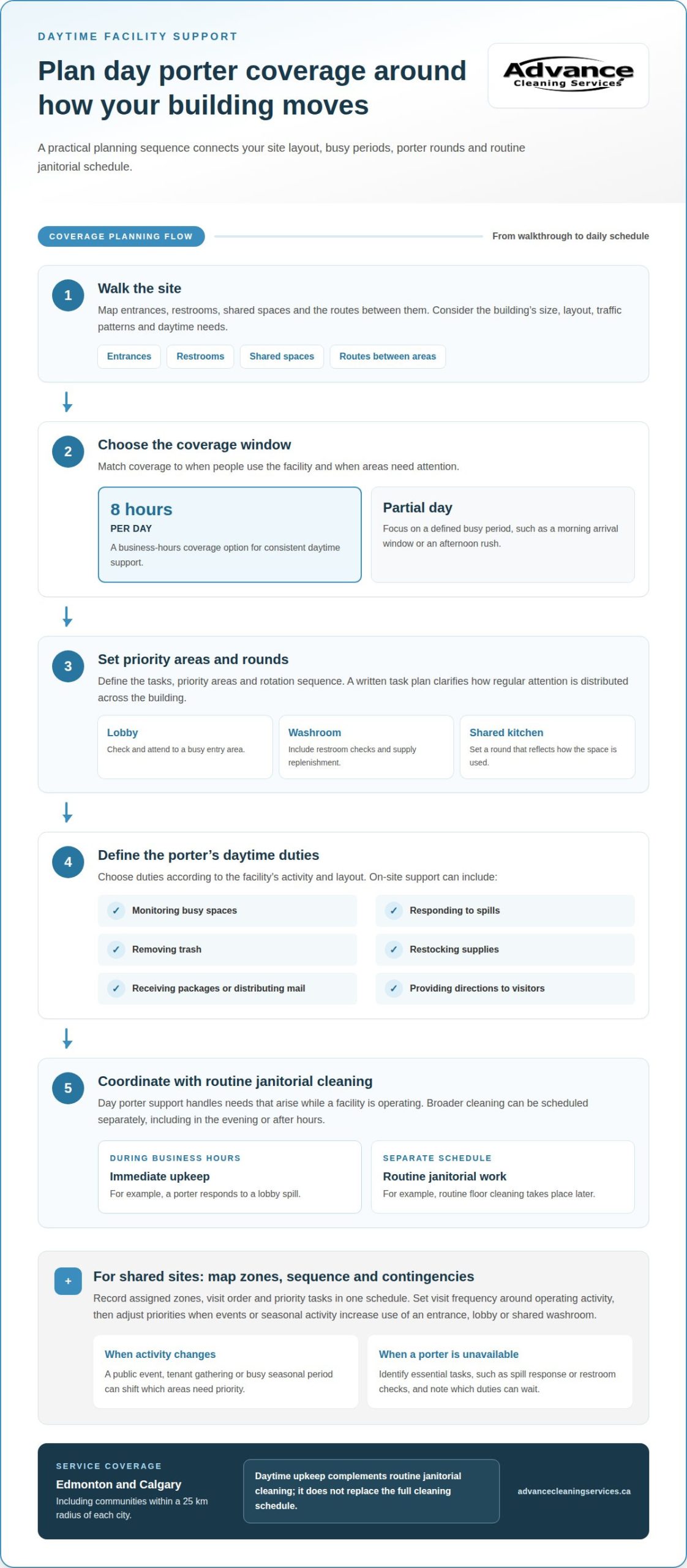
Coverage can be planned around a building’s size, traffic patterns and daytime cleaning needs. A walkthrough helps map entrances, restrooms, shared spaces and routes between them. From there, a schedule can prioritize high-use areas and define recurring duties, such as checking a lobby or replenishing restroom supplies. Day porter services are available in Edmonton and Calgary, including communities within a 25 km radius of each city.
When comparing day porter companies in Edmonton, look for a clearly defined scope of duties, coverage schedule, rotation plan and quality-check process. These details show how cleaning fits into daily operations. Insurance, bonding and WCB Alberta coverage depend on each company’s arrangements, so the service label alone does not establish them.
Products and equipment should suit the surfaces, tasks and facility requirements. A plan for a carpeted office, for example, differs from one focused on hard floors and shared washrooms. Match supplies and tools to the work being done and the areas receiving attention.
Pricing depends on factors such as facility size and layout, traffic levels, coverage schedule, task list and required supplies. When requesting a quote, describe the property, its busiest areas and the daytime duties you need. A walkthrough can help shape the coverage plan, giving the service provider practical details rather than relying on a generic schedule.
After a walkthrough, coverage can reflect layout, traffic patterns and daytime needs. Edmonton schedules and responsibilities can be customised to building size, traffic and operations; supervision and quality checks support standards, and porters can guide visitors.
Day porter coverage hours and shared-site rotations
Coverage can be tailored to building activity, daytime cleaning needs and the areas that require attention. A clear schedule also distinguishes porter rounds from routine janitorial services.
Partial-Day and Full-Day Coverage
An 8-hour-per-day business-hours coverage option can suit facilities that need consistent daytime support. Partial-day coverage can focus on a defined busy period, such as a morning arrival window or an afternoon rush. The schedule should reflect when people use the building and which surfaces or common areas need regular attention.
For either arrangement, define the tasks, priority areas and rotation sequence. A lobby, washroom and shared kitchen may need attention at different intervals. A written task plan keeps the building presentable and organized, while clarifying which broader cleaning tasks remain part of the regular janitorial schedule.
Edmonton-Area Service Coverage
Day porter service is available in Edmonton and Calgary, including communities within a 25 km radius of each city. For an Edmonton-area facility, location is one part of planning; the building’s layout and daytime traffic also shape the coverage plan.
For shared-site rotations, map the buildings or zones, then set the order and frequency of visits around operating activity. A multi-building property might prioritize its busiest entrance before rotating through quieter common areas. This organizes the schedule and clarifies where on-site attention is concentrated.
Events and seasonal activity can change which areas need priority. A public event, tenant gathering or busy seasonal period may bring more people through an entrance, lobby or shared washroom. Identify areas likely to see increased use and adjust rotation priorities accordingly.
Plan explicitly for porter absences. A coverage plan can identify essential tasks, such as spill response or restroom checks, and show which duties can wait if the scheduled porter is unavailable. This helps facility teams understand the day’s priorities without assuming every routine task can be completed during a staffing gap.
For a shared site, record the assigned zones, visit sequence and priority tasks in one schedule. That gives facility teams a practical reference when building use changes. A daytime cleaning coverage plan can also be considered alongside the site’s regular janitorial schedule.
Can cleaning be done after business hours or on weekends?
Yes. Office cleaning can be scheduled during the day, in the evening or after hours. Day porter support addresses needs that arise while a facility is operating, while broader cleaning can take place on a separate schedule. For example, a porter can respond to a lobby spill during business hours, while routine floor cleaning happens later. This separates immediate upkeep from work that is easier to do in a quieter, less occupied building.
High-traffic areas need attention because people continually use entrances, corridors, elevators and shared spaces. A spill near an office entrance, for instance, can affect the route employees and visitors use. A practical response is to identify the affected area, address the mess, then check that the floor and surrounding surfaces are presentable. The right task depends on the spill and materials involved.
Incident response also depends on clear communication. A staff member who notices a spill should report its location and nature, such as a drink spill beside reception. That detail helps the cleaning team prioritize the area and bring suitable supplies. After the immediate mess is addressed, a follow-up check can confirm that residue or tracked dirt hasn’t spread into nearby corridors.
For repeated messes, track where and when they occur. A break-room spill after lunch, for example, points to a different recurring need than wet footprints at a main entrance. These records help identify busy periods and adjust the cleaning sequence. They also give facility teams a concrete basis for setting priorities, such as which shared areas need attention first during peak occupancy.
After-hours cleaning supports tasks that are harder to perform around employees, customers or visitors. Routine office cleaning can be scheduled during off-peak periods to reduce workplace disruption. Treat weekend timing as a separate scheduling requirement, considering building access, occupancy and cleaning scope together. A quiet office and an active retail space may need different timing plans.
Keep the plan practical: identify high-traffic zones, define how spills are reported, and separate urgent daytime response from routine cleaning. In a reception area, that could mean promptly addressing a visible spill, then completing broader floor care outside busy hours. This clarifies responsibilities and helps facility teams align daytime response with cleaning expectations.
Business-hours restroom and common-area upkeep
During business hours, restroom and common-area rounds help keep frequently used spaces presentable as occupancy changes. A porter can monitor lobbies, entrances, floors and shared areas, then respond to visible needs. The work is recurring, not a single visit: a busy entrance may need attention after heavy foot traffic, while a quiet meeting room may need fewer checks.
Restrooms benefit from a defined routine. Service descriptions can include restocking, wiping and sanitizing every 1 to 2 hours. During each round, the porter can check supplies, wipe counters and sinks, and address visible mess. Regular checks also help catch an empty dispenser or overflowing bin before the next busy period.
Shared spaces need task plans that reflect how people use them. A lobby may need floor attention near the entrances, while an office kitchenette needs clean counters, tables and shared appliances. Frequently touched surfaces, including door handles and light switches, can be disinfected throughout the day. These practical tasks help keep common areas usable between scheduled cleaning visits.
Spills and scattered debris can change priorities. A drink spill on a lobby floor calls for prompt attention, while a full waste bin in a shared room can be handled on the next round. A clear route through the facility helps the porter notice and address issues before returning to the regular task sequence. Consistent upkeep supports a clean, welcoming impression for staff, visitors and tenants.
Coverage includes Edmonton and Calgary, along with communities within the surrounding service areas. In Edmonton, a facility’s layout and traffic patterns help determine which spaces receive the most frequent attention. For example, a property with a busy entrance and shared washrooms may prioritize those spaces before quieter corridors. The same planning approach applies to common areas in Calgary facilities.
To keep rounds consistent, group tasks by area and record recurring needs. One pass might cover an entrance, lobby and nearby floor; another could focus on washrooms and shared kitchens. This organizes the work and clarifies which duties belong in daytime upkeep. Broader janitorial cleaning can remain on its own schedule, distinct from ongoing restroom and common-area attention.
Day porter services can include ongoing monitoring and cleaning of high-traffic areas, restrooms and shared spaces during business hours. This focuses daytime attention on places in regular use, while allowing the porter to address needs as they arise. Staff break rooms and kitchenettes can also be included. Porters can clean counters, sinks, tables and shared appliances, helping maintain spaces employees use during breaks. Including these areas alongside other shared spaces gives daytime upkeep a practical scope.
Commercial janitorial services
Day porter coverage and commercial janitorial cleaning serve different parts of a facility’s cleaning plan. A porter handles visible daytime needs, while scheduled janitorial work addresses broader tasks across offices and shared areas. For example, daytime spill response can keep a corridor usable, while routine floor care happens during a planned cleaning visit.
A janitorial scope can include dust removal, carpet vacuuming, cleaning and disinfecting surfaces, and restroom restocking. Tasks should suit the rooms and surfaces. An office may need desk areas and meeting rooms included, while reception needs clean floors and a tidy visitor area. Clear task descriptions align cleaning with how each space is used.
Build the plan around three practical details: areas, tasks and timing. A cleaning team can organize work by zones, such as offices, washrooms and shared kitchens. The task list can specify surfaces to clean, waste to remove and supplies to replenish. The schedule then shows when each zone receives attention, so janitorial work fits around occupancy and business activity.
Commercial cleaning can also address high-touch areas, shared spaces and equipment through focused sanitization. Examples include frequently handled surfaces in a meeting room or shared equipment used by several employees. Naming the locations and tasks in the scope makes the work easier to organize and keeps expectations clear for facility teams, employees and visitors.
Commercial cleaning crews use professional-grade tools and eco-friendly products for workplace cleaning. The right approach depends on the task and surface: vacuuming carpet differs from wiping a shared table or cleaning a washroom counter. A defined scope directs the work, while scheduled checks help identify areas needing more attention. Visible debris in a lobby, for instance, calls for a different task than dust on an office surface.
Janitorial services support an orderly workplace by setting a consistent plan for recurring cleaning. A clean, organized environment also helps employees use shared spaces comfortably and welcome visitors. Daytime upkeep complements this plan rather than replacing broader scheduled cleaning. Define routine tasks separately from immediate daytime needs, then coordinate their timing across the facility.
For an Edmonton workplace that needs a coordinated cleaning plan, request commercial janitorial cleaning tailored to its spaces and routine tasks.
Advance Cleaning Services: Day porter services
Advance Cleaning Services provides day porter services for facilities that need attentive cleaning support during business hours. Coverage can be shaped around the building’s layout, traffic and priority areas, bridging daytime upkeep and scheduled janitorial cleaning.
For offices and medical facilities, Commercial & Office Cleaning, Medical Facilities cleaning and Janitorial and Day Porter Services can support broader workplace cleaning needs. A coordinated plan distinguishes routine tasks from immediate concerns, such as a spill in a shared area or a busy entrance needing attention.
If your facility needs daytime cleaning support, contact Advance Cleaning Services Inc. to discuss your requirements.
Set a clear plan for your facility
Turn your facility’s daily demands into a practical cleaning plan. Consider which areas need attention during operating hours, which tasks fit scheduled janitorial cleaning, and how staff can report changing priorities. Clear expectations make it easier to align coverage with building use and organize responsibilities.
If you’re considering commercial day porter services in Edmonton, Advance Cleaning Services can shape a plan around your facility’s cleaning needs. Its Medical Facilities cleaning, Commercial & Office Cleaning and Janitorial and Day Porter Services can also support broader workplace requirements.
Share the areas that matter most, such as entrances, washrooms or shared spaces, and describe how your building is used. A focused discussion can help establish a suitable next step for your property. Contact Advance Cleaning Services Inc. to discuss your facility’s needs and move forward with a clear plan.
Frequently Asked Questions
Are porters uniformed and background checked?
Uniforms and background checks are employment practices, not defining duties of a day porter. For facility planning, focus on how staff will be identified, how they’ll enter restricted areas, and which site protocols apply. A medical office, for example, may need clear procedures for staff access to treatment rooms and administrative spaces.
Do porters handle deliveries and packages?
Porters may receive and distribute packages and mail, including delivering items to their intended recipients. At a commercial property, this could mean taking a parcel from reception to a designated office. The task works best when delivery points and recipient locations are clear, especially in buildings with multiple tenants. Handling deliveries is facility support, distinct from cleaning tasks.
How can I reduce cleaning costs without sacrificing quality?
Keep the cleaning scope focused on how the facility is used. Separate essential recurring tasks from occasional needs, then prioritize washrooms, entrances and shared workspaces according to traffic. A lightly used meeting room, for example, may need a different schedule from a busy reception area. A clear task list avoids duplicated work while supporting the cleaning standards staff and visitors expect.
How many hours a day do I need?
An 8-hour-per-day business-hours coverage option is available, but the right duration depends on building activity and the duties assigned. A facility with steady visitor traffic may need coverage across its operating day, while another may concentrate support around its busiest periods. Map arrival patterns, shared-space use and recurring daytime tasks to decide which coverage window best fits the property.
What are the typical responsibilities of a porter?
A porter can monitor shared areas, respond to spills, remove waste, restock supplies and help keep common spaces orderly. Some also receive packages, distribute mail or direct visitors. In a condominium lobby, for example, duties may combine cleanliness checks with directing guests. Assigned responsibilities should distinguish cleaning and facility support from duties handled by building staff.
What is the difference between a day porter and janitorial cleaning?
A day porter addresses ongoing needs while a facility is occupied; janitorial cleaning covers scheduled tasks across the property. A porter may clear a spill during the workday, while a janitorial visit handles planned floor care. Coordinating these distinct functions helps facility managers assign immediate requests without losing sight of routine cleaning.
What do commercial day porter services in Edmonton include?
Commercial day porter services in Edmonton can include daytime monitoring of busy spaces, spill response, restroom and common-area upkeep, supply restocking and waste removal. The task mix varies by facility. A retail property may prioritize customer-facing entrances, while an office may focus on washrooms, shared kitchens and reception. Package and mail support can also form part of a porter’s facility duties.
How often should an Edmonton commercial property schedule day porter services?
Set the schedule according to traffic, building layout and how quickly shared areas need attention. A property with regular visitor arrivals may benefit from repeated rounds during active periods; a quieter office may concentrate coverage around predictable peaks. Review recurring needs, such as washroom supply use, lobby debris and kitchen activity, then align the porter’s schedule with those patterns and the facility’s operating hours.