
What if a cleaning method that works well on one office chair could damage another? For Calgary workplaces, upholstery care isn’t one-size-fits-all: fabric type, soil, stains and daily use all affect the right approach. If you’re searching for commercial upholstery cleaning Calgary, look beyond a quick refresh and consider how the work will suit your furniture and daily operations.
Questions about odours, drying time and disruption are understandable, especially when staff or customers use the furniture throughout the day. A practical plan starts with assessing each piece and discussing its condition, access requirements and suitable timing. This guide covers how to prepare workplace furniture for professional cleaning, compare providers using specific criteria and choose an approach suited to different upholstery. You’ll also learn how to plan care for frequently used seating around your workplace routine. Advance Cleaning Services Inc. provides upholstery cleaning and commercial cleaning for offices and retail businesses in Calgary.
Key Takeaways
- Match the cleaning approach to each piece’s fabric, construction, care instructions and condition.
- When comparing commercial upholstery cleaning Calgary providers, ask how they assess delicate, mixed, damaged or unlabelled upholstery.
- Confirm the proposed method, expected drying time, site access needs and service inclusions before scheduling.
- Prepare a furniture inventory with priority pieces, visible concerns, fabric labels and access restrictions.
- Plan when staff and visitors can use cleaned furniture again, and discuss your site and scheduling requirements with the provider.
Why commercial upholstery cleaning matters for Calgary workplaces
In Calgary offices, reception seating may welcome clients throughout the day, while meeting-room chairs serve staff and visitors between appointments. Waiting areas and retail seating also get regular use. With people sitting, moving and setting down drinks or belongings, fabric can accumulate visible soil and spill marks. These can affect how a space looks and make furniture upkeep more challenging.
Commercial upholstery cleaning is professional care for fabric-covered furniture used in workplaces. For businesses considering commercial upholstery cleaning Calgary, start by assessing how each piece is used and what it’s made of. The right approach depends on fabric, furniture construction, manufacturer care instructions, frequency of use and the type of soiling. A frequently used reception sofa may need a different plan from a meeting-room chair used occasionally.
Which commercial spaces may need upholstery care?
Consider where the upholstered furniture is located and who uses it. Office reception areas, meeting rooms, waiting areas and retail seating can all need attention, but they won’t necessarily need the same schedule. Shared seating used by staff, clients or visitors may show soil sooner than furniture used occasionally. Review each area separately and set priorities based on use and condition instead of applying one frequency across the workplace.
What signs suggest furniture needs professional attention?
Look for visible soil, recurring spills, a flattened appearance or persistent odours. These signs can help identify which pieces need attention, but they don’t guarantee that a mark or worn area can be fully corrected. Before trying a treatment, check the care label and manufacturer guidance. Upholstery varies, and an unsuitable cleaner or technique may cause damage or leave marks.
Repeated spot cleaning is another reason to pause and seek a professional assessment, particularly if marks return or you’re unsure how the fabric will respond. Note what was spilled, where it happened and which treatments have already been tried. This gives the provider useful information about the furniture’s condition. For background on methods used in textile cleaning, this overview of carpet cleaning methods describes approaches such as hot-water extraction and dry cleaning. Upholstery still needs a method suited to its specific fabric and construction.
How commercial upholstery cleaning works with different fabrics
A sound cleaning plan starts with the furniture, not a one-method-fits-all approach. Fabric type, construction, care instructions and current condition help determine which treatment may be appropriate. A woven seat, a delicate fabric panel and a cushion with existing wear can respond differently to moisture and agitation. Fabric identification and care instructions should guide the cleaning method.
How should cleaners assess fabric and care instructions?
Before work begins, review any care labels and available manufacturer recommendations. They can indicate which cleaning methods may be suitable and which to avoid. The fabric surface is only part of the assessment: backing, seams, mixed materials and existing damage can also affect how an item should be treated. If upholstery is unlabelled or its material is uncertain, discuss it with the provider before scheduling.
What are the main cleaning stages?
Professional cleaning generally involves inspecting the item, identifying areas of concern, applying pre-treatment where appropriate, cleaning with a selected method and allowing the furniture to dry. The process can vary by provider and item. Ask what the proposed work involves and how it accounts for the upholstery’s condition.
Extraction uses cleaning solution and equipment to remove soil and moisture from fabric. Lower-moisture approaches use less liquid, but the method name alone doesn’t establish whether it’s suitable. The material, construction, soiling and provider’s assessment all matter. For a broader overview of cleaning approaches, the CCOHS guidance on effective housekeeping provides useful workplace context. Your cleaner should explain the specific upholstery method proposed for each item.
What should businesses know about drying and access?
Drying time varies with the fabric, cleaning method, airflow and conditions at the site. Don’t assume every chair or sofa will be ready for use at the same time. Before booking, ask the provider for an item-specific expectation and when staff or visitors can use the furniture again. This helps you plan access, relocate priority seating if needed and limit disruption to workplace routines.
For commercial upholstery cleaning Calgary businesses can plan around, share fabric details, care labels, visible concerns and any existing damage when discussing the work. Advance Cleaning Services provides professional upholstery cleaning for commercial clients. If you’re assessing your furniture and site requirements, you can discuss commercial upholstery cleaning with the team.
How to compare commercial upholstery cleaning services in Calgary
A useful comparison goes beyond a provider’s preferred cleaning method. Compare the assessment and communication, not method names alone. A clear provider should explain how they’ll evaluate the furniture, what work they propose and what your workplace needs to arrange. For commercial upholstery cleaning Calgary businesses can plan around, confirm these details before setting a date.
| What to compare | What to ask |
|---|---|
| Fabric assessment | How will you assess the fabric, construction and condition? What happens if an item is delicate, mixed-material, damaged or unlabelled? |
| Cleaning method | Which method do you propose for these items, and why does it suit their fabric and care guidance? |
| Drying expectations | How long might the furniture be out of use, and what factors could affect drying? |
| Access and timing | What access is needed, and what service timing is available for our site? When should staff or visitors avoid the area? |
| Scope of work | Which pieces, surfaces and concerns are included? Is moving furniture part of the agreed scope, and are there exclusions? |
Questions to ask before arranging a commercial service
Share the furniture type and quantity, along with available fabric details, labels and known condition issues. Ask how the provider handles uncertain materials or existing damage, and what they need from your team before work begins. Confirm access requirements, service timing and expected furniture downtime. Request written clarification of the included work, exclusions and whether moving items is part of the scope. This helps both sides understand what has been agreed.
How do business needs change the comparison?
Consider visitor traffic, room use and how many pieces need attention. A reception area used throughout the day may require a different access and scheduling plan from a meeting room used occasionally. Factor in operating hours and ask what timing the provider can accommodate rather than assuming a particular schedule is available.
Also distinguish a one-time response to spills or visible soil from a longer-term workplace maintenance plan. If furniture care is part of a broader facility review, the commercial carpet cleaning Calgary maintenance guide may help you consider another aspect of site upkeep. Keep the upholstery scope specific and make sure the proposed work reflects your furniture, access needs and priorities.
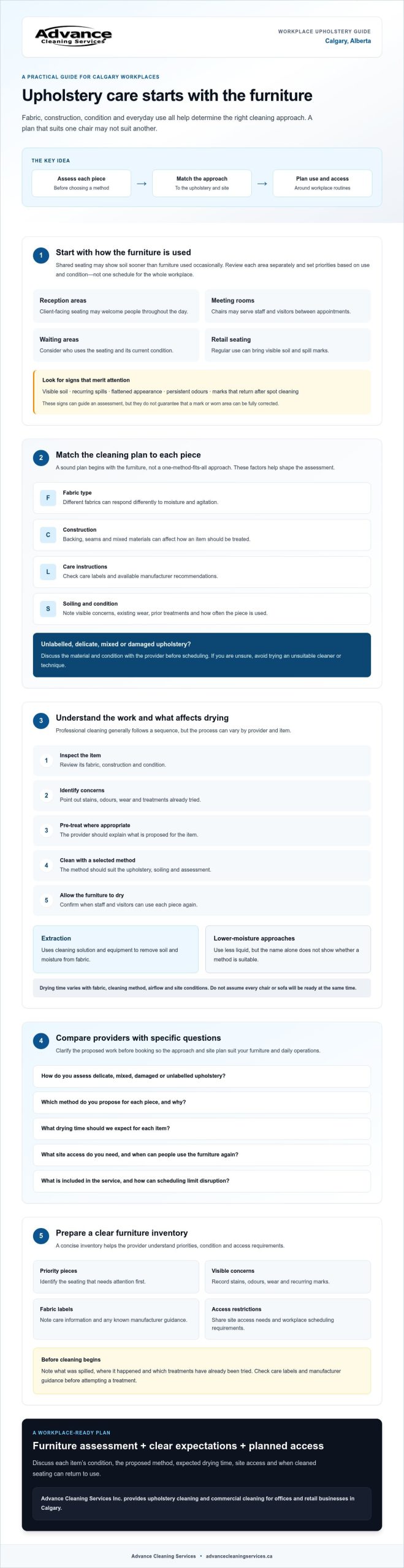
How to prepare a Calgary workplace for upholstery cleaning
Preparation helps the provider understand the job and gives your team a chance to plan around it. Before arranging commercial upholstery cleaning, Calgary businesses can create a clear inventory of the furniture, its condition and any areas that may need restricted access. Use this sequence to organize the details.
- Make a furniture inventory. Record furniture types, approximate quantities and locations, such as reception seating, meeting-room chairs or retail benches.
- Note fabric and care details. Check for labels and manufacturer instructions. List any pieces with unknown materials, mixed fabrics or existing damage so you can discuss them with the provider.
- Flag visible concerns. Record stains, recurring spills, odours and previous treatments. Share what has already been tried instead of applying another product before the assessment.
- Confirm site logistics. Identify access rules, parking arrangements, entry instructions and scheduling constraints. Coordinate with the appropriate building contact and ask what the provider needs to reach the furniture.
- Prepare the work area. Clear movable items from around the furniture and let staff know which areas may be in use during service. Agree on how access will be managed while work is underway.
- Plan the return to use. Ask when each area and piece of furniture is expected to be available again. Share that information with staff and plan alternate seating if needed.
How can cleaning fit around normal operations?
Choose timing with customer traffic, meetings, opening hours and staff routines in mind. Work near a busy reception area, for example, may need a different access plan from work in a seldom-used meeting room. Discuss available timing with the provider rather than assuming service can take place outside regular hours. Confirm how staff and visitors should avoid the work area and when cleaned furniture can return to use.
For broader workplace cleaning planning, see this Alberta janitorial services business guide. Advance Cleaning Services provides professional upholstery cleaning for commercial clients in Calgary. Discuss your furniture, site access and scheduling requirements with the team.
Arrange commercial upholstery cleaning in Calgary with Advance Cleaning Services
Once you’ve identified priority furniture, noted its condition and considered site access, you have a practical starting point for discussing service. Advance Cleaning Services provides professional upholstery cleaning for commercial clients in Calgary. Share details about your workplace and the furniture that needs attention so the conversation can focus on your site requirements, not assumptions about what every business needs.
What to share when requesting service information
Describe the workplace setting and the furniture you’d like assessed. Include the types and approximate quantities of pieces, where they’re located and how regularly they’re used. For example, distinguish a group of reception chairs from a sofa in a staff area that sees occasional use. This clarifies the request and helps identify items that may need priority attention.
Share any fabric labels or manufacturer care instructions you have, along with notes about stains, odours, wear, damage or previous treatments. If a label is missing or the material is uncertain, mention that before a method is proposed. Also outline access details, such as entry arrangements and areas that need to remain clear, as well as preferred timing and workplace scheduling constraints.
Ask what assessment is appropriate and which pieces are included in the proposed service. Confirm any exclusions, whether moving furniture is part of the agreed scope and what information the provider still needs from your team. Clear expectations make it easier to coordinate the work and plan around areas that may temporarily be unavailable.
How upholstery care fits broader facility cleaning
Upholstered furniture can be considered alongside other workplace cleaning needs, particularly when reviewing how different areas are used and maintained. Advance Cleaning Services also provides office and retail cleaning. These are separate service options, so confirm the scope and arrangements for each rather than assuming upholstery cleaning is bundled with other work.
For commercial upholstery cleaning Calgary businesses can plan around, discuss furniture types, quantities, fabric information, access and timing with the provider. You can discuss commercial upholstery cleaning in Calgary with Advance Cleaning Services and ask what assessment and service scope may suit your workplace.
Plan upholstery care around your Calgary workplace
A practical plan starts with understanding what each piece needs. Fabric, care instructions and condition help guide the cleaning approach, while furniture use and visible concerns help set priorities. Comparing providers on assessment, communication, service scope and drying expectations makes it easier to find an option that suits your workplace.
Before arranging service, gather furniture details, note access requirements and consider how staff or visitors will use each area during and after cleaning. This helps you discuss a clear, site-specific plan instead of relying on assumptions. Commercial upholstery cleaning can become part of thoughtful workplace maintenance when the work is planned around the furniture and your operations.
Advance Cleaning Services offers cleaning services in Calgary, Edmonton, Red Deer, Okotoks, Lethbridge, Strathmore, Chestermere, Airdrie, Cochrane, Vancouver, Richmond, Burnaby, Surrey, New Westminster, Coquitlam and Abbotsford. To discuss commercial upholstery cleaning in Calgary, share your furniture details, site access needs and scheduling requirements with the team.
Frequently Asked Questions
How often should commercial upholstery be professionally cleaned?
There’s no universal schedule for professional upholstery cleaning. Frequency depends on fabric, foot traffic, spills, furniture location and your business’s maintenance plan. Shared seating in a busy reception area may need attention sooner than furniture used occasionally. Monitor visible soil and check care instructions as part of routine upkeep. Rather than relying on a fixed interval, ask a provider to assess the furniture and recommend a schedule suited to its use and condition.
What is the best upholstery cleaning method for commercial furniture?
No single method suits every commercial fabric. A provider should consider the care label, construction, condition, type of soil and manufacturer instructions before recommending an approach. Extraction uses moisture to help remove soil, while lower-moisture methods use less liquid. Neither is automatically best for every item. Ask why the proposed method suits your furniture and how it may affect drying time and access to the chairs or sofas after cleaning.
How long does commercial upholstery take to dry after cleaning?
Drying time varies with the fabric, cleaning method, airflow, temperature and amount of moisture used. There isn’t one reliable timeframe for every chair or sofa, so don’t treat a general estimate as a promise. Ask the provider for an item-specific expectation before scheduling, then plan access around that guidance. This is especially useful for reception areas, meeting rooms and other frequently used Calgary workplace spaces where unavailable seating could affect daily routines.
Can professional upholstery cleaning remove every stain and odour?
No, complete stain or odour removal can’t be promised. Results depend on the type of stain, fabric, how long it has been present, previous treatment and whether the material has been damaged. Professional cleaning may improve some visible concerns, but outcomes vary by item. Before service, identify known spills and any products or treatments already tried. Ask the cleaner to assess the upholstery and explain likely results before work begins.
What should a business do before commercial upholstery cleaning?
Make a furniture list, check available care labels and note stains, odours or damage. Share those details and any previous treatments with the provider, along with access requirements and site scheduling constraints. Coordinate with staff, clear nearby work areas and plan around operating hours. Before service, confirm whether furniture needs to be moved and ask when each item or area may be used again. The provider can clarify any additional preparation for your workplace.