
Renovation dust travels beyond the work area, settling on vents, light fixtures, window sills, baseboards and floors. A construction cleanup crew in Calgary can address it through staged post-renovation cleaning: first remove debris and heavy dust, then clean surfaces and floors in detail, and finish with a touch-up. Schedule cleaning after major dust-producing work, once large debris and construction supplies have been cleared from the areas.
A quick sweep may make a renovated space look ready, but fine dust can remain across the property. This guide explains what post-renovation cleaning can include, how to approach dust removal, and how the property’s condition, sensitive surfaces and occupancy plans shape the scope. It also covers coordinating cleaning with final trades, inspections and move-in plans, plus the walkthrough and touch-ups before handover.
Key Takeaways
- Schedule post-renovation cleaning after dust-producing trades are substantially complete, and leave room for a final walkthrough and touch-ups.
- Clear large debris, tools and unused materials from cleaning areas before detailed dust removal begins.
- Set the cleaning scope around the property’s sensitive surfaces, mechanical areas and intended occupancy standard.
- Clarify which tasks are included, such as floor and glass cleaning, residue removal and final touch-ups.
- For cleaning needs in medical facilities, consider a service designed for those spaces; other needs may call for office cleaning, janitorial services or carpet cleaning.
What’s included in post-renovation cleaning?
Post-renovation cleaning removes construction dust and residue from surfaces throughout a home or commercial space. A detailed clean can cover ceilings, light fixtures, vents, window sills, baseboards, floors, glass and other hard surfaces. Depending on the project, the scope may also include stickers or protective films. Because dust can settle in several rooms, list every area to be cleaned before work begins.
Same-day or emergency construction cleanup in Calgary is a time-sensitive request, not the standard renovation sequence. Cleaning can begin only in areas where major dust-producing work is substantially complete and large debris, tools and supplies have been moved out of the way.
Schedule cleaning after the final dust-producing trades. Coordinate with the general contractor, painters, flooring installers and other trades on site. If painters still have a punch list to finish, cleaning too early can leave new dust and marks behind. If flooring work is ongoing, cleaners may not have safe or clear access. Set the cleaning window after those tasks, then coordinate it with inspections, furniture delivery and move-in plans.
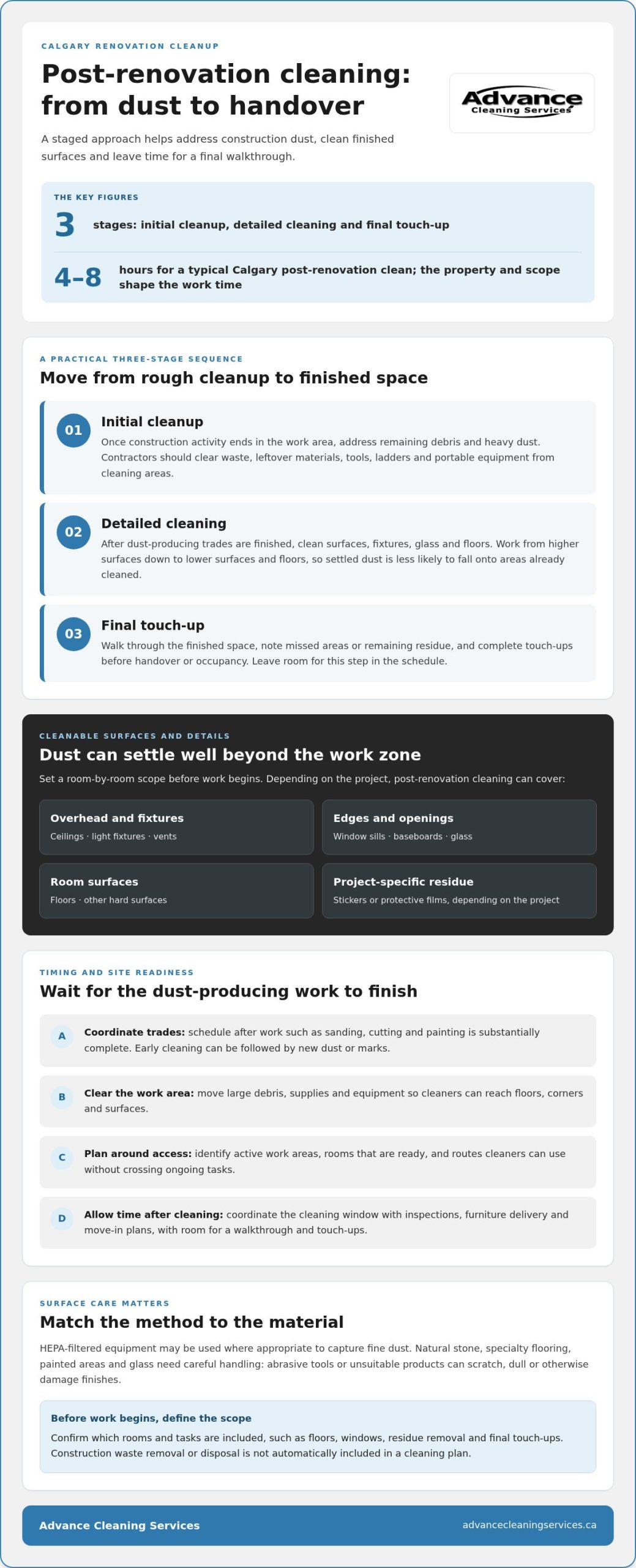
A practical sequence divides post construction cleaning into stages:
- Initial cleanup: Address remaining debris and heavy dust after construction activity ends in the work area.
- Detailed cleaning: Clean surfaces, fixtures, glass and floors once trades have finished creating dust.
- Final touch-up: Walk through the space, note any missed areas and complete touch-ups before handover or occupancy.
The final walkthrough matters when an inspection or tenant move-in is next. Leave time for touch-ups in the Calgary cleaning schedule instead of placing cleaning at the exact moment of handover. If punch-list work continues after detailed cleaning, agree which rooms remain active and which are ready. This helps protect finished areas while trades complete the remaining tasks elsewhere.
Construction schedules can shift, so build flexibility into the cleaning plan. Set a target date and identify the work that must be finished first, such as sanding, cutting or painting. If those tasks are delayed, adjust the cleaning sequence rather than sending cleaners into an active dust zone. A construction cleanup crew in Calgary can work more efficiently when access, cleared rooms and handover timing are organized in advance.
Job-site scheduling should also account for access and active work areas. Identify where contractors are still working, where tools or ladders remain, and which routes cleaners can use without crossing ongoing tasks. Keep cleaning areas clear of portable equipment and unused materials. For a one-time service, confirm the rooms and tasks included. Recurring cleaning follows a different schedule and purpose, while post-renovation cleaning focuses on construction dust and project residue. A typical Calgary post-renovation clean takes 4-8 hours, though the property and scope shape the work time.
Do you offer post construction cleaning in Calgary?
Yes. Post-construction cleaning can serve residential and commercial properties in Calgary. The work addresses construction dust and project residue after major trades have finished, with the scope tailored to the rooms and surfaces that need attention.
Before detailed cleaning starts, separate large construction debris from fine dust. Have contractors remove waste, leftover materials and unused supplies from the cleaning areas. Move tools, ladders and portable equipment as well. This gives cleaners access to floors, corners and surfaces without having to work around construction storage.
Construction waste disposal and recycling in Calgary depend on the material and the receiving facility’s acceptance requirements. Sort materials where practical, separating items that need special handling from ordinary renovation debris. A cleaning plan covers cleanable site residue; it does not automatically include removing or disposing of every construction material.
Fine construction dust calls for a staged approach: start with higher surfaces, then work down to lower surfaces and floors. This reduces the chance of dust falling onto areas already cleaned. Vents, light fixtures, window sills and baseboards can collect dust beyond the immediate work zone, so include them in the room-by-room scope.
Choose cleaning methods to suit the surface and residue. HEPA-filtered equipment may be used where appropriate to capture fine dust. Clean hard surfaces with methods suited to their finish. Natural stone, specialty flooring, painted areas and glass need careful handling, as abrasive tools or unsuitable products can scratch, dull or otherwise damage them.
For a Calgary project, a useful sequence is:
- Have contractors finish major dust-producing trades and clear large debris.
- Identify rooms, sensitive surfaces and areas still in use.
- Remove settled dust from upper surfaces before cleaning lower surfaces and floors.
- Review the finished areas and note any remaining residue or touch-ups.
Oxidation removal pricing depends on the affected material, the extent of the residue and the treatment required. The price depends on the case and is given after a quote request, with the surface condition and work involved shaping the scope.
Clarify whether the cleaning scope covers debris removal, floors, windows, residue and final touch-ups. For renovation dust and site residue, a cleaning plan for a renovated property can help define the work before the space is handed over.
Construction cleaning service areas
For Calgary renovation projects, service-area planning starts with the property address, access arrangements and cleaning scope. Calgary had 1,306,784 residents in the 2021 Census. In a city of that scale, an exact site address helps organize access, especially when a renovation covers several buildings or separate work zones.
Service location and scheduling go hand in hand. For a construction cleanup crew Calgary property managers arrange, share clear details about the site, rooms involved and preferred work window. This helps plan around contractor access and the project’s handover.
Plan for the specific property, not just the neighbourhood. A detached home, condominium unit and commercial space can have different entry arrangements. A condominium project, for example, may need coordinated loading access, while a retail renovation may involve only one unit. Note entrance, parking or loading instructions and restricted areas before arranging the work.
For a Calgary project, map the cleaning scope by location:
- Property: Provide the street address and identify each building or unit included.
- Access: Describe entry points, loading areas and any site restrictions.
- Work zones: List rooms or floors ready for cleaning, plus areas still occupied or under construction.
- Timing: Align access with trade completion, inspections and planned occupancy.
This information distinguishes the property’s location from the areas to be cleaned. A request for window cleaning, for instance, could mean interior glass in one renovated room, not every window in a multi-storey building. A shared corridor may also fall outside the unit’s renovation scope unless it is included in the work plan.
Bundling construction cleaning with other tasks can simplify coordination, but do not assume a multi-service discount. List each requested task separately, such as post-renovation dust removal, carpet cleaning or ongoing office cleaning. A defined scope shows what is included and whether separate visits are needed. Surface types, access and the building environment can affect how tasks are grouped.
Include insurance documentation and site access procedures in the project plan. These are separate from geographic coverage, and requirements can vary by property. For a construction cleanup crew Calgary businesses arrange, clear entry instructions and defined work zones help coordinate the visit with site procedures.
Prepare a short site brief with the address, work zones, access notes, requested tasks and target handover date. These details give a Calgary home, condominium or commercial project a practical starting point for scheduling and defining the cleaning area.
Property assessment and customized cleaning scope
A property assessment turns renovation details into a practical cleaning plan. Start with a room-by-room walkthrough and note surfaces, dust levels, access and areas still in use. A finished office, for example, may need careful attention to glass partitions, painted walls and specialty flooring. A vacant home may have different priorities before tenant move-in.
Identify sensitive surfaces before choosing cleaning methods. Natural stone, specialty flooring, glass and painted surfaces can react differently to products and tools. Record each surface type and visible residue, then match the method to its condition. This keeps the scope specific instead of treating every floor, counter and fixture alike.
Next, agree on the intended occupancy-readiness standard. The goal might be tenant move-in readiness or preparation for a final property inspection. Each can call for different attention to details such as window glass, floor edges or cabinet residue. State the standard plainly so the walkthrough has a clear reference point.
Consider mechanical areas separately. Identify HVAC equipment, vents, filters and mechanical rooms before cleaning begins. A general surface-cleaning scope does not automatically include work inside ducts or mechanical systems. Hazardous-material remediation, HVAC duct cleaning and tasks requiring specialized access equipment may also fall outside a standard post-construction cleaning quote.
A written scope should list the rooms and tasks covered by the cleaning. For each area, distinguish included work from exclusions. For example, specify whether the plan includes:
- Debris removal and residue removal.
- Floor cleaning and interior window or glass cleaning.
- Touch-ups after the initial walkthrough.
- HVAC equipment, filters, vents or mechanical rooms as separate items.
Calgary post-renovation cleaning prices depend on property size, dust and residue, surface types, access needs and requested tasks. The price depends on the case and is given after a quote request, with those factors shaping the scope.
Customer totals are easier to understand when the quote connects each task to a room or surface. Compare the stated scope with the assessment notes, rather than treating one total as a complete description. If a renovation leaves residue on glass and dust on specialty flooring, those conditions should appear in the work plan.
Finish with a customer walkthrough. Visit the rooms listed in the scope, compare the cleaned surfaces with the agreed occupancy standard, and record any remaining touch-ups. If the goal is a final property inspection, use its preparation requirements to guide the review. A clear walkthrough connects the assessment, cleaning and handover.
Construction cleanup crews Calgary Alberta
For a Calgary renovation, match the cleanup plan to the finished work, property layout and handover goal. One renovated office suite has different access needs from several condominium units. Map the work area on a floor plan, then mark rooms, shared spaces and surfaces to be cleaned. This defines the crew’s work area and helps prevent overlooked spots.
Use the remaining project work to judge whether the site is ready. If contractors still need to sand a doorframe or cut material in a room, that room may not be ready for final cleaning. A completed room beside an active work zone may need to be scheduled separately. List what is finished and what remains, then use that list to set the sequence.
Define the cleaning result in observable terms. For a final property inspection, identify surfaces that need to be visibly free of dust or residue. For tenant occupancy, note the rooms and fixtures that must be ready to use. A written scope can distinguish interior windows from exterior glass, or an accessible vent surface from internal ductwork.
Use a practical project checklist to make the plan specific:
- Site map: Mark the rooms, floors and shared areas within the cleaning boundary.
- Surface notes: Identify natural stone, specialty flooring, painted finishes and glass.
- Work status: Record completed trades and any active work that could affect cleaned areas.
- Scope limits: Separate ordinary dust and residue from hazardous-material remediation or HVAC duct cleaning.
- Handover goal: State whether the clean prepares the property for an inspection or occupancy.
These details also help organize a customer walkthrough. Follow the floor plan in the same order as the cleaning scope, and note any remaining dust or residue by room and surface. For example, “dust on the office window sill” identifies a clear location and task. “Needs more cleaning” does not say what remains or where.
Project size, room access, surface condition and requested tasks shape the work plan. A crew may need to clean zones in sequence when contractors still occupy part of the site. A final touch-up can then focus on areas affected by later work instead of repeating the entire clean.
Prepare your Calgary site map and handover goal, then discuss your post-renovation cleaning project with a clear scope in mind.
Advance Cleaning Services: Medical Facility Cleaning
Advance Cleaning Services Inc. provides Medical Facility Cleaning for clinics that need a clean, orderly environment after renovation work. For a medical office preparing to reopen, a defined cleaning scope helps address construction residue separately from ongoing facility-cleaning needs. The company also provides office cleaning, janitorial services and carpet cleaning for other workplace needs.
When discussing next steps, share the property type, areas requiring attention and intended use of each space. For example, a clinic may need Medical Facility Cleaning, while its administrative office may need office cleaning. This distinction helps shape a suitable plan for each setting.
Contact Advance Cleaning Services Inc. to discuss your facility’s cleaning needs.
Set your renovation up for a clean handover
A renovation’s final stage is easier to manage when cleaning has a defined place in the handover plan. Before booking a construction cleanup crew in Calgary, decide who will provide access, which areas are ready and who will review the finished work. Clear responsibilities help organize the transition from construction to everyday use.
Advance Cleaning Services provides Medical Facility Cleaning, office cleaning and Janitorial Services for facilities with ongoing cleaning needs beyond a renovation. Start by matching the service to the space’s purpose: a clinic has different cleaning requirements from an administrative office. Keep that distinction in mind as you move from project cleanup to regular facility care.
Prepare the property address, a brief description of the space and your intended next step. Then contact Advance Cleaning Services Inc. to discuss your cleaning needs. A clear plan can help you move forward with confidence and welcome people back into a refreshed space.
Frequently Asked Questions
Do you remove debris and offcuts?
Advance Cleaning Services provides Post-Construction Cleaning, but large construction debris and offcuts should be cleared before detailed cleaning starts. The service focuses on dust and residue left on accessible surfaces, rather than replacing contractors’ waste-removal work. Have contractors remove timber offcuts, packaging and leftover materials, then identify any small residue remaining in the cleaning area. This distinction helps define the work clearly.
How long does it take?
A Calgary post-renovation clean typically takes 4-8 hours. The actual work plan depends on the size and layout of the property, the amount of dust, surface types and requested tasks. A compact, open area differs from a property with several rooms and delicate finishes. Share the floor plan and priorities when arranging the clean so the work can be organized around the areas that matter most.
What should a Calgary post-construction cleanup checklist include?
A useful checklist names each room and the tasks required there. Include ledges, baseboards, floors, glass, fixtures and visible residue, then note delicate finishes or areas to leave untouched. Add a separate line for excluded work, such as internal duct cleaning or hazardous-material remediation. During the final walkthrough, mark each completed item and record any remaining touch-up by room and surface.
What is the average cost of construction cleanup in Calgary?
Cleaning prices depend on the property, dust level, surface types, access and requested scope. The price depends on the case and is given after a quote request. To make the quote useful, provide the address, room count, site condition and task list. The scope should clarify whether debris, interior windows, floors, residue removal and final touch-ups are included, rather than presenting a total without detail.
What are the hourly rates for construction cleanup crews in Calgary?
Hourly rates vary with the site and work involved, so review the project quote and scope to understand the charge. An open commercial unit may require different work from a multi-room home with detailed surfaces. Compare what the quote covers, including access needs, excluded areas and whether a final touch-up is part of the planned service.
How can I compare construction cleanup companies in Calgary?
Compare the written scope, not just a headline claim or total. Check whether the plan names the rooms, surfaces and tasks, and distinguishes routine dust cleaning from debris disposal or specialized remediation. Reviews can offer context about communication and follow-through, but the scope still needs to fit your property. A quote that identifies interior glass, for example, is more useful than one that says only “windows.”
How do I hire a construction cleanup crew in Calgary?
Start with the property address, a room list and the renovation’s completion status. Note which trades have finished, what remains on site and when the space needs to be ready. Then request a written scope identifying included tasks, exclusions and the walkthrough process. A construction cleanup crew in Calgary can plan the work more accurately when site details and the handover goal are clear.
What safety requirements and insurance should I consider for Calgary construction cleanup?
Follow site access and safety procedures, including restricted zones, entry instructions and requirements set by the property manager or contractor. Identify active work areas and hazards before cleaning starts. Address insurance documentation in the service agreement rather than assuming it based on the cleaning task. Keep these arrangements separate from the cleaning checklist so access and scope are both clear.