How do you plan a thorough lab deep clean without interrupting work or crossing into sensitive equipment and specimen handling? If you’re comparing deep cleaning for medical labs Calgary providers offer, start with the scope, access arrangements and responsibilities. A clear plan separates facility surfaces and shared areas from tasks that remain under lab staff procedures.
This guide gives you a practical framework to define the cleaning scope, coordinate access around lab operations and compare service plans beyond broad hygiene claims. Map the areas, identify suitable access windows and agree on how completed tasks will be reviewed. Advance Cleaning Services provides medical facility cleaning for dental, doctor and veterinary facilities, supported by dedicated management and monthly site evaluations. Use the same clear, area-based approach to plan facility cleaning while respecting your lab’s established procedures.
Key Takeaways
- Plan deep cleaning for medical labs Calgary around agreed facility surfaces and work areas, keeping equipment and specimen handling within the lab’s own procedures.
- Build an area-by-area scope that distinguishes detailed periodic tasks from routine janitorial work.
- Compare cleaning plans by task list, access timing, products, oversight and optional services, not broad hygiene claims alone.
- Define zones, coordinate access windows and review completed tasks without overlooking daily operations.
- Dedicated management and monthly site evaluations can support consistent oversight of medical facility cleaning.
What Deep Cleaning for Medical Labs in Calgary Should Accomplish
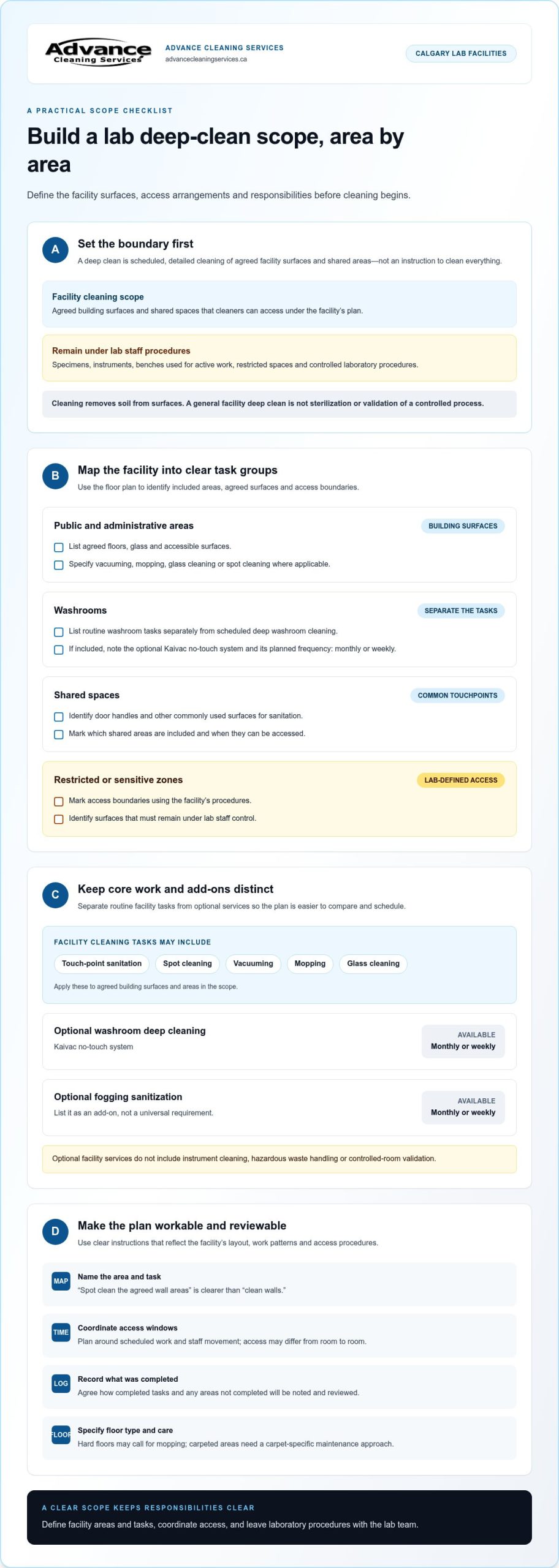
A useful deep clean starts with a defined boundary. It is planned, detailed cleaning of agreed facility surfaces and areas, not an open-ended instruction to “clean everything.” This distinction helps a lab decide which building surfaces need attention, what belongs in routine janitorial service and which responsibilities stay with facility staff.
Quotable definition: “Medical lab deep cleaning is scheduled, detailed cleaning of agreed facility surfaces and shared areas; it does not include handling specimens, cleaning instruments or carrying out the lab’s controlled procedures.”
How lab deep cleaning differs from routine facility cleaning
Routine facility cleaning addresses recurring needs such as floors, washrooms and frequently touched surfaces. A scheduled detailed clean can add attention to agreed building surfaces that may not need the same treatment on every routine visit. Depending on the facility’s scope, examples might include washing accessible wall areas, cleaning door frames or giving more detailed attention to shared surfaces and floors.
The distinction is about the work area and task, not a promise of sterilization. Cleaning removes soil from surfaces; it should not be described as making a room sterile or validating a controlled process. For context, terminal cleaning in healthcare environments is a separate concept with its own context and procedures. A general facility deep clean is not equivalent to it.
Lab personnel retain control of laboratory procedures and decisions about specimens, instruments, benches used for active work and restricted spaces. Before work begins, identify which surfaces are available for facility cleaning and which must remain under the lab team’s care. Clear boundaries reduce crossed responsibilities and give cleaners a practical, agreed scope to follow.
Why Calgary lab operations shape the cleaning plan
Calgary is the local focus, but a useful cleaning plan is shaped by the individual facility rather than assumptions about every lab in the city. Layout, room use and daily work patterns vary. A reception area, staff washroom, corridor and active work room may each need different access arrangements and task boundaries.
Before setting the scope, consider:
- Which rooms and shared spaces are included, and which are restricted?
- When can cleaning take place without disrupting scheduled work or staff movement?
- Are there surfaces facility cleaners should avoid or leave to lab personnel?
- How will agreed tasks and any areas not completed be recorded?
These details make deep cleaning for medical labs Calgary facilities require more practical to plan and review. A well-defined scope gives the cleaning team clear instructions while leaving the lab to manage its own procedures. It also creates a starting point for matching tasks to the facility’s schedule.
What a Medical Lab Deep-Cleaning Scope Can Cover in Calgary
A useful scope turns the facility’s floor plan into a practical task list. For deep cleaning for medical labs Calgary facilities, organize the list by area rather than relying on a broad phrase such as “full clean.” This makes it easier to see what is included, what needs a separate arrangement and which spaces are outside the cleaning boundary.
Map facility areas before assigning tasks
Start with public, administrative, washroom and shared facility areas. Then mark rooms or surfaces where access depends on the lab’s own work procedures. The map should describe building areas and surfaces, not instruments, specimens or controlled processes.
- Public and administrative areas: Note floors, glass and accessible surfaces that need vacuuming, mopping, glass cleaning or spot cleaning.
- Washrooms: List routine washroom tasks separately from scheduled deep washroom cleaning.
- Shared spaces: Identify touchpoints such as door handles and other commonly used surfaces for sanitation.
- Restricted or sensitive zones: Mark access boundaries using the facility’s procedures, and identify surfaces that remain under lab staff control.
This area-by-area format prevents vague scope descriptions and helps confirm that listed tasks match the spaces cleaners can access. Keep tasks specific: “spot clean the agreed wall areas” is clearer than “clean walls,” especially where access or room use varies.
Separate core tasks from optional services
Keep the regular scope distinct from optional work so the plan is easier to compare and schedule. Facility cleaning tasks can include frequent touch-point sanitation, spot cleaning, vacuuming, mopping and glass cleaning on agreed building surfaces. The areas and task boundaries should reflect the facility’s layout and access procedures.
Optional washroom deep cleaning using the Kaivac no-touch system is available monthly or weekly. Fogging sanitization is also available as an add-on monthly or weekly. Neither is a universal requirement for every lab; its place in the scope depends on the facility’s needs and agreed plan. These options apply to facility cleaning, not instrument cleaning, hazardous waste handling or controlled-room validation.
Keep floor care and add-ons easy to compare
When reviewing a task list, separate floor types and work methods. A hard floor may call for mopping, while carpeted areas require a different care plan. Keeping those needs distinct helps avoid assuming that a general deep-clean scope covers every floor surface. List optional services separately, with the area and planned frequency, so it is clear what is included.
For carpeted spaces, use a carpet-specific maintenance approach rather than treating carpet care as interchangeable with mopping or vacuuming. A clear written scope gives the facility and cleaning team a shared reference for agreed tasks, access boundaries and add-ons. To discuss facility cleaning for your site, explore medical facility cleaning services.
How to Compare Deep Cleaning for Medical Labs in Calgary
Compare service plans by the work they describe, not broad promises such as “fully sanitized.” A clear plan should show which facility areas are included, how access is planned, what products are used, how service is reviewed and which tasks are optional. This makes differences easier to see and keeps lab procedures separate from facility cleaning responsibilities.
Compare task scope and responsibility boundaries
Before cleaners enter a sensitive work area, document boundaries with the facility team. Identify each included room and surface, the task to be completed and any access restriction. Keep laboratory procedures, specimen handling and instrument care under the lab’s control. Specific wording makes the scope easier to follow and review.
- Task scope: Are the areas and surfaces named, with tasks such as mopping, spot cleaning, glass cleaning or touchpoint sanitation clearly described?
- Access planning: Does the plan identify restricted areas and fit the facility’s access windows and room use?
- Responsibility boundaries: Does it distinguish agreed facility surfaces from laboratory procedures, specimens and instruments?
- Products: Is the product approach clear, without unsupported claims about compatibility with every surface or process?
- Oversight: Is there a defined way to review the work and discuss scope concerns?
- Optional services: Are add-ons listed separately so the facility can judge whether they fit its needs?
For example, “clean the shared corridor floor” is more useful than “deep clean the lab.” Naming the area and task reduces ambiguity. Avoid treating “disinfection” or “sterile” as a catch-all description. A facility cleaning scope should state the work to be performed, not imply instrument reprocessing, sterile-room validation or a guaranteed outcome.
Compare oversight, products, and optional services
Oversight matters after the task list is agreed. Advance Cleaning Services provides dedicated management, with monthly site evaluations as a quality-review touchpoint. This gives clients a regular opportunity to review service observations and discuss whether the agreed facility scope still fits the site. It is an oversight measure, not laboratory-process validation.
Advance Cleaning Services uses eco-friendly cleaning products and professional equipment. Product choice should still be considered alongside the surfaces and procedures identified by the facility, rather than assumed suitable for every laboratory material or controlled area. Clear responsibility boundaries remain essential.
Optional services belong in the comparison when they address an agreed facility need. Monthly or weekly deep washroom cleaning using the Kaivac no-touch system is available, as is monthly or weekly fogging sanitization. Neither needs to be treated as a standard requirement for every lab. Compare each option by its intended facility area, timing and place in the agreed scope.
For deep cleaning for medical labs Calgary facilities, a well-organized comparison puts scope and access first, then considers products, oversight and relevant options. That order keeps the decision grounded in the facility’s actual work areas and responsibilities.
Plan a Medical Lab Deep Clean in Calgary Around Daily Work
A practical plan protects the lab’s schedule by making access and responsibilities clear before cleaning begins. The facility team knows how rooms are used, which spaces are restricted and what preparation its procedures require. Share those details early, then use the agreed task list to coordinate work and review what was completed.
Prepare access, timing, and area information
Start with room functions and preferred access windows, not a generic request to clean the entire facility. Identify shared areas, restricted rooms and surfaces facility cleaners can access. Lab staff should manage specimens, instruments and any laboratory-specific preparation under internal procedures. Agree on the work sequence so shared spaces have clear ownership and cleaning fits the day’s operations.
Use a sequence from planning to review
Work through these steps with the people responsible for facility access and lab operations. Keep the sequence in a shared plan so everyone follows the same instructions.
- Map the zones. List the rooms and shared spaces in scope, noting each room’s function and any access restrictions.
- Set access windows. Identify suitable times for each area based on work patterns, room use and the facility’s operating procedures. If a window changes, update the plan before cleaners enter.
- Confirm staff preparation. Have lab personnel prepare restricted or sensitive areas according to internal procedures. Keep specimen and instrument handling with the facility team.
- Agree on the work order. Decide how the team will move between areas, especially where corridors or shared spaces need to remain available to staff.
- Review completed tasks. Compare work against the agreed list, record missed or deferred items and decide how follow-up should be handled.
Specifics make coordination easier. For instance, list a shared washroom as its own zone instead of grouping it under “lab areas.” This gives the facility a clear way to assign access and review the relevant tasks without blurring boundaries around sensitive workspaces.
Review completion and ongoing service needs
Use the original task list as the review tool. Note which agreed areas were completed and capture follow-up items in plain language, such as an inaccessible surface or a task deferred because the room remained in use. Keep recurring janitorial tasks separate from optional services so the scope stays easy to understand. Monthly or weekly Kaivac washroom deep cleaning and fogging are optional services, not universal requirements.
Advance Cleaning Services’ dedicated managers conduct monthly site evaluations as part of the quality-assurance program. These evaluations provide a regular touchpoint to review service and discuss whether the agreed facility plan continues to suit the site.
With zones, timing and responsibilities documented, you’re ready to shape a plan around your facility’s needs. Discuss a cleaning plan with Advance Cleaning Services.
Advance Cleaning Services for Calgary Medical Facilities: Scope and Next Steps
A well-planned service starts with a clear understanding of the facility, its work areas and the tasks in the agreed scope. Advance Cleaning Services provides medical facility cleaning for dental, doctor and veterinary facilities. That experience supports an organized approach to facility surfaces and shared areas, while the lab team retains control of its own procedures, specimens and instruments.
For deep cleaning for medical labs Calgary facilities need, clarity matters more than broad promises. The cleaning plan should identify accessible facility areas and specific tasks without suggesting that a general deep clean validates a controlled room, sterilizes a space or ensures regulatory compliance.
What Advance Cleaning Services brings to a facility plan
Advance Cleaning Services uses eco-friendly cleaning products and professional equipment. Frequent touch-point sanitation is among the available cleaning tasks, and the agreed scope can be shaped around facility surfaces and spaces staff use. Dedicated management supports communication about the cleaning plan, while monthly site evaluations provide a quality-review touchpoint. These features keep the discussion grounded in agreed work rather than assumptions about laboratory processes.
For a lab, define facility work plainly: which shared surfaces are included, which areas have access restrictions and which responsibilities remain with lab personnel. Clear boundaries help the cleaning team focus on assigned tasks and allow facility staff to maintain their own procedures.
What to include when requesting a Calgary cleaning plan
Prepare a concise outline of the site before discussing the work. This gives the planning conversation a practical starting point and helps distinguish a one-time deep-clean request from regular janitorial needs or optional services.
- Facility areas: List public, administrative, washroom and shared areas, along with the building surfaces that need attention.
- Requested tasks: Name needs such as touch-point sanitation, vacuuming, mopping, spot cleaning or glass cleaning.
- Access and timing: Describe preferred access windows, room use and any restrictions.
- Responsibility boundaries: Identify preparation and procedures that remain with facility staff, including specimen and instrument handling.
- Service categories: Separate requested deep-clean tasks from ongoing janitorial work and optional services, such as monthly or weekly washroom deep cleaning.
Keep the description specific. “Clean the agreed shared-area glass” gives clearer direction than “clean the whole lab.” If the facility has broader medical-cleaning needs beyond this project, consider how professional medical facility cleaning in Alberta could fit an ongoing facility plan.
Advance Cleaning Services serves clients in Calgary, Edmonton, Red Deer, Okotoks, Lethbridge, Strathmore, Chestermere, Airdrie and Cochrane, as well as Vancouver, Richmond, Burnaby, Surry, New Westminster, Coquitlam and Abbotsford. Talk with Advance Cleaning Services about medical facility cleaning shaped around your site’s agreed needs.
Set a Clear Starting Point for Your Facility
A cleaning plan can be a useful working document, not just a one-time task list. As room use or access needs change, update the agreed scope so facility staff and cleaners continue to share the same expectations. This keeps future planning grounded in the way your lab operates.
For deep cleaning for medical labs Calgary facilities, a clear next step is to outline your site’s priorities and the facility areas you want included. Bring the room list, preferred access windows and any boundaries set by internal procedures. From there, you can shape a practical plan that respects the distinction between facility cleaning and laboratory responsibilities.
Discuss a cleaning plan for your facility with Advance Cleaning Services. Share your priorities and the agreed facility areas to start a focused conversation about a plan for your site.
Frequently Asked Questions
How often should a medical lab in Calgary schedule deep cleaning?
There’s no single interval that suits every lab. Set the timing according to the facility’s work patterns, room use and cleaning priorities, then keep recurring janitorial tasks separate from occasional detailed work. Advance Cleaning Services offers deep washroom cleaning using the Kaivac no-touch system monthly or weekly. That frequency applies to this optional washroom service, not automatically to every part of a laboratory.
Can a medical lab deep clean be scheduled outside regular operating hours?
Plan timing around access windows the facility can authorize. Share preferred periods and room-use limits as part of the cleaning plan, then coordinate the work sequence so cleaners aren’t directed into spaces that are in use or restricted. The facility’s operating procedures and approved access arrangements should guide when each agreed area can be cleaned.
Do professional cleaners clean laboratory instruments or handle specimens?
No. A facility cleaning scope covers agreed building surfaces and areas, not instrument care or specimen handling. Lab staff should retain responsibility for those items and follow the facility’s own procedures for preparing work areas. For instance, staff can identify a restricted bench or room as outside the cleaners’ scope. Clear boundaries help prevent facility cleaning tasks from being mistaken for laboratory work.
Can eco-friendly cleaning products be used in a medical laboratory?
Advance Cleaning Services uses eco-friendly cleaning products, but suitability depends on the particular surface and the facility’s procedures. Identify surfaces or areas with specific product restrictions before work is planned, and keep those decisions with responsible facility staff. For example, note any surface that requires a particular cleaning approach in the scope. Eco-friendly describes the products used; it does not mean they are universally compatible.
What information should a lab provide when requesting a deep-cleaning plan?
Share a room list, each area’s function, the facility surfaces that need attention, preferred access windows and restricted spaces. Add the tasks you want considered, such as glass cleaning or floor care, and flag surfaces that must remain under staff control. Separate one-time deep-clean requests from routine janitorial needs and optional services. This gives the planning discussion a specific starting point without disclosing unnecessary specimen or process details.
Is deep cleaning the same as disinfecting a medical laboratory?
No. Cleaning physically removes soil from surfaces, while disinfection uses a suitable product to inactivate pathogens under its directions for use. A deep clean may include detailed cleaning of agreed facility surfaces, but that wording alone doesn’t mean every surface has been disinfected or that a room is sterile. The facility’s procedures should determine where disinfection is required and who is responsible for laboratory-specific tasks.
What should facility staff prepare before cleaners enter a laboratory area?
Staff should identify approved work areas, mark restricted spaces and communicate access or surface limitations before cleaning begins. They should manage specimens, instruments and laboratory-specific preparation under internal procedures. It can also help to identify a facility contact who can clarify room boundaries and access changes on the day. Keep the cleaners’ task list limited to the agreed facility work.