A long-term contract isn’t the only way to arrange commercial cleaning in Calgary. The right service terms depend on your schedule, premises, and cleaning needs. If you’re considering eco-friendly commercial cleaning in Calgary, look for a clear plan that explains the work, products, and routines involved.
A dependable cleaning routine should fit your business rather than force you into a plan that doesn’t. This article explains what to consider when setting the scope and schedule, choosing cleaning products and practices, and adapting service to Calgary offices and business centres. You’ll also find practical details to discuss, from the areas that need attention to the tasks you want included.
Key Takeaways
- Short-term or trial arrangements may be available without a contract, while ongoing service can be structured around your business’s needs.
- Learn what non-toxic products and sustainable cleaning practices can mean for a commercial cleaning plan.
- Cleaning schedules in Greater Calgary can range from nightly service to tailored daytime routines.
- Consider the space, cleaning frequency and requested services when shaping a plan for an office or business centre.
- See how janitorial services, office cleaning and related cleaning support can fit different commercial spaces.
Do I need a contract for commercial cleaning services?
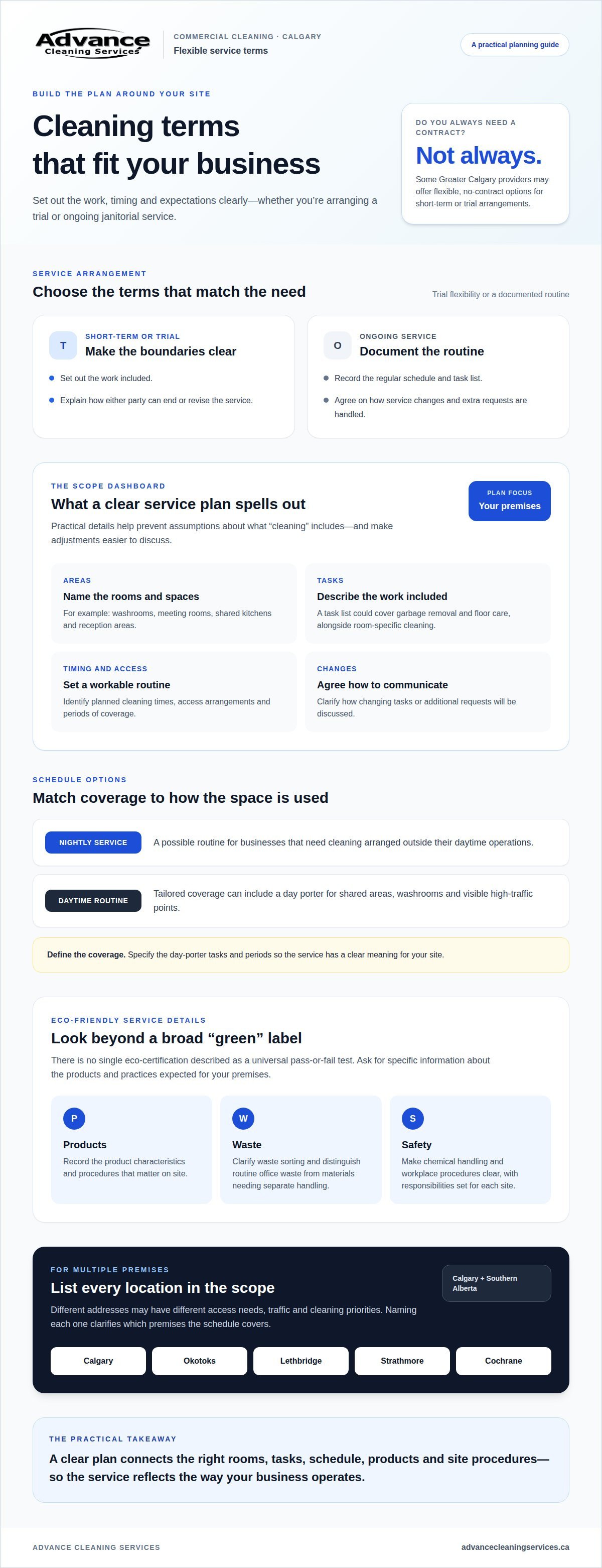
Not always. Some Greater Calgary cleaning companies may offer flexible, no-contract options for short-term or trial arrangements. For ongoing janitorial services, a written agreement can clarify which rooms are covered, how often cleaning takes place, and how service changes are handled. Those details help a business match cleaning services to its premises and routine.
Define the scope in practical terms. An office plan might cover washrooms, meeting rooms, shared kitchens, garbage removal, and floor care. It can also identify planned cleaning times, access arrangements, and how to communicate about changing tasks. If your needs change, a clearly documented scope makes it easier to discuss an adjustment.
For a trial arrangement, set out the work included and how either party can end or revise the service. For a longer agreement, outline the regular schedule, task list, and process for handling extra requests. Commercial cleaning services may differ in scope, so a detailed agreement helps prevent assumptions about what “cleaning” includes. For eco-friendly work, it can also describe the products or practices expected.
There is no single eco-certification that serves as a universal pass-or-fail test. Instead, look for clear, specific information about the products and practices used. The service plan can record the product characteristics and procedures that matter for your premises, rather than relying on a broad “green” label.
Calgary or Alberta requirements can depend on the product, waste stream, and workplace. A sound service plan should account for chemical handling, waste sorting, and workplace procedures, with responsibilities clear for each site. For example, the agreement can distinguish routine office waste from materials that require separate handling, without treating every waste type alike.
Schedule terms matter, too. Commercial cleaning can be arranged around the needs of the premises, including daytime service with a day porter for shared areas, washrooms, and visible high-traffic points. Define the tasks and periods of coverage so “day porter service” has a clear meaning for your site.
For businesses with premises across Calgary and Southern Alberta, list each location in the service scope. A portfolio could include sites in Calgary, Okotoks, Lethbridge, Strathmore, and Cochrane; each address may have different access needs, traffic, and cleaning priorities. Naming the locations helps distinguish a Calgary office from a smaller site elsewhere in Alberta. It also makes clear which premises the schedule covers, rather than implying service across an entire region.
Non-toxic products and sustainable cleaning practices
Eco-friendly commercial cleaning combines product choices with consistent work practices. A tailored plan can describe both, so your environmental priorities and routine cleaning needs are considered together.
Sustainable Cleaning Practices
Look beyond the product bottle to the cleaning method. A consistent plan can assign reusable microfiber cloths to desks and counters, using separate cloths for different areas. Staff should follow product-label directions and use the amount needed for each task. These practical steps help avoid unnecessary product use and keep work organized.
Operational choices matter, too. Grouping tasks by area can avoid repeatedly cleaning the same surfaces, and refillable containers may suit some products and suppliers. In a shared kitchen, for example, the plan can set a sequence for counters, sinks, and floors. Describe the approach clearly instead of relying on a broad “green” claim.
Checking Green Claims and Product Safety
Review the product name, label, and safety data sheet, then compare the stated use with the tasks in the cleaning plan. Check whether “plant-based” describes the ingredients or is simply a marketing phrase. A product’s origin alone does not establish that it is harmless or suitable for every surface. Clear records make product selection easier to understand.
Product safety also depends on how a cleaner is used. Its label explains the intended use, application, and precautions. Cleaning procedures should account for workers, building occupants, and surfaces. The review can also identify where a different product or method is appropriate, such as on delicate finishes.
Benefits and Limitations
Green products and techniques can help reduce reliance on ingredients your business wants to avoid. Reusable supplies and careful product use can also support consistent routines. However, “eco-friendly” does not mean that every product suits every task. Grease, heavy soil, and different floor finishes may require different products or methods.
The goal for offices and facilities is effective cleaning with a considered environmental approach. A plant-based product still needs to suit the surface and task, while a non-toxic claim does not replace label directions or safe handling. Match products and techniques to the site’s needs, then include those choices in the service plan.
A busy reception area may need a different floor-care routine from a lightly used meeting room. The plan can identify the products, reusable supplies, and techniques for each area. This level of detail helps keep practices consistent and gives your business a clear basis for discussing environmental priorities and cleaning quality.
Commercial cleaning for offices and business centres
Office cleaning works best when tasks reflect how each workspace is used. In a Calgary business centre, reception, meeting rooms, washrooms, and shared kitchens may need different attention. A planned routine can distinguish regular janitorial tasks from periodic floor or upholstery care, keeping visible areas presentable without treating every room alike.
Touchpoint cleaning focuses on frequently handled surfaces, such as door handles, elevator buttons, reception counters, and shared printer controls. Include these points in a clear task list and follow a consistent sequence through each area. A shared kitchen plan, for example, might cover table surfaces, cupboard handles, sink taps, and appliance fronts. The list should reflect the building’s layout and use.
Janitorial work can support order across common spaces. A service plan might include emptying garbage, cleaning washrooms, refreshing shared kitchens, and addressing visible spills. In a multi-tenant office, defined responsibilities distinguish tenant areas from common corridors and lobbies. Clear instructions also help staff report issues, such as a spill near an elevator, separately from scheduled cleaning.
Office cleaning and disinfection are related but distinct tasks. Plan disinfection for the surfaces and situations that call for it, and use products according to their label directions. Allergies or sensitivities, including fragrance concerns, may affect product selection. A site plan can also set cleaning times and access arrangements to reduce disruption to staff, meetings, and visitors.
Service interruptions are easier to manage when the cleaning sequence accounts for occupied rooms and busy periods. A team can clean a boardroom after a scheduled meeting rather than interrupting it. In a reception area with steady visitor traffic, the plan can prioritize visible surfaces while keeping walkways clear. Include access procedures and work timing in the service instructions.
Business centres often combine private offices and shared facilities, so one routine may not suit every zone. A tailored schedule can identify areas for regular attention and those needing periodic care. It can set expectations for entrances, meeting rooms, washrooms, and shared kitchens. This structure supports a clean, professional workspace without promising that every surface will stay spotless throughout the workday.
Before service begins, map the premises, identify shared and private areas, and organize tasks by priority. This practical walkthrough helps align the schedule with building operations and gives the cleaning team a basis for adjusting task frequency when room use, traffic, or access changes.
Customised commercial cleaning solutions
A tailored cleaning plan starts with the facility’s layout, use, and priorities. Map areas such as reception, workstations, washrooms, and storage rooms, then define the tasks for each. A busy entrance may need regular floor attention, while a low-use meeting room may need less frequent service. This creates a practical scope instead of a one-size-fits-all routine.
Schedules can also reflect how a business operates. Commercial cleaning in Greater Calgary can range from standard nightly service to customized daytime schedules. A plan might assign routine cleaning to quieter periods and reserve specific tasks for times when rooms are available. If a facility’s hours or occupancy change, the schedule and task priorities can be adjusted to match.
A useful plan spells out what’s included, how often work is performed, and which areas are covered. It can distinguish regular cleaning from additional services such as carpet or upholstery cleaning. These details prevent confusion over whether a task belongs to the recurring schedule or is a separate request. For multi-use facilities, separate lists can clarify expectations for offices, shared areas, and public-facing spaces.
A commercial cleaning quote reflects the premises and requested scope. Key factors include the space size, cleaning frequency, requested services, and use of eco-friendly products and practices. A clear quote connects those details to the proposed work. For example, a facility needing more frequent floor care may require a different plan from one focused on washrooms and shared kitchens.
Include access arrangements in the service plan. Record entry procedures, restricted areas, and where supplies or waste should be handled. A site may require staff to use a designated entrance and avoid a locked records room. Clear instructions help the cleaning team follow facility procedures and reduce interruptions.
Some facilities require an insured contractor or specific insurance documentation before work begins. Record those requirements separately from the cleaning task list, alongside access instructions and site contacts. This keeps operational details organized without confusing them with the cleaning scope. A designated contact can communicate changes, such as a temporarily closed room or revised entry procedure.
To shape a customized cleaning plan, review the premises, establish priorities, and document the agreed tasks and schedule. The plan gives everyone a shared reference point and makes it easier to discuss adjustments when facility use, service needs, or environmental preferences change.
Eco-friendly commercial cleaning in Calgary
For businesses seeking eco-friendly commercial cleaning in Calgary, the useful measure is how well environmental priorities fit the building’s daily needs. Calgary has more than 1.3 million citizens, and its workplaces range from individual offices to shared business centres. A practical plan should identify the spaces being cleaned, the tasks involved, and the products or practices selected for them.
Start with the building’s different zones. A reception area, staff kitchen, washroom, and private office may need different routines. A plan can separate regular surface cleaning from less frequent floor care, then assign suitable methods to each. This keeps attention on the actual work instead of treating “green cleaning” as a single product choice.
Next, connect environmental preferences to clear service expectations. Your business may prefer plant-based products for routine tasks, reusable cleaning supplies, or reduced use of unnecessary products. Describe which preferences apply to which tasks. Specific instructions give you a practical basis for discussing whether the work meets expectations.
Buildings also differ in access, room use, and traffic through shared spaces. A Calgary office with a busy entrance may need a different cleaning sequence from a quieter workspace. The plan can identify high-use areas, set task priorities, and explain how cleaners handle spaces that remain occupied. These details support consistent work while respecting how staff and visitors use the premises.
Environmental goals should not come at the expense of cleaning performance. The product and method still need to suit the surface and task. A method appropriate for a desk may not work for carpet or a delicate finish. A professional plan can distinguish those needs, document the approach, and adapt it when building requirements change.
Review the plan with three practical questions: Are the priority spaces named? Are products and practices clearly described? Does the schedule match how the building operates? These checks focus the discussion on specific work and help identify unclear tasks, such as whether shared kitchens or meeting rooms are part of routine service.
For Calgary businesses, define environmental preferences alongside the scope, schedule, and building use. That combination makes a cleaning plan easier to understand and assess. Focus on documented tasks, the methods assigned to each space, and how the routine supports a clean, usable workplace, rather than relying on a broad claim.
Advance Cleaning Services Inc.
Advance Cleaning Services Inc. helps businesses plan professional cleaning around their premises and routine. Its office cleaning and janitorial services can support commercial spaces, while carpet cleaning addresses flooring needs beyond regular upkeep. Share the areas that need attention, your preferred schedule, and any environmental priorities you want reflected in the cleaning plan. This gives the service team a clear picture of the work involved and the outcomes that matter to your workplace. For businesses seeking a dependable cleaning routine in Calgary, these services offer a practical next step after considering contract flexibility, products, and site-specific requirements.
Contact Advance Cleaning Services Inc. to discuss cleaning needs for your business.
Set a clear direction for your cleaning plan
Turn your workplace priorities into a practical service scope. Decide which areas need regular attention, what matters most to daily operations, and how environmental preferences should inform the plan. A clear starting point keeps the discussion focused on your building’s needs, rather than assumptions about what the service includes.
For eco-friendly commercial cleaning in Calgary, align your expectations with the specific tasks and service requirements. Advance Cleaning Services provides office cleaning, janitorial services, and medical facility cleaning. Share your workplace’s cleaning needs to discuss a suitable service plan.
Whether you’re planning service for an office or a medical facility, a direct conversation can help clarify the scope you need. Contact Advance Cleaning Services Inc. to discuss your commercial cleaning requirements and move forward with a plan that suits your workplace.
Frequently Asked Questions
Do you bring your own supplies and equipment?
Professional cleaning equipment is used, and chemical and paper products can be supplied for your facility. If you already stock particular items, include that in your service request so the plan can account for them. For example, note whether washroom dispensers need restocking or whether your building has designated storage for cleaning materials. This clarifies supply responsibilities before routine service begins.
How far in advance should I book?
Plan your booking around the date you want service to begin and any preparation your site requires. An office with straightforward access may need less coordination than a medical facility with multiple rooms and specific entry procedures. Include your preferred start date, operating hours, location, and requested tasks in your initial request. These details help establish a workable schedule for your facility.
What cleaning products do you use?
Eco-friendly cleaning products are used in cleaning services. The product selected for a task should suit the surface and intended use, so a hard-floor product may differ from one used on upholstery. If your workplace has fragrance sensitivities or material-care requirements, include them in the service details. This gives the cleaning team relevant information for planning the work.
What is green cleaning?
Green cleaning combines environmentally conscious product choices with practical cleaning methods. For example, a workplace plan might identify products used on floors, desks, and washroom surfaces, along with reusable supplies where appropriate. The term alone doesn’t describe the full service. Businesses can understand the approach more clearly by looking at the actual products, tasks, and procedures proposed for their premises.
What eco-friendly commercial cleaning services are available in Calgary?
Commercial cleaning in Calgary can include office and janitorial services, as well as medical facility and carpet cleaning. The right combination depends on the building and the work required. A dental clinic, for example, has different room-use needs from a general office. Describe your facility type and the areas requiring attention to shape a suitable service scope.
How much does commercial green cleaning cost in Calgary per square foot or visit?
A quote reflects the premises and requested scope, including space size, cleaning frequency, requested services, and the use of eco-friendly products and practices. A per-visit scope may differ from recurring service, while a larger premises may require more work. Share your requirements to receive a quote for the cleaning plan you need.
What should businesses include in a quote request for eco-friendly commercial cleaning?
Include the Calgary site address, building type, areas to be cleaned, preferred schedule, and requested tasks. Note environmental priorities, such as preferred product characteristics, along with access instructions or restricted rooms. For example, an office request can identify shared kitchens, washrooms, and carpeted areas. These details help define the work and provide a clear basis for a quote.
Which Calgary commercial cleaning providers serve specific areas and building types?
Advance Cleaning Services serves Calgary, Edmonton, Red Deer, Okotoks, Lethbridge, Strathmore, Chestermere, Airdrie, Cochrane, Vancouver, Richmond, Burnaby, Surrey, New Westminster, Coquitlam, and Abbotsford. Commercial services include cleaning for offices, retail businesses, and medical, dental, and veterinary facilities. Since rooms, surfaces, and tasks differ by building type, include your location and facility type when describing the service you need.