Imagine a Monday morning meeting where a spilled coffee leaves a dark mark on your executive chair just minutes before a major client arrives. It’s a frustrating moment that many office managers know well. You likely worry that a quick scrub will leave a permanent water ring or bleach the fabric of an expensive ergonomic investment. Effective office furniture stain removal is a science that requires the right balance of speed and caution to protect the professional colour and integrity of your workspace.
We understand that your office environment represents your brand’s commitment to excellence. This guide will show you how to identify, treat, and remove stubborn marks while protecting your commercial assets from accidental damage. You’ll learn to decode the W and S cleaning symbols, stay compliant with the latest WHMIS safety standards, and recognize exactly when a stain requires the steady hand of a professional expert. We’ll help you realize which methods work best for your specific textiles so you can maintain a pristine atmosphere for your employees and guests alike.
Key Takeaways
- Understand how immediate action on spills protects your company’s professional image and extends the life of expensive seating.
- Learn to decode manufacturer tags like “W” and “S” to avoid accidental fabric damage or permanent discolouration.
- Master the proper blotting techniques for office furniture stain removal to handle coffee and ink spills without spreading the mess.
- Recognize when a DIY approach risks a costly furniture replacement and why standard household tools often fall short.
- Discover how professional upholstery cleaning provides a deep restorative clean that standard office vacuums can’t achieve.
The Impact of Office Furniture Stains on Professionalism and Asset Longevity
First impressions are often permanent. In corporate centres like Calgary and Vancouver, your reception area acts as a physical handshake for your brand. When a potential client sits on a stained chair, their trust can waver. They might wonder if your attention to detail in professional contracts matches the neglect shown to your physical assets. A clean workspace communicates discipline and success. It shows that you care about the environment you provide for both guests and staff.
Furniture is more than just a place to sit. It’s a significant capital investment. For many Alberta businesses, a single ergonomic chair can cost hundreds of dollars. Consistent office furniture stain removal isn’t just about aesthetics; it’s about protecting that investment. Neglect leads to the degradation of fabric fibres. Coffee acidity and winter salt tracked in from the street act like sandpaper on textiles. Over time, these particles break down the weave, leading to premature thinning and tears. Replacing a whole floor of furniture due to poor maintenance is a cost that most budgets don’t need.
Your team notices their surroundings. Working in a space filled with coffee-ringed desks and dingy seating can dampen morale. A clean, well-maintained office signals that management values the workspace and the people in it. It fosters a sense of pride and professionalism that translates into better performance. When employees feel they are in a high-standard environment, they are more likely to uphold those standards themselves.
Commercial vs. Residential Upholstery
Commercial Upholstery is engineered differently than the sofa in your living room. Manufacturers design these fabrics to withstand thousands of “rubs” and heavy daily use. They often use synthetic blends or tightly woven natural fibres treated with fire-retardant chemicals. While durable, these treatments can react poorly to generic household cleaners. Using the wrong chemical on a commercial-grade chair can cause permanent discolouration or strip away protective coatings. It’s why understanding the specific chemistry of office furniture stain removal is so vital for maintaining fabric integrity.
The ROI of Regular Furniture Maintenance
Consistent care significantly extends the lifecycle of your assets. A high-quality chair that might fail after five years of neglect can easily last ten years with professional maintenance. This proactive approach also improves indoor air quality. Porous fabrics trap dust mites and allergens that standard vacuums can’t reach. By integrating upholstery care into your broader janitorial services Alberta strategy, you create a healthier environment. It’s a simple calculation: the cost of a periodic cleaning service is a fraction of the price of total furniture replacement. Before committing to a service provider, reviewing current upholstery cleaning prices in Canada helps you budget accurately and avoid low-ball quotes that may compromise quality.
Deciphering Upholstery Cleaning Codes: The Science of Fabric Care
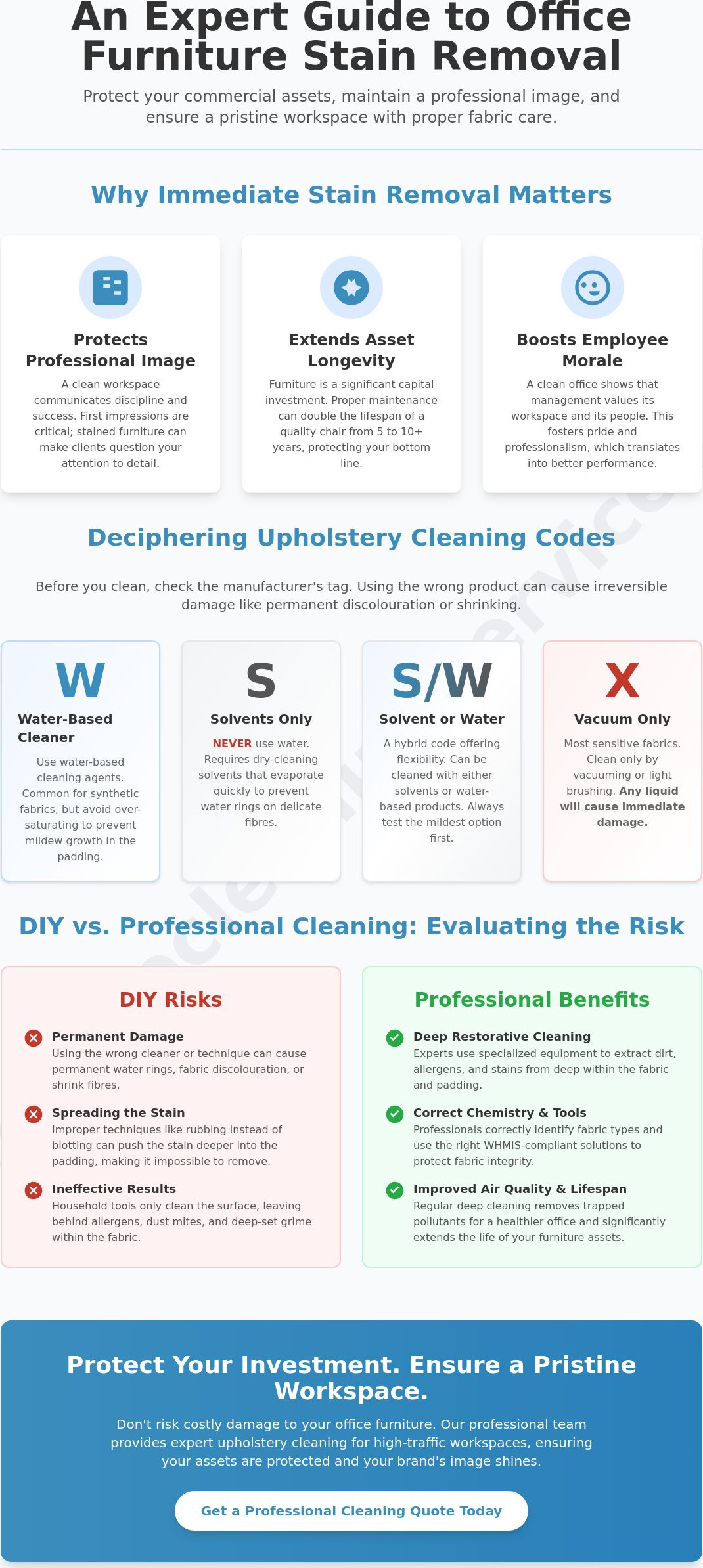
Before you begin any office furniture stain removal, you must understand the language of the manufacturer. Every piece of commercial furniture comes with a chemical blueprint. These codes aren’t just suggestions; they’re strict boundaries designed to prevent permanent damage. According to the Smithsonian’s Stain Removal Guide, matching the right solvent to the specific fibre type is the only way to ensure the stain is lifted rather than set permanently into the weave. Using water on a fabric designed for solvents can cause the fibres to swell or shrink, leaving a ring that is often harder to remove than the original spill.
- Code W: This is the most common for synthetic office chairs. It allows for water-based cleaning agents. While it’s the most forgiving, using too much water can still lead to mildew in the padding.
- Code S: This requires dry-cleaning solvents. You must never use water on these fabrics. Solvents evaporate quickly, preventing the “water ring” effect often seen on delicate executive seating.
- Code S/W: This hybrid code offers the most flexibility. You can use either water-based or solvent-based cleaners, though it’s always best to start with the mildest option first.
- Code X: These fabrics are the most sensitive. They should only be cleaned by vacuuming or light brushing. Applying any liquid cleaner to a Code X fabric often results in immediate and irreversible discolouration.
Where to Find and How to Read Your Furniture Tags
You’ll typically find these labels tucked under the seat cushion or stapled to the underside of the chair frame. For acoustic desk dividers or modular sofas, check the bottom seams or behind zippers. If a tag has been removed or is illegible, don’t guess. You can perform a patch test on a hidden area, such as the underside of an armrest or the back of a skirt. Apply a small amount of your cleaner and wait for it to dry completely. This reveals if the chemical causes “bleeding” or changes the texture of the fabric before you tackle the visible stain. If you’re managing a large facility with various fabric types, our team can help you organize a professional maintenance plan to keep every piece in top condition.
Common Cleaning Solvents for Office Environments
Effective cleaning relies on the proper pH balance. Most general office grime responds well to pH-neutral detergents that lift dirt without stripping fabric dyes. For tougher challenges like ink from a leaking pen or adhesive residue from a label, isopropyl alcohol is often the tool of choice for “S” coded fabrics. Always prioritize safety by ensuring the room is well-ventilated. In Canada, all cleaning chemicals used in a commercial setting must be WHMIS-compliant. This ensures that you have access to Safety Data Sheets (SDS) and understand the proper PPE required to protect your staff during the process.
Step-by-Step Removal Guide for Common Office Stains
Speed is your ally when a spill occurs. However, the wrong technique can turn a minor spill into a permanent blemish on your professional environment. The fundamental law of office furniture stain removal is to blot, never rub. Rubbing creates friction that generates heat and pushes liquid deeper into the upholstery padding. This can trap moisture and chemicals where they are impossible to reach. Use a clean, white microfibre cloth to lift the substance away from the surface. Work from the outside of the spill toward the centre to prevent the spot from spreading. This disciplined approach preserves the texture of the fabric and prevents the fibres from fraying.
Protocol for Coffee and Tea Spills
Coffee is a tannin-based stain that requires specific chemistry to break down. Start by absorbing as much liquid as possible with a dry cloth. You can create a mild solution by mixing one tablespoon of white vinegar with half a teaspoon of liquid dish soap in a cup of cool water. Apply this sparingly to the area. To avoid the unsightly “halo” effect, feather the edges of the damp spot as it dries. This means lightly dampening the area around the stain so there isn’t a sharp line between the wet and dry sections of the chair.
Ink and Toner: The Office Manager’s Nightmare
Ink and toner require completely different strategies. Toner is a fine plastic dust, not a liquid. If you apply a wet cloth to a toner spill, you will create a permanent black smear. Always use a vacuum with a HEPA filter to lift the dry powder first. For ballpoint pen marks, a surgical application of isopropyl alcohol on a cotton swab often works best. Press the swab directly onto the ink line and lift. Avoid saturated movements that might cause the ink to bleed into the surrounding microfibre or mesh.
Food and Grease from Desk Lunches
Grease is a common issue in modern workspaces. If salad dressing or a buttery snack hits a fabric chair, apply cornstarch or baking soda immediately. Let the powder sit for fifteen minutes to draw the oils out of the weave before vacuuming it away. For lingering odours or protein-based spills like milk, an enzyme-based cleaner is effective. These cleaners “eat” the organic material causing the smell. This is a vital step for maintaining the high standards expected in commercial carpet cleaning Calgary and upholstery care.
In Canada, winter presents a unique challenge. Road salt and slush can leave white, abrasive rings on chair bases and lower upholstery. This salt is chemically aggressive and can weaken fabric over time. Use a solution of equal parts water and vinegar to neutralize the salt. The same road salt and gravel that damages your upholstery also penetrates deep into office flooring, which is why pairing your furniture care with deep carpet cleaning Alberta services gives your workspace a comprehensive defence against winter contaminants. In humid climates like Vancouver, moisture control is the final, critical step. Ensure you use a fan or a specialized air mover to dry the furniture quickly. Leaving fabric damp for too long in a closed office can lead to mildew, which creates a health hazard for your team.
DIY vs. Professional Upholstery Cleaning: Evaluating the Risk
Attempting a quick fix with a twenty-dollar bottle of grocery store cleaner seems efficient until it results in a thousand-dollar replacement bill. Many office managers realize too late that commercial fabrics react differently than residential textiles. While basic office furniture stain removal techniques work for small, fresh spills, the risk of permanent damage increases with every scrub. A common mistake is using too much liquid, which saturates the internal foam and causes the furniture frame to rust or warp from within. This moisture trap is often invisible until the smell of mildew begins to permeate the workspace.
Household “steam” cleaners often lack the vacuum power required for commercial-grade extraction. They inject water and soap but fail to pull it back out effectively. This leaves the fabric damp for hours, inviting bacterial growth and compromising the internal structure of the chair. Professional equipment utilizes high-pressure extraction that removes the sticky soap residue that DIY methods leave behind. Without proper rinsing, that leftover soap acts like a magnet for dust, causing the chair to look dirty again within weeks of the “cleaning.” Understanding professional upholstery cleaning prices and what they include helps you make an informed comparison between DIY costs and the true value of expert service.
In environments requiring medical facility cleaning Alberta standards, the stakes are even higher. Standard stains in a clinic or dental office aren’t just aesthetic issues; they are potential biohazards. Professional services ensure that disinfection protocols meet current health standards without compromising the structural integrity of the upholstery. We provide a level of thoroughness that protects both your patients and your capital assets through specialized chemical application.
Signs You Should Call a Professional
- Surface Area: If the stain covers more than 10% of the seat or backrest, DIY blotting is rarely effective and often leads to uneven “clean spots” or permanent rings.
- Delicate Materials: Natural blends like wool, silk, or high-end leather require specialized pH-balanced solvents and low-moisture techniques that household tools cannot provide.
- Set Stains: If a previous DIY attempt failed or if the furniture was exposed to high heat, the pigment is likely “set” into the fibres and requires industrial-strength lifting agents.
What Professional Hot Water Extraction Offers
Professional hot water extraction is the gold standard for restorative care. It reaches deep into the fabric weave to lift allergens, bacteria, and deeply embedded oils that standard vacuums miss. Our technicians control the water temperature and suction levels to ensure the furniture is dry and ready for use in a fraction of the time required by home tools. We also apply professional-grade fabric protectors. This creates an invisible barrier that gives your staff more time to react to future spills before they become permanent marks. If your workspace needs a restorative touch, book our professional upholstery cleaning services today to protect your investment and maintain a healthy environment.
Advance Cleaning Services Inc.: Professional Restoration for High-Traffic Workspaces
In environments like medical, dental, and veterinarian clinics, hygiene isn’t just about appearance. It’s a safety requirement. We utilize eco-friendly and scent-free cleaning agents to protect the health of your staff and clients. This ensures that shared office spaces remain accessible to those with sensitivities while maintaining the highest sanitation standards. Our technicians are well-versed in the latest protocols for both upholstery and commercial carpet cleaning Calgary, ensuring every fibre is treated with the appropriate standard of care.
Customized Maintenance Plans for Alberta Businesses
Most facilities operate in a reactive mode, calling for help only after a major spill occurs. We encourage a proactive shift toward long-term asset protection. By establishing a quarterly maintenance plan, you prevent the accumulation of oils and grit that lead to permanent fabric damage. You can bundle your upholstery care with our routine janitorial services or post-construction cleanup for a streamlined facility management experience. We offer flexible scheduling options to ensure our work happens with minimal disruption to your daily operations. This organized approach allows you to budget effectively while keeping your office looking its best.
Our Expertise in Specialized Remediation
Some situations require more than standard care. We handle tough biohazard and extreme cleaning scenarios that many general cleaners are not equipped to manage. Our professional staff is trained in rigorous safety and sanitation protocols to manage complex environments safely and discreetly. We act as a steady hand in busy environments, providing the reliability you need to focus on your core business. Whether you are dealing with a single stubborn spot or require a full-floor restoration, our team is ready to help. Contact us today to arrange a walkthrough and receive a detailed maintenance quote for your facility.
Invest in a Cleaner, More Professional Workspace
Maintaining a pristine office requires a balance of immediate action and professional expertise. You now understand how to decode fabric tags and why the “blot, don’t rub” rule is the foundation of successful office furniture stain removal. While small spills are manageable with the right knowledge, deep restorative care ensures your assets remain in service for years to come. Protecting your investment today prevents the high cost of premature replacement tomorrow.
Advance Cleaning Services Inc. has served businesses across Alberta and the Vancouver area for over 20 years. Our IICRC Certified technicians specialize in the high-level sanitation required for medical and dental facilities. We bring a steady hand and a disciplined approach to every project, ensuring your workspace remains healthy and impressive for every visitor. We take pride in our workmanship and our commitment to your long-term satisfaction.
Request a Professional Upholstery Cleaning Quote for Your Office today to see the difference our experience makes. Let us help you protect your investment with a standard of care you can trust. We look forward to helping you maintain a workspace that reflects your professional excellence.
Frequently Asked Questions
How do I remove coffee stains from an office chair?
Blot the spill immediately with a clean, white cloth and cold water to prevent the tannins from bonding with the fabric fibres. If the spot remains, apply a mixture of mild detergent and water, then rinse by dabbing with a damp cloth. This method is the most effective first step for office furniture stain removal before the liquid reaches the internal foam. Avoid using hot water, as it can permanently set the stain into synthetic materials.
What does the “S” cleaning code mean on office furniture?
The “S” code signifies that only pure, water-free solvents should be used for cleaning. Using water on these fabrics can cause permanent shrinking, staining, or “bleeding” of the upholstery dyes. You can find these specialized dry-cleaning solvents at most professional supply stores. Always ensure you work in a well-ventilated area to manage the fumes associated with these chemical agents, as they evaporate quickly to prevent water rings.
Can I use a steam cleaner on my mesh office chair?
You should avoid using high-heat residential steam cleaners on mesh chairs because excessive heat can compromise the tension of the synthetic weave. While mesh is durable, it is often made of polyester or nylon that can warp or lose its shape under extreme temperatures. A better approach is to use a vacuum with a brush attachment followed by a light application of a pH-neutral cleaning solution and a low-moisture extraction method.
How do I get ink out of a fabric chair without alcohol?
You can use a glycerin-based cleaner or a specialized non-alcohol surfactant to lift ink pigments safely. Apply a small amount of the cleaner to a cotton swab and press it firmly into the mark without spreading the liquid. This process breaks down the oils in the ink so they can be blotted away. Always follow up with a clean, damp cloth to remove any remaining residue from the fabric surface.
Is it worth cleaning old office furniture or should I replace it?
Professional cleaning is almost always the more cost-effective choice if the chair’s mechanical components and internal frame are still functional. A restorative deep clean can remove years of accumulated oils and dust, making the piece look and feel like new for a fraction of the replacement cost. If the hydraulics work and the fabric isn’t torn, office furniture stain removal is a smart way to stretch your facility budget.
How long does it take for a professionally cleaned office chair to dry?
A professionally cleaned office chair typically takes between two and six hours to dry completely. This timeframe depends on the humidity levels in your office and the amount of airflow available in the room. Because professional technicians use high-powered extraction equipment, they remove the vast majority of the moisture during the process. You can speed up the drying time by keeping your HVAC system running or using portable fans.
Are professional cleaning chemicals safe for people with allergies?
Yes, modern professional cleaning agents are designed to be safe for sensitive environments and comply with strict Canadian VOC regulations. As of 2025, new concentration limits ensure that cleaning products used in workplaces have minimal impact on indoor air quality. We prioritize scent-free and hypoallergenic solutions that remove dust mites and allergens from the upholstery. This creates a healthier workspace for your employees without introducing harsh chemical odours.
How often should commercial office furniture be professionally cleaned?
Most Canadian businesses find that a professional cleaning once or twice a year is sufficient for standard office environments. However, high-traffic areas like reception seating or dental clinic waiting rooms may require quarterly maintenance to uphold hygiene standards. Regular cleaning prevents the buildup of grit that acts like sandpaper on fabric fibres. Establishing a consistent schedule helps you maintain a professional appearance and extends the life of your furniture assets.