A quick wipe is not the same as effective disinfection. For high-touch surface disinfection services in Vancouver, the right sequence is to clean away dirt and debris first, then apply disinfectant and keep the surface visibly wet for the contact time on the product label. That gives the disinfectant time to work as directed.
A surface that looks clean is not necessarily disinfected. Cleaning removes dirt and some germs, while disinfection uses chemicals to kill germs remaining on the surface. Knowing the difference helps you understand what thorough workplace or home cleaning should involve.
This guide explains the difference between cleaning and disinfection, identifies common high-touch surfaces, and shows how dwell time affects the process. You’ll also learn what commercial and residential disinfection services can involve, so you can better understand the care needed for shared spaces and frequently handled surfaces.
Key Takeaways
- Cleaning removes soil and some germs; disinfection targets germs that remain, so the sequence matters.
- Map frequently handled surfaces in each space, including shared controls, handles and devices, to focus routine attention.
- Use the disinfectant’s label directions to understand how long a treated surface must stay wet.
- Match the service schedule and scope to how the space is used, from busy workplaces to residential rooms.
- For medical, office and janitorial cleaning needs, understand how professional cleaning services can support a consistent approach.
Cleaning versus disinfection – do you know the difference?
Cleaning removes dirt and some germs; disinfection uses chemicals to kill germs remaining on a surface. A reliable process treats these as separate steps and follows the disinfectant label’s directions.
Cleaning and disinfection steps
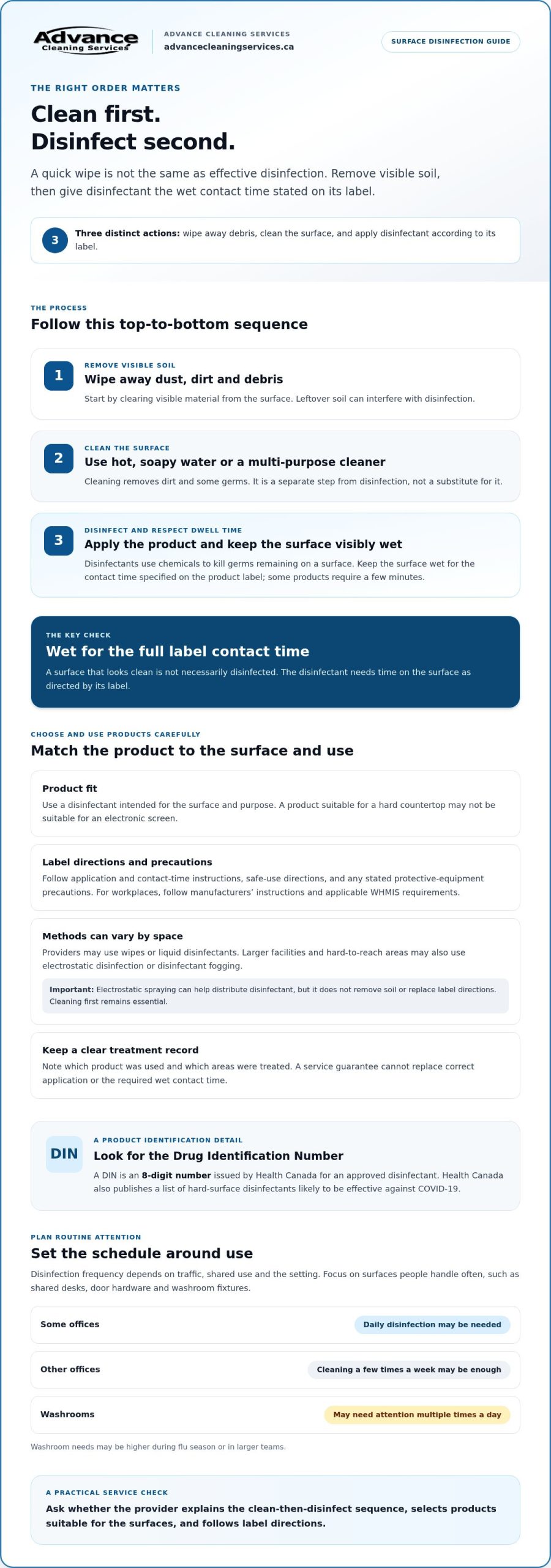
A three-step process removes visible soil before disinfection: wipe away dust, dirt and debris, clean with hot, soapy water or a multi-purpose cleaner, then apply disinfectant. This order matters because leftover soil can interfere with disinfection. Keep the product wet for the contact time on its label. Some disinfectants need to remain on a surface for a few minutes.
For comparing Vancouver services, focus on whether the provider explains this sequence, uses products suitable for the surfaces, and follows label directions. Health Canada publishes a list of hard-surface disinfectants likely to be effective against COVID-19; a Drug Identification Number (DIN) is an 8-digit number issued by Health Canada for an approved disinfectant. Workplaces should also follow manufacturers’ safe-use instructions and applicable WHMIS requirements.
Products and disinfection methods
Commercial cleaning products described as eco-friendly can be considered for routine soil removal, but that description alone doesn’t establish disinfectant effectiveness. For disinfection, look for a product intended for the surface and use, and follow its label for application and contact time. Vancouver providers may use wipes or liquid disinfectants; larger facilities and hard-to-reach areas may also use electrostatic disinfection or disinfectant fogging.
To understand product safety around people, pets and indoor air, follow label precautions, including any stated protective equipment and use directions. Note which product is applied and how the work is recorded. A useful treatment record identifies the areas treated and the product used. A service guarantee cannot replace correct application or the required wet contact time.
Electrostatic spraying can help distribute disinfectant across hard-to-reach areas, but it does not remove soil or replace the product’s label directions. Cleaning first remains essential.
Outbreak and routine disinfection
After a COVID-19 outbreak, professional cleaning and disinfection can address frequently touched surfaces using appropriate PPE, suitable disinfectants and trained staff. The process still starts with removing visible dirt and debris. For equipment between patients, Vancouver Coastal Health guidance emphasizes cleaning and disinfection, followed immediately by disinfection after cleaning.
How often to disinfect depends on traffic, shared use and the setting. Some offices may need daily disinfection, while others may need cleaning a few times a week. Washrooms may need attention multiple times a day, particularly during flu season or in larger teams. Set the schedule according to how often people handle surfaces such as shared desks, door hardware and washroom fixtures.
What Are High-Touch Areas in an Office?
High-touch areas are surfaces people handle repeatedly during normal routines. Start an inventory with shared entrances, workstations, meeting rooms and washrooms.
Common office touch surfaces
Common high-touch surfaces include doorknobs, handrails, elevator buttons, light switches, cabinet handles, faucet handles, tables, countertops and electronics. Employees, visitors and service staff may handle these throughout the day. A clear list helps teams focus on shared contact points rather than treating every surface as equally used.
Frequently handled office surfaces
High-touch surfaces vary with an office’s layout and routines. At reception, the counter edge, entrance handle and shared pen may be used repeatedly. In a meeting room, different people may handle table edges, chair arms, light switches and presentation controls. Listing these examples makes routine cleaning more relevant to how each room is used.
Look beyond obvious handles. Map the route people take through the workplace: entry door, elevator button, corridor handrail, workstation and lunchroom counter. Shared printers, photocopier controls, keyboards, mice and phones also need attention when employees share equipment or use it across shifts. Base the map on actual use, not just a standard checklist.
- Entrances: door hardware, access buttons and reception counters.
- Circulation areas: handrails, elevator controls and light switches.
- Workstations: shared phones, keyboards, mice and printer controls.
- Common rooms: tables, countertop edges, cabinet handles and faucet handles.
Prioritize surfaces by how often they are touched and how widely they are shared. A handle used by staff and visitors differs from a cabinet inside a private office. A shared meeting-room control may also need more regular attention than an object handled by one person. These distinctions help set a practical scope and reduce missed touchpoints during busy routines.
Health Canada’s list of hard-surface disinfectants likely to be effective against COVID-19 can inform product selection, but the surface inventory answers a different question: what needs attention? For example, a disinfectant suitable for a hard countertop may not suit an electronic screen. Match the product directions to the material and intended use.
Keep the inventory usable. Group points by room, note shared equipment, and update the list when desks or common areas change. A structured office cleaning service can support consistent attention to the work areas and shared surfaces identified in that plan.
Make the inventory useful during routine work by following a clear sequence: cleaning first and disinfecting second is the gold standard for professional office cleaning. High-touch point areas should be cleaned frequently and thoroughly, with attention guided by how many people use them and how often.
High-touch points can contribute to the spread of germs in busy areas. Hand washing, sanitizing and consistent surface care work alongside one another. Vancouver Coastal Health’s equipment guidance specifies daily cleaning and disinfection of ventilator exterior surfaces and high-touch areas. Including relevant equipment surfaces in a touchpoint plan keeps the inventory aligned with how the workplace is actually used.
Disinfectant dwell time
Dwell time, also called wet contact time, is how long a disinfectant must remain wet on a surface to work as directed. The required time depends on the product, so follow its label rather than assuming every disinfectant works at the same speed. A product may need to stay wet for a few minutes.
Contact time begins when the product is applied. If the label says to keep a surface wet, it must remain visibly wet for the full stated time. A quick wipe that dries too soon may cut the contact period short. A large countertop, small handle and absorbent material may behave differently, so apply the product as directed.
Cleaning before disinfection supports the process. Dirt, dust and debris can get between the disinfectant and the surface. Remove visible soil first, then apply the disinfectant. Follow the label for application and wet contact time. Don’t wipe it dry early unless the product directions say to do so.
Product instructions cover more than contact time. Vancouver Coastal Health guidance recommends using disinfectants according to the manufacturer’s directions for dilution, temperature, water hardness and use. These conditions matter because incorrect mixing or use outside the directions can affect how a product performs. Follow the stated preparation and application method for the surface being treated.
For example, a shared washroom counter may dry sooner than a freshly treated, less exposed area. If the product requires continuous wetness, check the surface during the contact period and reapply only as the label directs. Don’t shorten the time because the counter looks clean or staff need the room quickly. Drying time is not a substitute for the stated contact time.
Plan the work around the label. Staff can treat one section at a time, note when application begins, and prevent people from touching the area until the required period has passed. The same applies to a high-touch handle: the entire treated surface needs the required wet contact, not just a brief pass across its centre.
Labels also provide essential safe-use directions, including any protective equipment and ventilation instructions. Read them before use, especially when changing products or treating a new material. Don’t mix disinfectants or assume a product suitable for one surface is suitable for another. Correct application, full wet contact and the stated use instructions work together.
A visibly wet surface can help staff see that contact is still underway, but appearance alone does not verify the process. The product label is the practical reference for timing. Following it helps prevent rushed wiping, incomplete coverage and uncertainty about whether the disinfectant had the required time to act.
Definition of high touch points
A high-touch point is a surface or object people handle frequently during their normal activities. In an office, that might be a shared entrance handle, elevator button or workstation phone. The term describes how often people touch something, not how dirty it looks.
Frequency and shared use distinguish these points from less-handled surfaces. A reception counter used by staff and visitors may need more attention than a cabinet inside a private office. Different people may touch a meeting-room switch throughout the day, while an item at one person’s desk has a narrower pattern of use.
Think of the term as a practical way to identify contact points across a room. It includes objects as well as fixed surfaces. Shared electronics, such as a keyboard or mouse, count because people repeatedly operate them. A tabletop may also qualify if staff use it for meetings, meals or shared tasks.
In Canada, a useful workplace inventory can follow the route people take through a space. Consider the entrance, reception area, corridor, meeting room and washroom. At each stop, note the items people use: door hardware, handrails, switches, tables, countertop edges and faucet handles. This creates a location-based picture instead of a generic list.
Use three questions to decide whether an item belongs on the inventory:
- Do several people handle it during their usual routines?
- Is it shared between employees, visitors or shifts?
- Does it sit on a common route, such as an entrance or corridor?
These questions help distinguish frequent contact from occasional contact. For example, different staff may repeatedly use a shared printer control panel, while one employee may use a personal storage drawer. That distinction guides attention without assuming every surface has the same use pattern.
High-touch status is not permanent for every room. A training space used for group sessions has different contact points from a closed office with one occupant. Changes to desk arrangements, shared equipment or room use can also change which items belong on the list. Review the inventory when workplace routines change.
A high-touch point identifies where contact happens; it does not specify the cleaning method or product. A hard countertop, electronic screen and metal handle have different materials and care instructions. Naming each point clearly helps staff match the task to the surface and its use, keeping the workplace inventory practical.
Commercial and residential disinfection services
Commercial and residential disinfection differ mainly in how people use the space, share surfaces and move through it. A Vancouver office, condominium common area and family home each need a scope that reflects their routines.
To arrange service, describe the property, the rooms needing attention and the surfaces people share. Include details such as a busy reception area, shared washroom, kitchen counter or condominium lobby. Before the visit, clear personal items from work surfaces and identify sensitive materials, electronics or areas needing careful access.
Commercial schedules can cover offices, retail spaces, clinics and shared buildings. A reception desk, meeting-room table and washroom fixtures may need different attention from a private office. Workplaces should plan regular, frequent professional cleaning and disinfection around their timelines and requirements. Some may need daily attention; others may need service a few times a week.
Residential cleaning follows household use. A kitchen, bathroom and shared living area may each have distinct touchpoints, while a home office has its own equipment and surfaces. A clear room-by-room scope helps prevent missed areas. Using different cloths for washrooms, kitchens and desks helps reduce cross-contamination between zones.
For both settings, proper product use matters. Vancouver-based services use disinfectants approved by Health Canada, and staff should follow product directions for the intended surface. Cleaning and disinfection plans also need to account for material compatibility, shared access and the time treated surfaces must remain wet. Fogging or electrostatic methods may suit some larger facilities or hard-to-reach areas, but they don’t replace cleaning first.
Recurring service is organized around a site’s use and preferred schedule. Daily cleaning may suit a busy workplace, while another facility may need a few visits each week. After-hours or emergency work requires separate scheduling and should not be assumed to be part of a routine plan. When arranging the scope, state operating hours, access limits and urgency.
Before a visit, secure loose belongings, make work areas accessible and identify priority rooms. At a commercial site, a facilities contact can explain shared equipment and access procedures. At home, residents can point out high-use rooms and surfaces. These details help tailor the work to actual use instead of applying the same plan everywhere.
For recurring care in shared buildings or homes, plan a cleaning schedule for your space around its rooms, users and daily routines.
High touch points spread viruses person-to-person in high-traffic areas; washing, sanitizing, persistent cleaning help stop germs. Use Health Canada-approved disinfectants, meet WHMIS requirements, and consider electrostatic disinfection or ULV fogging after cleaning following a COVID-19 outbreak.
Advance Cleaning Services: Medical Facility Cleaning
Advance Cleaning Services Inc. provides Medical Facility Cleaning for dental, doctor and veterinary clinics. This service supports facilities seeking professional cleaning suited to healthcare spaces. For other workplaces, office cleaning and janitorial services support routine care across shared areas and workspaces. Carpet cleaning is also available for facilities that need attention to floor coverings as part of their broader cleaning needs.
Consider the rooms in use, shared surfaces and regular cleaning requirements when deciding what support fits your facility. A clear scope helps align the work with the space and its routines. Contact Advance Cleaning Services Inc. to discuss your cleaning needs.
Build a cleaning plan that keeps pace with your space
Make surface care part of workplace and facility management, not a task that gets overlooked when routines change. Identify who maintains the cleaning schedule and how changes in room use are communicated. This keeps the plan connected to the people using the space. If you’re considering high-touch surface disinfection services in Vancouver, define the setting and the support you need.
Advance Cleaning Services offers Medical Facility Cleaning, office cleaning and janitorial services. These options support clinics, workplaces and shared spaces with professional cleaning suited to their needs.
Contact Advance Cleaning Services Inc. today to discuss your cleaning needs. A clear plan is a positive step toward caring for the spaces people use every day.
Frequently Asked Questions
Do I need professional cleaners for all of this?
No, routine care of personal items and small household surfaces can often fit into regular cleaning. Professional cleaning is useful when a workplace needs a consistent schedule, shared spaces need coordinated attention, or a medical setting requires specialized facility cleaning. For example, a clinic’s reception and treatment areas have different day-to-day needs from a single home office. The scope depends on the space, its use and who shares it.
Which high touch surfaces should you focus on?
Start with surfaces people handle repeatedly, then consider how your space is used. In a small office, check shared printer controls and entrance hardware; at home, consider the refrigerator handle or frequently used light switches. A surface used by several people deserves closer attention than an item handled by one person. Revisit priorities when room use or shared equipment changes.
What do high-touch surface disinfection services in Vancouver include?
These services typically focus on cleaning and disinfecting frequently handled surfaces in the agreed areas. Depending on the property’s needs, the work may cover shared workspaces, entrances, washrooms or common rooms. A defined scope should identify the rooms and surfaces included, the products used, and any access or material-care considerations. This gives building managers and residents a practical way to understand the work being done.
Which high-touch surfaces are typically disinfected in homes and businesses?
In homes, attention often goes to shared-use items such as appliance handles, bathroom fixtures and switches in common areas. Businesses may prioritize customer-facing counters, shared equipment and touchpoints in staff rooms or common areas. A veterinary clinic, office and condominium each have different traffic patterns, so their surface priorities differ. Focus on points shared by residents, staff, visitors or clients during ordinary routines.