
A cleaner walkway isn’t worth a blocked entrance or slippery floor. For high traffic area cleaning in Calgary, work in manageable zones, remove loose grit and soil, and keep treated areas closed until they’re dry. This helps maintain cleaner floors without unnecessarily interrupting daily operations.
Busy entrances and walkways collect dirt quickly as people move through them throughout the day. These areas deserve focused attention, but cleaning should fit the flow of the space and the type of flooring.
This article explains how to plan cleaning around foot traffic, choose suitable methods for common floor surfaces, and reduce disruption while prioritizing safety. It also covers when routine upkeep may benefit from professional janitorial or carpet cleaning services.
Key Takeaways
- Prioritize entrances and the busiest routes, and match cleaning methods to the flooring and soil being removed.
- Keep operations moving by planning work around foot traffic and managing access to areas while floors are being cleaned and dried.
- Choose a service approach that fits the space, from routine janitorial care to carpet cleaning for fabric floor coverings.
- Cleaning costs depend on factors such as the area, floor type, condition and scope of work, so define the requirements before requesting a quote.
- Set cleaning frequency around actual use and visible soil, then adjust the routine when traffic patterns or conditions change.
Cleaning high-traffic walkways and entrances
For high-traffic area cleaning in Calgary, focus on entrances, main walkways and the floors beneath frequently used routes. A practical plan addresses tracked-in soil, surface type and the flow of people through the space.
Services for High-Traffic Commercial Areas
Cleaning busy commercial areas combines routine floor care with targeted attention to entrances and walkways. Grit, moisture and debris can travel from entry points into surrounding rooms. For example, remove loose soil from a hard-floor entrance, then vacuum the carpet along the route beyond it. Matching each task to the surface helps avoid using one method on every floor.
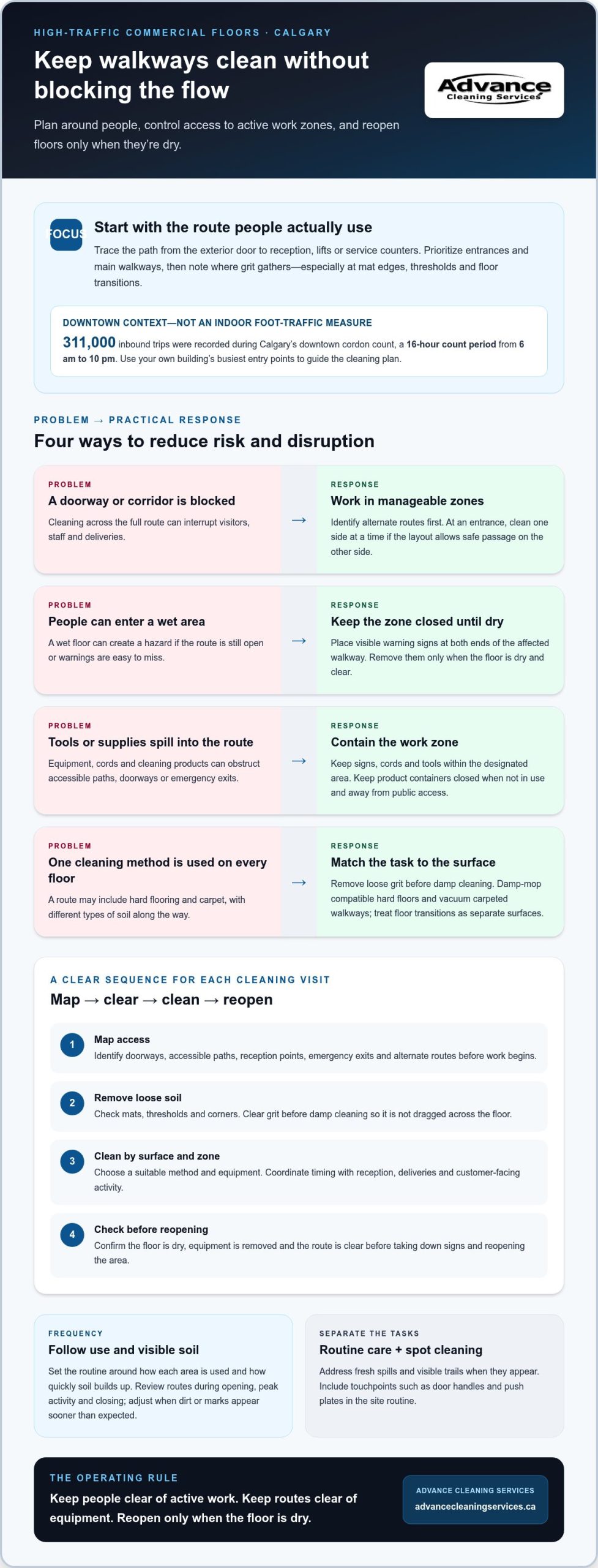
Traffic volumes help explain why some routes need closer attention. Calgary’s downtown cordon count recorded 311,000 inbound trips during its 16-hour count period, from 6 am to 10 pm. That figure describes travel into downtown, not foot traffic inside any particular building. Still, it highlights why businesses should map their own busiest entry points instead of treating every floor area alike.
Trace the path people take from the exterior door to reception, lifts or service counters. Note where grit gathers, such as mat edges and door thresholds. Remove loose particles before damp cleaning, since dragging grit across a floor can leave marks. Then choose a method suited to the material: damp-mop compatible hard floors and vacuum carpeted walkways.
- At the entrance: Check mats, thresholds and corners where tracked-in debris collects.
- Along the route: Follow the main path to counters, seating or elevators.
- At transitions: Treat changes between tile, resilient flooring and carpet as separate surfaces.
Cleaning Schedules for Floors and Touchpoints
Set a cleaning schedule based on how each area is used and how quickly visible soil builds up. An entrance beside a busy reception desk, for example, may collect debris faster than a quiet corridor. Review routes during opening, peak activity and closing periods, then adjust the routine if tracked-in dirt or marks appear sooner than expected.
Separate recurring floor care from spot cleaning. Address a fresh spill or visible trail when it appears, while routine work follows the building’s traffic patterns. Include touchpoints such as door handles and push plates. A retail entrance may need frequent checks during customer flow, while an office corridor may need attention around its busiest arrival periods.
When comparing commercial cleaning plans in Calgary, check that each defines the same areas, surfaces, tasks and schedule. Compare how each plan addresses entry mats, floor transitions, visible spills and touchpoints, then consider whether the timing fits the building’s operating pattern.
Safety and minimizing operational disruption
Safe cleaning keeps pedestrian routes clear, separates people from active work, and reopens each area only when it is ready. At a reception entrance, divide the floor into workable zones so visitors can use an alternate route while one section is being cleaned.
Before work begins, identify doorways, accessible paths, reception points and emergency exits. Keep equipment, cords and cleaning supplies clear of these routes. If a corridor has no practical alternate path, schedule the task for a quieter operating period and coordinate access with the person responsible for the space.
Wet floors need careful management. Place visible warning signs at both ends of an affected walkway, not only beside the cleaning equipment. Keep the route closed while the surface is wet, and remove signs only when the floor is dry and clear. At an entrance, clean one side at a time if the layout allows people to pass safely on the other side.
- Plan access: Identify alternate routes before blocking a doorway or corridor.
- Control the work zone: Keep signs, cords and tools within the designated area.
- Protect operations: Coordinate timing with reception, deliveries and customer-facing activity.
- Reopen carefully: Check that the floor is dry and equipment has been removed.
Cleaning products and equipment also affect safety. Follow product label directions, keep containers closed when not in use, and store them away from public access. Choose equipment suited to the floor and work area. A compact machine, for example, may be more practical near a narrow reception desk than equipment that blocks the entire route.
When choosing a commercial cleaning company in Calgary, assess insurance documentation and training relevant to the work. Ask for evidence of liability coverage, workers’ compensation standing, and task-specific training for equipment, products or sensitive environments. Credentials should match the site and cleaning duties, rather than replace a clear safety plan.
Compare service plans by how they address barriers, signs, alternate routes, product handling and communication with building staff. A useful plan explains who controls access and how staff know when an area can reopen. For businesses arranging commercial cleaning support, clear coordination helps fit floor care around the people using the space.
What cleaning services are available for high-traffic commercial areas in Calgary?
Cleaning busy commercial spaces can combine routine upkeep with targeted floor and fabric care. The right mix depends on surfaces, soil and activity in places such as an office lobby, retail entrance or condominium corridor in Calgary.
Routine janitorial work covers recurring tasks across shared spaces. Depending on the site plan, this may include sweeping, damp mopping, vacuuming, waste removal and cleaning visible marks. An office reception area, for example, may need floor care and tidy waiting spaces as part of regular upkeep. Clear task boundaries distinguish routine maintenance from periodic, more intensive work.
Hard-floor maintenance should suit the material and its condition. A sealed resilient floor, for example, needs a different approach from natural stone or tile with grout lines. Start by removing loose soil, then use a compatible method for the surface. Periodic attention can address dullness or embedded grime that routine sweeping and mopping leave behind.
Carpet cleaning targets fibres that collect tracked-in soil along entrances and walkways. Vacuuming supports routine maintenance, while deeper cleaning can address dirt settled below the surface. Upholstery cleaning focuses on fabric-covered chairs or benches in reception areas. Keeping these tasks distinct from hard-floor work helps match the method to each material.
- Routine janitorial care: Recurring cleaning for shared areas, such as an office lobby or retail floor.
- Hard-floor care: Surface-specific cleaning for tile, resilient flooring or other hard surfaces.
- Carpet cleaning: Targeted care for carpeted entrances and walkways.
- Upholstery cleaning: Cleaning for fabric seating in waiting or customer areas.
A day porter can support upkeep during operating hours by responding to visible messes and keeping shared areas presentable. For example, a porter may address tracked-in debris near a retail entrance while the business remains open. Scheduled cleaning can cover broader tasks across the site. The key distinction is whether the building needs attention as activity unfolds or planned work at set intervals.
To define the service mix, list each area, its flooring or fabric, and the work it needs. A dental reception area may call for a different plan from a carpeted office corridor or retail entrance. Identify priority surfaces, recurring tasks and periodic deep cleaning separately. This outline clarifies the scope and helps prevent an entrance, waiting area or transition between floor types from being overlooked.
Structuring this information makes it easier to match each service to the conditions in the area and plan when work should take place. For exterior approaches, access around the building can also affect when entrance care is practical. Calgary uses 3-foot-high square “No Parking” signs to mark some street-sweeping areas where vehicles may be ticketed and towed.
For a site with a street-facing entrance, note these marked areas when arranging cleaning or coordinating vehicle access. This keeps the focus on the entrance and nearby tracked-in soil without confusing street-sweeping restrictions with cleaning tasks. Interior routines can then be planned alongside the access needs of the surrounding area.
What factors affect the cost of cleaning high-traffic areas in Calgary?
The price depends on the site and scope and is provided after a quote request. Factors include the area to be cleaned, floor materials, soil levels, requested tasks, access conditions and service frequency. A single tiled entrance needs a different plan from a full lobby with carpet, seating and connecting corridors.
Area and layout: The size of the cleaning zone affects the labour and equipment needed. A straight hallway is simpler to plan than a lobby with alcoves, multiple doorways and furniture. Include connecting routes in the area description, since cleaning only the entrance may leave a visible soil line where the work stops.
Floor type: Surface material determines the suitable method and equipment. Tile, resilient flooring and carpet each need different care. A tiled entrance may need attention to grout, while a carpeted walkway calls for vacuuming and potentially deeper carpet cleaning. Mixed-floor sites require separate methods and clear transitions in the work plan.
Condition and soil: Routine maintenance differs from restorative work. A recently maintained floor with light tracked-in dirt may need less intensive treatment than a surface with embedded grime, sticky residue or neglected edges. Describe where soil accumulates, such as beneath a reception mat or around a busy service counter, so the proposed scope reflects actual conditions.
Task scope: The work included affects the price. Floor cleaning alone differs from a scope that also covers carpets, upholstery, entrance mats or nearby touchpoints. Specify each area and task. For example, distinguish routine vacuuming from periodic deep carpet cleaning rather than combining them under a general “floor care” label.
- List the spaces, including entrances, corridors and waiting areas.
- Identify each floor material and any fabric surfaces.
- Describe visible soil, stains and areas needing extra attention.
- Separate recurring tasks from occasional deep cleaning.
Frequency and access: A recurring schedule differs from a one-time clean. A busy retail entrance may need regular maintenance, while a quieter office corridor may require another approach. Access matters too: tightly placed furniture, restricted rooms or the need to preserve customer routes can change how work is organized.
To make a quote request useful, provide a floor plan or clear description, note the surface types, and identify priorities such as the front entrance or reception area. Include the requested tasks and schedule. These details help define the work accurately, whether your Calgary site needs routine floor care, carpet cleaning or a broader cleaning scope.
Calgary street-sweeping tickets cost $80 if paid within 10 days. Calgary street-sweeping tickets cost $90 if paid within 30 days. These ticket amounts are distinct from a cleaning estimate: they are not prices for cleaning an entrance, corridor or lobby.
The figures concern street-sweeping ticket payment timing, not indoor floor care. For cleaning, use the quote request and details about the site and scope to assess the proposed price. Keeping the two costs distinct avoids treating either ticket amount as a charge for cleaning high-traffic areas.
How often should high-traffic commercial floors and touchpoints be cleaned?
Set cleaning intervals by observing how quickly each surface collects soil, marks or residue. A Calgary building entrance exposed to wet boots needs a different routine from an interior hallway with little tracked-in dirt. Review conditions during operating hours, then adjust the schedule to match what staff actually see.
Separate routine floor maintenance from immediate spot cleaning. Sweep or vacuum loose debris before it spreads, and address spills when they appear. A coffee spill beside an office kitchenette, for example, needs prompt attention, while light dust in a quiet meeting-room corridor can follow the planned routine. This prevents minor incidents from waiting for the next scheduled clean.
Floor material also affects cleaning intervals. Porcelain tile can show footprints and residue near a main entrance, while carpet may conceal soil along a lobby route. Check visible appearance and places where debris gathers, such as corners, mat edges and transitions between flooring types. Schedule deeper care when routine vacuuming or mopping no longer addresses the observed condition.
Give touchpoints their own schedule rather than treating them as part of floor care. Identify frequently handled surfaces, such as reception counters, door plates, lift buttons and shared equipment. Set the routine according to activity: a shared entrance used throughout the day needs more frequent attention than a staff-only storage-room handle. Record completed tasks to make missed surfaces easier to spot.
- Observe: Note soil, spills and marks at entrances, counters and corridor turns.
- Separate: Keep routine floor care distinct from immediate spill response.
- Assign: Include specific touchpoints, such as lift buttons and door plates.
- Review: Adjust the plan when seasonal conditions or building use change.
Calgary’s changing seasons can alter what enters a building. Wet footwear may leave moisture near an entrance, while dry conditions can bring more dust through the same doors. Use these visible changes, along with shifts in occupancy or room use, to revise the cleaning plan. A retail space with changing customer activity may need a different routine from a professional office with predictable arrivals.
Keep the schedule practical by assigning each task to a clear part of the work plan. Note the area, surface, trigger for extra attention and person responsible. For example, staff can report a spill as it occurs, while scheduled cleaning covers routine floor maintenance and touchpoints. For help planning a suitable routine, discuss your commercial cleaning schedule.
Advance Cleaning Services Inc.: Medical Facility Cleaning
Advance Cleaning Services Inc. provides Medical Facility Cleaning for healthcare settings, where entrance and walkway care is part of day-to-day upkeep. A medical reception area, for example, needs an organised approach to busy floors that considers the space and its operations. For other commercial environments, office cleaning and janitorial services support ongoing care, while carpet cleaning addresses soil in carpeted routes and waiting areas.
Turn to these services when routine cleaning needs to cover specific floor types, shared spaces or recurring tasks. Describe your facility, priority areas and cleaning needs to shape a suitable service plan. For commercial spaces beyond medical facilities, the conversation can focus on the right service and scope of work.
Contact Advance Cleaning Services Inc. to discuss your cleaning needs.
Make floor care part of your operations plan
During your next facilities review, identify who reports changing floor conditions and how cleaning priorities are updated. Clear responsibility helps the routine adapt as entrances, work areas or occupancy patterns change. For high-traffic area cleaning in Calgary, match the service plan to the building’s purpose and the people who use it.
Advance Cleaning Services provides Medical Facility Cleaning, Office cleaning and Janitorial Services to support organizations with recurring premises care. Healthcare settings, offices and shared commercial spaces have different needs, so start by describing your site and priorities.
Contact Advance Cleaning Services Inc. to discuss a cleaning plan for your facility. A thoughtful routine can help your team care for the space with greater confidence.
Frequently Asked Questions
Which cleaning methods and products work best for high-traffic floors?
Choose a method and product suited to the floor material and soil. A soft-bristle dust mop can collect loose grit from a hard floor before damp cleaning, while carpet requires vacuuming. Follow product label directions and the flooring manufacturer’s care instructions, and avoid leaving excess moisture or residue. Testing a product in an inconspicuous spot can reveal whether it affects the floor’s colour or finish.
How do Calgary commercial cleaning companies handle after-hours service and minimal disruption?
Cleaning teams can coordinate work windows, access arrangements and room priorities with building management to limit conflicts with daily activity. A lobby task, for example, can be planned around scheduled deliveries, while an office corridor can be cleaned when staff have left the area. A written scope should identify restricted spaces, alarm or entry procedures, and how staff will know which areas remain unavailable during cleaning.
What are the risks of inadequate cleaning in high-traffic commercial spaces?
Unattended spills and tracked-in debris can create slippery or uneven walking conditions, while embedded grit can dull floor finishes over time. A dirty entrance can also carry soil into adjoining rooms, expanding the area that needs attention. A wet patch near a doorway, for example, may go unnoticed without a clear way for staff to report spills. Prompt reporting and a consistent cleaning routine help address these issues.