
A rushed cleanout can make a difficult situation harder. If you’re looking for hoarding cleanup services in Red Deer, start by identifying immediate hazards, respecting the person’s control over their belongings, and involving professional help when they’re ready. Clutter can block access and contribute to unsanitary conditions, so don’t enter unsafe areas or move possessions without consent.
It’s understandable to worry when a loved one’s home seems unsafe. A calm, respectful conversation can help preserve trust while making room to discuss health, safety, and practical support. Threats, criticism, or cleaning without the person’s knowledge can undermine that trust.
This article explains common risks related to clutter, vermin, mould, and bacteria, and suggests respectful ways to raise concerns. You’ll also learn what professional hoarding cleanup can involve and how to take a compassionate first step without losing sight of the person’s dignity and choices.
Key Takeaways
- Recognize how blocked pathways and unsanitary conditions can create safety concerns, and avoid entering areas where someone could become trapped.
- Protect trust by seeking consent before touching, moving or discarding any belongings.
- Understand when a professional cleanup may help and why cleanup should be approached with the person’s readiness and needs in mind.
- Use a calm, supportive conversation to express concern about health and safety without threats or criticism.
- Learn what to clarify about an assessment and written estimate before cleanup work begins.
1. Health and safety risks from clutter, vermin, mould, and bacteria
Clutter can make everyday movement hazardous. Bags, boxes, and furniture may block doorways, stairs, windows, or access to essential rooms, making it harder for residents or helpers to leave safely. Vermin, mould, and bacteria can also contribute to unsanitary conditions, particularly where food waste or damp materials have accumulated.
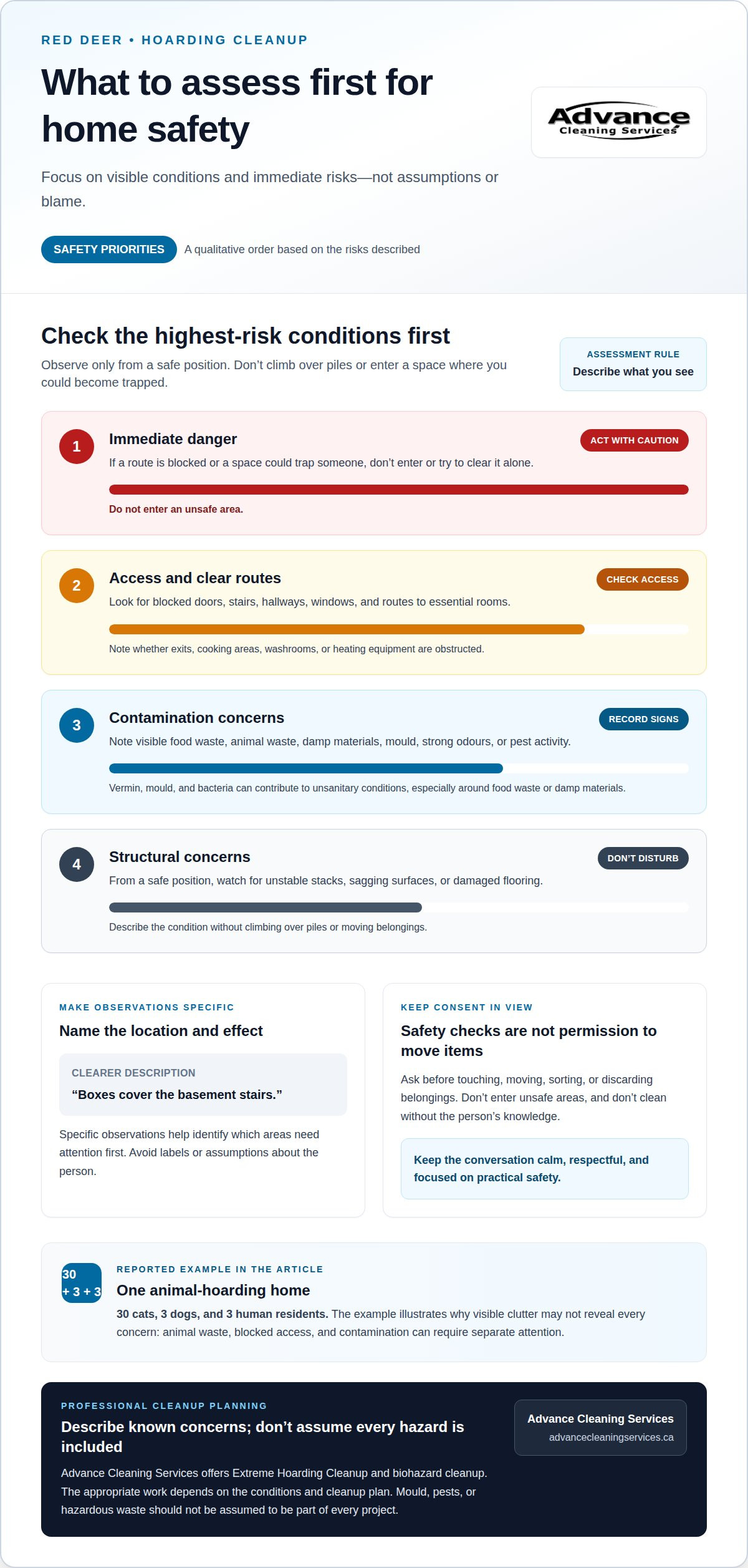
Assess the home using practical safety concerns, not assumptions about the person. Note what you can see from a safe position, and don’t climb over piles or enter spaces where you could become trapped. For example, a narrow path between a doorway and a kitchen may be the only clear route through a room.
A useful safety assessment records specific conditions rather than labels. Describe where a hazard is and what it affects: “boxes cover the basement stairs” is clearer than “the basement is dangerous.” Note whether exits, cooking areas, washrooms, or heating equipment are obstructed. Record visible signs of leaks, animal waste, strong odours, damaged flooring, or pest activity. These observations help identify which areas need attention first.
- Access: Identify blocked doors, stairs, hallways, and routes to essential rooms.
- Contamination: Note visible food waste, animal waste, damp materials, mould, or other biological hazards.
- Structural concerns: Watch for unstable stacks, sagging surfaces, or damaged flooring without disturbing them.
- Immediate danger: If a route is blocked or a space could trap someone, don’t enter or try to clear it alone.
The scale can vary widely. One reported animal-hoarding home housed 30 cats, three dogs, and three human residents. That example shows why visible clutter may not reveal every concern: animal waste, blocked access, and contamination can require separate attention. A careful assessment distinguishes those risks rather than treating the home as a routine tidying job.
When biological contamination is present, professional biohazard cleanup may be appropriate. The plan should reflect the materials and conditions, while keeping people out of unsafe areas until they can be addressed. Clear observations help keep the conversation focused on practical safety steps, not blame.
2. Respecting the individual’s control and trust
Possessions can hold memories, support routines, and provide a sense of security. Removing items without permission can damage trust, even when the intention is to make the home safer. Cleaning without the person’s knowledge can also take away their control over important decisions. Begin by asking what support they want, then respect their answer.
Consent should be specific, not assumed. Before touching an item, ask permission and explain what you propose to do. “May I move these bags so the doorway is easier to use?” gives the person a clear choice. If they say no, don’t move or discard the belongings. Pause and discuss another option, such as working on an area they choose.
- Ask before acting: Get permission before touching, moving, sorting, or removing any possession.
- Offer choices: Ask whether the person wants to start with a table, a chair, or another area.
- Agree on boundaries: Clarify which items or rooms are off-limits before beginning.
- Check as you go: Ask again when the work shifts to a new space or category of belongings.
- Stop when consent changes: If the person withdraws permission, pause rather than pressing ahead.
Small decisions can make cleanup feel more manageable. Someone might agree to clear a path while choosing to keep every item on a nearby shelf. Honour that boundary. A defined task shows what will happen while allowing the person to decide what stays. Agreement to one task is not permission to handle everything in the room.
Do Red Deer hoarding cleanup companies provide compassionate, trauma-informed support and confidentiality? A respectful approach preserves the person’s choices, explains each proposed step, and protects sensitive details. With Advance Cleaning Services, discuss consent and privacy expectations as you plan the work, rather than assuming what the person is comfortable sharing.
Use neutral language when planning. “Let’s decide what you’d like to keep accessible” invites participation; “This all has to go” can make a person feel judged or cornered. If family members disagree, return to the person whose home and belongings are involved. Keep agreed priorities clear, and revisit them before changing the plan.
For professional support, look for a process that centres consent and respects agreed boundaries. A careful conversation about extreme hoarding cleanup can help clarify the next steps while keeping the person involved in decisions.
Before a visit, agree on how the person wants helpers to communicate and what they may do. Set clear limits: permission to help with one task does not extend to nearby belongings. If permission is unclear, leave the item as it is and ask again; silence or a delay is not approval. Never clean the person’s home without their knowledge, as this can undermine trust and take away their sense of control.
Caregivers should ask for consent before touching anything in a hoarded home. Don’t move, discard, or tidy possessions without explicit permission. If the person changes their mind, stop and let them decide whether to continue, change the task, or end the visit. Open communication keeps support guided by the person’s choices, not a helper’s preferred pace.
3. Seeking professional hoarding cleanup services
Professional cleanup can help when the volume of belongings, contamination, or blocked access exceeds what household members can safely manage. The person should be ready to participate, and the plan should account for their choices. A large clear-out alone may not address the underlying hoarding condition. One reported estimate associates cleanup without addressing that condition with a near-100% regression rate within 12-18 months.
What permits and disposal rules apply to hoarding cleanup waste in Red Deer County? Disposal depends on the material and its condition. Ordinary belongings, biological contamination, and hazardous waste are distinct categories. The cleanup plan should identify the waste types and their appropriate handling and destination under applicable local requirements, rather than assuming one disposal route suits everything.
What is included in a professional hoarding cleanup service in Red Deer? The scope can include assessing the home, removing agreed contents, and cleaning affected areas. Advance Cleaning Services provides Extreme Hoarding Cleanup, with tasks shaped by the home’s condition and the agreed plan. Where biological contamination is present, biohazard cleanup may also be relevant.
How quickly can hoarding cleanup services in Red Deer respond, and are emergency appointments available? Response timing and emergency appointment availability depend on scheduling and the project’s needs. Describe any immediate hazard, access concern, or contamination when arranging service so the urgency and work requirements are clear.
Does Alberta health insurance or local assistance help pay for hoarding cleanup in Red Deer? Don’t assume health coverage pays for physical property cleanup. Separate the need for clinical support from the cleanup work, and review any private insurance or local assistance against its eligibility requirements before relying on funding.
Before work begins, make sure the plan clearly sets out the scope: which areas are included, what will happen to belongings, and how identified hazards will be handled. For example, a resident may agree to clear a blocked hallway while keeping other rooms outside the initial project. Clear boundaries align cleanup decisions with the person’s priorities.
4. Starting a conversation compassionately
Choose a calm setting before raising concerns about the home. Meeting for lunch or coffee gives both people room to talk without the pressure of standing among belongings. Avoid starting during an argument, a rushed visit, or a moment when other family members are criticizing the person. A quiet conversation makes it easier to listen and discuss one concern at a time.
Begin with care, not a demand. You might say, “I’m concerned about your health and safety, and I’d like to help make your living conditions more comfortable.” This focuses on wellbeing rather than blame. Avoid threats, insults, and negative comments about possessions. Even “This place is disgusting” can shift the conversation from practical concerns to shame and defensiveness.
Be specific about what you’ve observed. Instead of saying, “Your home is unsafe,” describe one situation: “I noticed the hallway is hard to walk through, and I’m worried someone could trip.” A clear example gives the person something concrete to respond to. Keep the focus on safety, access, or daily routines, rather than judging the home’s appearance.
Then pause. Ask what feels most difficult and listen without interrupting or arguing over individual items. The person may worry about losing important belongings, being judged, or having decisions taken away. Reflect what you hear: “You want to keep your papers together, and you’re concerned they might be thrown out.” This acknowledges a specific worry without promising an outcome you can’t control.
Offer a small choice rather than an ultimatum. For example, ask whether the person would prefer to discuss clearing a path to the kitchen or making the entrance easier to use. If they aren’t ready to choose, agree to revisit the topic later. A limited, person-selected goal keeps the discussion practical without demanding a whole-home cleanout.
- Pick the moment: Suggest coffee or lunch in a quiet setting.
- Use one example: Describe a blocked route or another observed concern without labels.
- State your intention: Explain that you care about their health, safety, and living conditions.
- Invite their view: Ask what they’re worried about and listen to the answer.
- Offer a choice: Let them select one possible starting point, or pause the discussion.
If the conversation becomes tense, don’t press for agreement. Return to the specific concern another time, using calm language and a clear example. A compassionate first conversation isn’t a demand to begin cleanup; it’s a chance to express concern while leaving the person in control of what happens next.
5. Do Red Deer hoarding cleanup providers offer free assessments or written estimates?
Before work begins, make sure the scope and expected charges are clear in writing, including what the estimate covers and which conditions could change it. Ask for a breakdown of the areas included, planned removal, and cleaning so you can understand what has been agreed.
The price depends on the case and is given after a quote request. Key cost factors include the amount and type of material, access to the affected areas, contamination, and the cleaning required. For example, a room with ordinary household belongings may require different work from an area affected by biological contamination.
A useful estimate describes the work, not just a total. It should identify which rooms or areas are included, what removal involves, and whether cleaning is part of the scope. If the plan covers a hallway and kitchen but excludes bedrooms, those boundaries should be stated plainly.
Check how the plan handles changes in conditions. A hidden leak, additional animal waste, or blocked access may affect the work once a team reaches an area. A clear document explains how changes are handled and how approval is obtained before the scope expands. This helps prevent confusion about the agreed plan and any additional work proposed later.
- Assessment: Understand whether it is visual, on-site, or based on information provided about the home.
- Scope: Identify the rooms, removal tasks, and cleaning included.
- Exclusions: Note any areas or work outside the written plan.
- Changes: Understand how newly discovered hazards or access problems affect the scope.
- Estimate format: Keep the written details so the person involved can review the same agreed plan.
For a respectful planning process, the person whose home is being cleaned should be able to explain their priorities and identify belongings requiring special care. They may want papers kept together or one room left untouched during the initial work. Recording these instructions connects the plan to the person’s choices rather than treating the home as a generic job.
Keep the estimate and cleanup plan together. If a change is proposed, compare it with the original scope and discuss the reason before proceeding. A written record helps the person receiving support and family members understand what has been agreed, what remains outside the plan, and which decisions still need consent.
To discuss a cleanup scope and quote request, contact Advance Cleaning Services Inc.
The estimated prevalence of hoarding disorder is approximately 1.5-6% of the population. This broad range is useful context, but it cannot indicate what a particular home needs or what its cleanup will cost. An estimate should be based on the actual conditions and priorities discussed for that project, rather than assumptions about a person or household. If someone is helping arrange the assessment, they can ask how the provider will gather information, who may participate in decisions, and how private details will be handled. Those questions can help keep the discussion focused on the requested work and the person’s preferences.
Advance Cleaning Services Inc.: Extreme Hoarding Cleanup
Advance Cleaning Services offers Extreme Hoarding Cleanup when accumulated belongings or difficult home conditions call for professional support. It can be a practical next step when the person is ready to discuss the work and the cleanup is beyond what family or friends can safely manage.
Start by discussing the areas needing attention, the person’s priorities, and any known hazards. These details help shape cleanup around the home’s condition and the individual’s choices. The service addresses the physical cleanup; support for the underlying hoarding behaviour may also be important.
If you’re ready to discuss cleanup support for a home in Red Deer, contact Advance Cleaning Services Inc. to talk about the next step.
Choose one manageable next step
A difficult home situation doesn’t have to be solved in one conversation or visit. Start by identifying the person’s immediate priority, such as making a daily routine easier or choosing which area to address first. A small, agreed step can create a clearer path forward without requiring decisions about every belonging at once.
Choosing hoarding cleanup services in Red Deer can be part of the plan when professional help is appropriate. Keep the person involved, share the priorities that matter to them, and discuss the work before it begins. The next step can simply be a conversation about the home and the support needed.
Contact Advance Cleaning Services Inc. to discuss Extreme Hoarding Cleanup. A respectful start can help turn a challenging situation into a practical plan, one decision at a time.
Frequently Asked Questions
What hoarding cleanup services are available in Red Deer, Alberta?
Advance Cleaning Services offers Extreme Hoarding Cleanup and biohazard cleanup in Red Deer. These services address different needs: hoarding cleanup focuses on the home and accumulated belongings, while biohazard cleanup is for biological contamination. A project may involve one or both, depending on the conditions. If you’re seeking hoarding cleanup services in Red Deer, describing the main concerns helps clarify which type of cleanup is relevant.
Which Red Deer companies specialize in hoarding cleanup and have strong reviews?
Advance Cleaning Services offers Extreme Hoarding Cleanup in Red Deer. Assess a provider using current, verifiable feedback rather than assumptions based on a service description. For this sensitive work, look for comments about respectful communication, clear explanations of the agreed scope, and care with belongings. These details can help you decide whether the approach suits the person and home involved, beyond a general rating.