
What if a cleaning schedule that looks thorough on paper still misses the areas your staff notice first? The answer to “how often should an office be professionally cleaned” depends on how many people use the space, what happens there and which areas need regular attention. Busy washrooms, shared kitchens, meeting rooms and high-touch surfaces may need care more often than a lightly used office.
A practical schedule keeps your workplace clean and welcoming without assigning the same frequency to every room. Visible dirt, lingering odours or unclear responsibility for everyday upkeep can affect staff and visitor confidence. The goal is a routine that supports hygiene and presentation while focusing on the tasks that matter most.
This guide explains how to set a baseline for daily, weekly and periodic cleaning, then adjust it for traffic, activities and hybrid occupancy. You’ll also learn how routine janitorial work and day porter support can fit different workplace needs, and how to review whether your schedule is working.
Key Takeaways
- To decide how often should an office be professionally cleaned, assess the tasks, attendance patterns and hygiene priorities rather than relying on a fixed rule.
- Separate scheduled professional cleaning from staff tidying and prompt spill response so responsibilities are clear.
- Compare daily, several-times-weekly, weekly and periodic schedules as starting points, then match each task to how your spaces are used.
- Map your office, set task priorities and assign a cadence that reflects busy shared areas as well as quieter workspaces.
- Review missed tasks, recurring complaints, visible soil and occupancy changes to see whether the schedule needs adjusting.
How often should an office be professionally cleaned? Start with the tasks
There’s no single schedule that suits every workplace. How often should an office be professionally cleaned depends on the tasks, how many people use the space, how they use it and the hygiene standard the workplace needs to maintain.
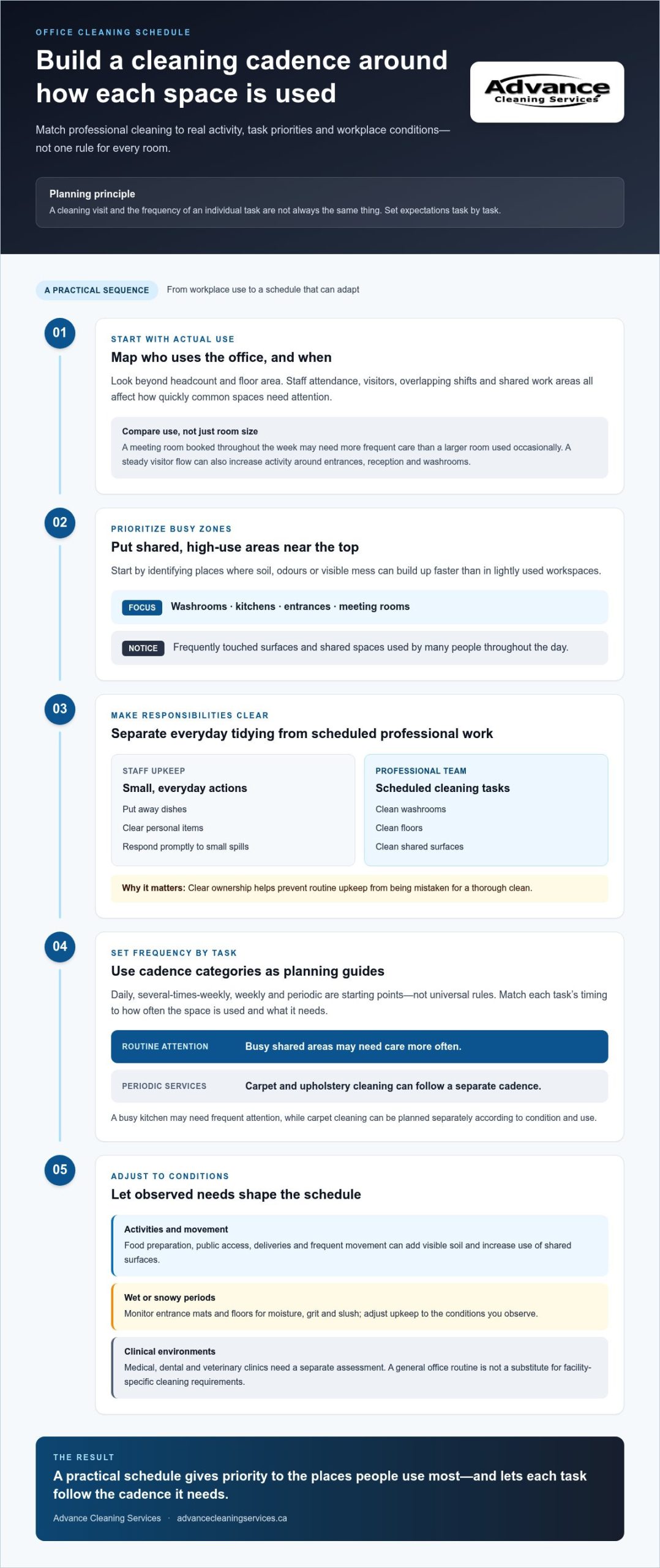
Separate professional cleaning from everyday tidying. Staff can put away dishes, clear personal items and respond promptly to small spills, while a professional cleaning team handles scheduled tasks such as cleaning washrooms, floors and shared surfaces. A clear division prevents routine upkeep from being mistaken for a thorough clean.
A tailored office cleaning schedule matches the timing of each task to how often the space is used and what it needs. Daily, weekly and periodic tasks are planning categories, not universal rules. For example, a busy kitchen may need frequent attention, while carpet cleaning can be scheduled separately according to its condition and use.
What does professional office cleaning frequency mean?
Frequency can mean two different things: how often a cleaning team attends and how often a particular task is completed. A visit might include routine janitorial work, while specific tasks follow a different cadence. Carpet and upholstery cleaning, for example, are periodic services rather than tasks that necessarily belong in every visit. The broad Commercial cleaning overview describes the wider work of janitors and custodians. In practice, prioritize spaces and surfaces that are consistently used.
This distinction makes planning more precise. An office may need regular attention to shared areas even if some individual rooms require less frequent cleaning. Set expectations task by task instead of assuming every part of the workplace needs the same treatment on every visit.
Which office areas usually need attention first?
Start with washrooms, kitchens, entrances, meeting rooms and frequently touched surfaces. These areas often serve many people throughout the day, so soil, odours or visible mess can build up faster than in a lightly used private office. Shared spaces may need attention more often, even when the overall headcount is modest.
Consider actual use, not just the floor plan. A meeting room booked throughout the week may need more frequent care than a larger room used occasionally. A standard office schedule should also reflect the workplace’s activities. Medical, dental and veterinary clinics have specific cleaning needs, so plan for those separately rather than applying a general office routine to clinical areas.
What changes how often an office needs professional cleaning?
Headcount is only one part of the picture. Two offices with the same number of employees can need different schedules if one has steady visitor traffic and shared meeting rooms while the other is used by a small team on a few days each week. To decide how often should an office be professionally cleaned, look at attendance patterns, shared-space use, workplace activities, visible soil and hygiene priorities.
How do occupancy and office layout affect cleaning cadence?
Consider who uses the office and when. Staff attendance, visitors, overlapping shifts and the number of shared work areas all affect how quickly common spaces need attention. An open-plan kitchen used by several teams may collect food residue throughout the day; a meeting room booked back-to-back may need more frequent resetting than a private office.
Compare real use, not just floor area. A client-facing Calgary office with a steady flow of visitors may see more activity at its entrance, reception area and washrooms than a lower-traffic administrative workspace. In the quieter office, some areas may need less frequent service, while a shared kitchen or washroom still needs regular attention. Map busy zones and consider when they’re used before setting a cadence.
Do workplace activities or seasons change the schedule?
Yes. Food preparation, public access, deliveries and frequent movement through the office can add visible soil and increase use of shared surfaces. Track where dirt accumulates and whether certain areas need attention between scheduled visits. For general guidance on cleaning non-healthcare settings and high-touch surfaces, consult the CDC cleaning guidelines.
Canadian weather can change entrance needs, too. During wet or snowy periods, footwear may bring in moisture, grit and slush, so monitor mats and floors and adjust upkeep as conditions require. That doesn’t mean every office needs the same seasonal schedule. Let observed conditions guide the response.
Clinical environments need a separate assessment. A standard office schedule isn’t a substitute for facility-specific cleaning requirements. Identify the setting and its hygiene needs before applying general office guidance.
Office cleaning frequency is shaped by occupancy, layout, activities, seasonal conditions and the hygiene expectations of the workplace. Reviewing these factors together helps focus service on the spaces that need it, rather than relying on a schedule based on staff numbers alone. Advance Cleaning Services Inc. provides professional office cleaning and routine janitorial services for workplaces across Alberta and the Vancouver area. Explore professional office cleaning to plan a schedule around your workplace.
Daily, weekly, or less often: compare office cleaning schedules
There’s no universal cadence for every office. Use the options below as examples to assess against your space, attendance and priorities, then adjust individual tasks as needed. The question “how often should an office be professionally cleaned” is best answered by matching service frequency to what the workplace actually needs.
| Example cadence | May suit | Likely priorities and limitations |
|---|---|---|
| Daily | Busy, client-facing offices with steady visitor traffic or heavily used shared areas. | Frequent attention to washrooms, kitchens, entrances and common spaces. It may be more than quieter areas need. |
| Several times weekly | Workplaces with regular occupancy and shared washrooms, kitchens or meeting rooms. | Focus on high-use spaces between deeper or less frequent tasks. Some areas may not need attention at every visit. |
| Weekly | Lower-traffic offices where staff handle basic tidying between professional visits. | Can cover planned recurring tasks, but visible soil or frequent complaints may show that certain tasks need more attention. |
| Periodic | Tasks that aren’t required as part of every routine visit. | Carpet or upholstery cleaning can be planned separately. Periodic work complements routine upkeep; it doesn’t replace it. |
These are planning patterns, not industry-wide requirements. Professional cleaning standards and resources, including ISSA standards, can provide broader context, but your schedule should still reflect your workplace’s use and priorities.
When might daily or several-times-weekly service make sense?
A busy office with frequent visitors, shared washrooms or common areas in constant use may benefit from more regular attention to those spaces. That doesn’t mean every room needs cleaning at the same cadence. Day porter support can address cleaning needs that arise during operating hours, while scheduled janitorial work covers planned recurring tasks. The right pattern depends on what’s happening in the office, not simply on whether it’s labelled “busy.”
When could weekly or periodic cleaning be suitable?
A lower-traffic administrative office may be able to use weekly professional cleaning if staff keep the space orderly between visits and shared areas remain presentable. Treat that as a starting point, not a fixed answer. If soil builds up before the next visit, complaints recur, or washrooms and kitchens need attention sooner, review the relevant tasks and adjust their cadence.
Keep periodic carpet and upholstery maintenance on a separate plan based on workplace use and observed condition. Periodic cleaning can support the overall schedule, but routine upkeep is still needed to manage everyday use between those deeper tasks.
Build an office cleaning schedule and review whether it works
A practical schedule turns cleaning needs into clear responsibilities. If you’re deciding how often should an office be professionally cleaned, build the plan around specific spaces and tasks, then review how well it works in daily operations. For organizations evaluating service frequencies against operational budgets, resources from Showpiece Commercial Cleaning illustrate how commercial cleaning schedules and specifications typically influence contract rates. A short written schedule also helps managers and staff understand what’s handled during professional visits and what remains routine upkeep.
How can an office manager create a realistic cleaning plan?
Work through these steps with the people who know how the office is used:
- Step 1: Map the spaces. List work areas, entrances, washrooms, kitchens, meeting rooms and flooring. Note shared spaces and areas with particular access needs.
- Step 2: List the tasks. Record recurring cleaning needs separately from periodic maintenance, such as carpet or upholstery cleaning. Be specific about the area and task.
- Step 3: Set priorities. Rank tasks by how often a space is used, how visible it is to staff or visitors, and what happens if the task is missed. A shared kitchen may need closer attention than a rarely used office.
- Step 4: Assign a cadence and responsibility. Set a suitable frequency for each task, and distinguish professional cleaning from staff tidying or immediate spill response.
- Step 5: Coordinate access. Plan attendance around office access, business hours and staff activity. Consider whether work in meeting rooms or shared areas could disrupt the day, and arrange the schedule to limit avoidable interruptions.
How do you know when to change the schedule?
Review evidence, not just assumptions. Keep a simple record of missed tasks, recurring complaints, visible buildup, lingering odours and areas where supplies regularly run low. These signs can point to a task that needs attention sooner, but they don’t automatically mean every visit should happen more often.
Look for the cause before changing the whole plan. If one meeting room is repeatedly left untidy, adjust attention to that room rather than increasing service across the entire office. If complaints concern a task that’s being missed, clarify responsibility or scheduling. Reassess when attendance patterns, office layout or workplace routines change, too. A shift to more shared-space use, for example, may affect those areas without changing the needs of quieter rooms.
Keep recurring work and periodic maintenance clearly separated in the schedule. That makes it easier to spot gaps and update one task at a time. Advance Cleaning Services provides professional office cleaning and routine janitorial work tailored to workplace needs. Discuss your office cleaning schedule and identify the tasks that need the most consistent attention.
Plan professional office cleaning with Advance Cleaning Services Inc.
A useful office cleaning plan starts with the work your space actually needs. Consider which areas see the most traffic, which tasks must happen regularly and which needs are occasional. Advance Cleaning Services provides commercial office cleaning and routine janitorial support tailored to a workplace’s spaces, operating patterns and priorities across Alberta and the Vancouver area.
What should a tailored office cleaning plan address?
Start with the areas employees and visitors use most, then identify the recurring tasks that help keep them presentable and orderly. Shared kitchens, washrooms, entrances and meeting rooms may need different attention from quiet work areas. A practical plan distinguishes routine janitorial tasks from periodic needs, such as carpet or upholstery cleaning, so each is scheduled according to its purpose and use.
Day porter support can help address upkeep needs that arise during the workday. It complements scheduled cleaning by responding to the demands of a workplace in use, rather than treating every task as though it belongs on the same fixed timetable. The right balance depends on the office and its priorities.
Cleaning should also fit the way the workplace operates. Planning can account for access, staff activity and the potential disruption of work in shared or busy areas. Clear priorities make it easier to coordinate service with the office schedule and understand what is handled through professional cleaning versus everyday staff tidying.
How can local businesses take the next step?
Office managers in Calgary, Edmonton, Red Deer, Okotoks, Lethbridge, Strathmore, Chestermere, Airdrie, Cochrane and the Vancouver area can start with a straightforward overview of the workplace. Advance Cleaning Services serves businesses in these communities, as well as Vancouver, Richmond, Burnaby, Surry, New Westminster, Coquitlam and Abbotsford. Share the spaces that need attention, how the office is used, its operating patterns and any recurring cleaning concerns. That information helps shape a plan around actual needs instead of assuming every workplace requires the same cadence.
If you’re still weighing how often should an office be professionally cleaned, focus first on the tasks and spaces where consistent attention matters most. Advance Cleaning Services can turn those priorities into a practical office cleaning and janitorial plan, with day porter support for workplaces that need daytime upkeep. Discuss an office cleaning plan that fits your workplace.
Set a schedule that works for your office
The right answer to “how often should an office be professionally cleaned” comes from matching each task to the space’s use, occupancy and hygiene priorities. Daily, several-times-weekly, weekly and periodic service are starting points to assess, not fixed rules for every workplace.
Make the plan practical. Separate professional cleaning from staff tidying, prioritize high-use areas, and review missed tasks, recurring concerns and changes in office activity. Adjust specific tasks when needed instead of increasing the frequency of every visit. Routine janitorial work and periodic maintenance each play a role in keeping an office presentable.
Advance Cleaning Services provides commercial office cleaning, routine janitorial services and day porter services for workplaces across Alberta and the Vancouver area. Share your office’s spaces, operating patterns and cleaning priorities to start shaping a suitable plan. Discuss a tailored office cleaning plan, and take the next step toward a workplace that feels clean, welcoming and well cared for.
Frequently Asked Questions
How often should a small office be professionally cleaned?
There’s no single schedule that fits every small office. To decide how often should an office be professionally cleaned, consider how many people use it, how often visitors arrive and whether washrooms, kitchens or meeting rooms are shared. Some workplaces may need recurring service several times a week, while others may need less frequent visits. Review visible cleanliness and staff feedback, then adjust the plan to suit how the space is actually used.
Is weekly professional office cleaning enough?
Weekly service can suit a lower-traffic office, particularly if staff keep shared spaces tidy between visits. It may not be enough if washrooms, kitchens, entrances or meeting rooms see heavy daily use. Pay attention to how the office looks and functions throughout the week, not just after a cleaning visit. If mess or recurring concerns build up before the next visit, revise the task list or adjust the frequency of specific tasks.
Should an office be professionally cleaned every day?
Daily service may suit a busy workplace with frequent visitors, heavily used shared areas or cleaning needs that arise throughout operating hours. It isn’t automatically necessary for every office. Compare daily needs with weekly and periodic tasks, then set a cadence around actual occupancy and use. Day porter support can address daytime upkeep separately from scheduled cleaning visits, helping respond to needs that develop while the workplace is in use.
What office areas should be cleaned most often?
Prioritize areas according to how frequently people use them and what takes place there. Washrooms, kitchens, entrances, meeting rooms and frequently touched surfaces often need regular attention. Low-traffic offices or storage areas may need a different cadence. Create a space-by-space task list, then review it when attendance, visitor traffic or workplace routines change. This helps focus cleaning effort where it’s most useful instead of assigning the same frequency to every room.
How often should office carpets be professionally cleaned?
Carpet cleaning frequency depends on foot traffic, visible soil, flooring condition and daily office activities. Entrances and busy walkways may need attention sooner than lightly used rooms. Treat carpet cleaning as periodic maintenance, separate from routine janitorial tasks, and reassess the need when you notice buildup or a change in appearance. Rather than relying on one fixed interval for every office, use the carpet’s condition and how the space is used to guide planning.
Do Alberta winters affect how often office entrances should be cleaned?
They can. Snow, moisture and grit may be tracked into Alberta offices during winter, so monitor entrance areas and adjust upkeep when conditions call for it. The right response depends on the weather, foot traffic, floor surfaces and matting. Include entrances in routine checks and respond when floors or mats become visibly wet or soiled. Offices in Calgary, Edmonton and other Alberta communities shouldn’t assume the same entrance-cleaning cadence is needed year-round.
How often should a medical office be professionally cleaned?
A medical office needs a cleaning plan suited to its activities, spaces and applicable facility procedures. General office-frequency guidance isn’t a substitute for healthcare-specific requirements. Identify clinical and non-clinical areas separately, then establish appropriate routines for each. Advance Cleaning Services provides medical facility cleaning for medical, dental and veterinary clinics across Alberta and the Vancouver area. Consider the facility’s particular needs when planning professional cleaning rather than applying a standard office schedule across all areas.