Production doesn’t always have to stop for cleaning. Industrial warehouse cleaning services can be scheduled around operating hours and site activity, but tasks near machinery require careful planning, and some equipment must be switched off before cleaning. The right approach depends on the work area, task and site safety requirements.
It’s understandable to be cautious about cleaning in a busy facility. Floors, aisles and loading areas need attention, while crews, deliveries and production still need to keep moving. A practical schedule accounts for these demands instead of treating every part of the warehouse the same way.
This article explains how cleaning can fit around production, which tasks help maintain floors and support safer operations, and how to plan a suitable schedule. You’ll also learn what can affect the service scope and where Advance Cleaning Services fits when professional cleaning support is needed.
Key Takeaways
- Plan cleaning around production activity by coordinating work areas, shift schedules and access needs.
- Use site orientation, PPE and access procedures to support safer cleaning in active facilities.
- Prioritize floors, aisles and loading areas to manage dust, debris and tracked-in materials.
- Set cleaning frequency according to traffic, production demands, spills and dust levels, with periodic deeper work for less-accessible areas.
- Match the cleaning plan to the facility’s needs, then consider professional support for related janitorial and floor-care tasks.
What Are The Best Commercial Warehouse Cleaning Services All About?
Effective warehouse cleaning plans match tasks to the facility’s operations, access rules and production shifts. They define which areas need routine attention, which need periodic deep cleaning, and when work can happen without disrupting production.
Cleaning Around Active Operations
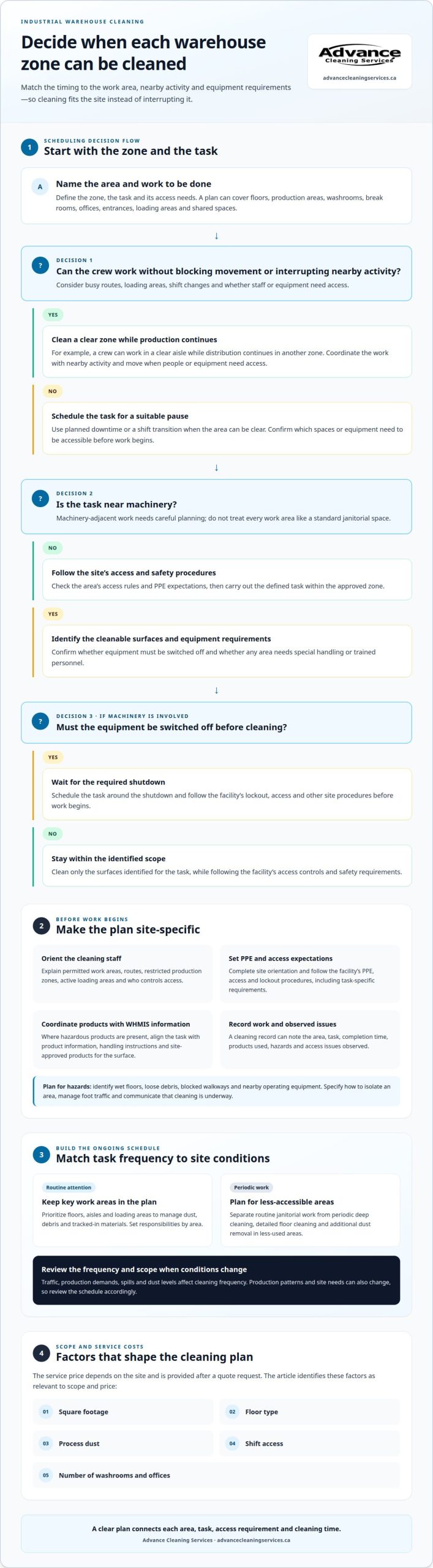
Cleaning around active operations means dividing the site into work zones and coordinating tasks with nearby activity. For example, a crew can clean a clear aisle while distribution continues in another zone, then move when equipment or staff need access. The schedule should account for busy routes, loading areas and shift changes so cleaning doesn’t obstruct movement or interrupt work.
Industrial warehouse cleaning services can cover floors, washrooms, break rooms, offices and shared areas. The work plan should name each area and explain how it fits into the site’s janitorial routine. This makes coverage clear across large facilities, including warehouse centres with separate production and distribution spaces.
Scheduling Around Production Downtime
Production downtime creates an opportunity to clean areas that are difficult to access during active work. Schedule those tasks around planned pauses or shift transitions, and confirm which equipment or spaces need to be clear before work begins. Near machinery, identify cleanable surfaces, shutdown requirements and any areas needing special handling or trained personnel.
Cleaning frequency and the scope of work affect the service price. The price depends on the site and is provided after a quote request; relevant factors include square footage, floor type, process dust, shift access, and the number of washrooms and offices.
Choosing a Warehouse Cleaning Company
Choose a Canadian provider whose proposed schedule accounts for production activity, access restrictions and the areas you need cleaned. A useful scope can cover warehouse floors, production areas, washrooms, break rooms, offices, entrances, loading areas and common spaces. For a facility searching for a provider nearby, the practical first step is to identify providers serving its region and match the service scope to the site.
Ask for a clear task schedule rather than a general promise of cleaning. It should distinguish routine janitorial work from periodic tasks, such as detailed floor cleaning or additional dust removal in less-used areas.
In-House Cleaning or a Contractor
In-house cleaning can give a facility direct control over daily priorities and staff coordination. A cleaning service can provide scheduled support for defined areas and tasks, which may suit sites that need additional coverage. Compare the options by listing responsibilities, equipment needs, shift access and the time each arrangement takes from operations staff.
Either approach should support clean floors, clear aisles and controlled dust levels. These housekeeping practices align with workplace housekeeping guidance from the Canadian Centre for Occupational Health and Safety. Set responsibilities by area, then review the schedule when production patterns or site needs change.
Site safety, WHMIS training, and documentation
A safe cleaning plan starts with the site’s own procedures, hazards and access controls. Before a first visit, cleaning staff should complete site orientation and follow the facility’s lockout, personal protective equipment (PPE) and access rules. These steps coordinate cleaning with employees and machinery, rather than treating every work area as an ordinary janitorial space.
Align training with site procedures
Site orientation should explain where cleaning staff may work, which routes they can use and who controls access. For example, the site can identify restricted production zones, active loading areas and equipment that must remain off-limits. Staff need to understand the facility’s PPE expectations before entering each area, including any task-specific requirements established by the site.
WHMIS information should also inform the cleaning plan wherever hazardous products are present. Coordinate the site’s WHMIS program, product information and handling instructions with each task. Cleaning staff should know which products are approved for a surface and what precautions apply before use. Dusting near machinery or stored materials may need a different approach from routine office cleaning.
Reduce hazards during cleaning
Before work begins, identify hazards that could affect employees or cleaning staff. Examples include wet floors, loose debris, blocked walkways and nearby operating equipment. The work plan can specify how to isolate an area, manage foot traffic and communicate that cleaning is underway. Clear aisles and controlled dust levels also support workplace housekeeping practices described by the Canadian Centre for Occupational Health and Safety.
Machinery needs particular care. Identify which surfaces can be cleaned, which equipment must be switched off, and which areas need special handling or trained personnel. This helps prevent routine cleaning from becoming an unplanned interaction with moving equipment or sensitive components.
Document the work and waste handling
A practical cleaning record can note the area, task, completion time, products used and any hazards or access issues observed. For example, a log can show that a spill was addressed, an aisle was cleared, or a restricted area remained untouched because equipment was active. These records help site supervisors review completed work and adjust instructions when operations change.
Waste handling should follow the facility’s established categories and disposal procedures. Keep general debris separate from materials the site identifies for special handling, and record any issue that affects safe removal. Clear instructions reduce confusion around bins, waste routes and temporary storage. For a coordinated cleaning plan that reflects site needs, explore professional cleaning support.
Do you handle warehouse floor scrubbing?
Floor scrubbing can be part of a warehouse cleaning plan when the method suits the surface and work area. The facility’s floor type, production activity and loading patterns help determine the right approach.
Warehouse and Loading Dock Cleaning
Warehouse floors collect dust, packaging fragments and tracked-in residue from daily movement. Loading docks may also accumulate debris brought in by deliveries. A useful cleaning scope maps these areas separately, since a dock, production floor and storage aisle can have different access needs and soil conditions.
Before cleaning, divide the floor into workable zones and identify routes used by employees, carts and machinery. For example, a clear section near a loading bay can be addressed while another remains open for active deliveries. This zoning helps the schedule account for production without treating the entire floor as one uninterrupted work area.
Floor Scrubbing and Refinishing
Scrubbing targets accumulated soil on the floor surface. Start by identifying the floor material and type of residue, then select a method suited to both. Routine dust and loose debris, for example, call for a different treatment than marks or residue concentrated near a production line.
Commercial cleaning plans should also consider how the work area will be accessed during cleaning. Marking zones, coordinating equipment movement and keeping the scope clear can help organize work around facility operations. Machinery and loading routes need particular attention when they sit beside the floor area being treated.
Industrial floor-cleaning costs depend on facility size, cleaning frequency, dirt level, required equipment and special requirements. The price depends on the individual site and is provided after a quote request, with square footage, floor type, process dust, shift access, and washroom and office counts among the relevant factors.
Cleaning frequency and periodic deep cleaning
A useful cleaning calendar separates routine attention from detailed work. Set frequency according to traffic, dust, spills and production activity, then assign each task to a space and schedule.
Frequent cleaning may suit facilities with heavy employee traffic, ongoing production, frequent deliveries, high dust levels, spills or busy loading areas. Focus routine attention on main walkways, high-traffic areas and loading zones, and remove visible spills and debris. This keeps priority routes on the schedule while less-used spaces can receive less frequent attention.
Weekly work can include detailed floor cleaning, less-frequently used areas and additional dust removal. For example, a cleaning team can add an overlooked storage area to the weekly plan while keeping busy walkways on the daily list. Review the schedule when traffic patterns, deliveries or production activity change, so recurring tasks still match how employees use the facility.
Monthly detailed cleaning can target selected areas, difficult-to-reach spaces and additional floor maintenance. High-level dusting is another periodic task, especially where ledges or overhead surfaces collect dust. Industrial vacuum cleaners with special fittings can clean ceilings, ledges, machinery and other hard-to-reach places, according to the Canadian Centre for Occupational Health and Safety.
Shutdown deep cleans can be organized around a planned pause in production. Use that window to reach spaces normally occupied by equipment or active work, and group tasks by area. A cleaning team can follow the agreed sequence, from accessible surfaces to harder-to-reach areas, while respecting the site’s access and equipment procedures.
Tile and grout need attention within the broader surface plan. Identify tiled spaces, visible soil and grout lines, then schedule targeted deep cleaning according to use and condition. Entrances, washrooms and break areas may need different attention from low-traffic storage spaces. Recording completed tasks helps show which surfaces need follow-up during the next scheduled visit.
Review results with a simple area-based record: list each space, its routine tasks, periodic work and any observed buildup. If dust returns quickly near production, adjust the frequency of the relevant task. If a low-traffic area remains clean between visits, reserve detailed work for its planned cycle. This keeps the calendar specific without applying the same schedule to every surface.
Industrial and warehouse cleaning services
Industrial cleaning works best as a planned part of facility operations, not a separate task list. Manufacturing, storage and distribution environments create different cleaning priorities, so the scope should reflect how the site functions.
Build the scope around the facility
Start by mapping the spaces that need attention: production areas, warehouse floors, loading zones, offices, washrooms and break rooms. Record the surfaces, access limits and cleaning frequency for each area. A production floor with process dust may need different tasks from an office beside the warehouse, even within one facility.
Then distinguish recurring work from periodic tasks. A practical scope might include routine floor care and debris removal, with detailed cleaning of selected areas scheduled separately. This keeps expectations clear and helps operations teams understand what the regular schedule covers.
Match methods to industrial environments
Equipment and methods should suit the surface and the material being removed. Loose dust, tracked-in residue and deposits around machinery call for different approaches. For high or difficult-to-reach surfaces, industrial vacuum cleaners with special fittings can clean ceilings, ledges, machinery and other hard-to-reach places, according to the Canadian Centre for Occupational Health and Safety (CCOHS).
Machinery also requires clear boundaries. Identify surfaces that can be cleaned, equipment that must be switched off, and areas requiring special handling or trained personnel. For example, a cleaning plan can mark a machine’s perimeter as restricted until the site’s operating and access procedures allow work to proceed.
Keep service consistent as needs change
Production schedules, delivery patterns and dust levels can change a facility’s cleaning needs. Review the plan when a production line changes, a storage area becomes busier, or loading activity shifts. Update the relevant tasks and areas instead of applying the same routine across every space.
A clear record supports consistent service. List each area, its scheduled tasks and any access or surface notes that affect the work. If a recurring dust issue appears near manufacturing equipment, record the location and adjust the cleaning plan for that area. This gives facility teams a practical way to track whether the scope still fits daily operations.
The takeaway is simple: define the areas, match methods to surfaces, and keep the schedule aligned with actual site activity. Explore cleaning support for a plan built around your facility’s needs.
Advance Cleaning Services
Advance Cleaning Services Inc. can help with cleaning needs in the offices and shared spaces connected to a warehouse. Its Janitorial and Day Porter Services and Commercial & Office Cleaning can support a coordinated plan for those areas, while Carpet and Tile Cleaning addresses carpeted spaces. This is a practical fit when your site needs professional attention beyond production and storage floors.
For a useful discussion, outline the areas that need cleaning, how they are used, and how the schedule fits around site operations. This helps clarify where office or janitorial support can contribute to the facility’s overall cleaning plan.
Contact Advance Cleaning Services Inc. to discuss your facility’s cleaning needs.
Set a Practical Next Step for Your Facility
Use your next schedule review to identify where cleaning support would make the clearest difference. Consider which spaces affect daily routines, where staff need consistent upkeep, and whether adjacent areas have needs distinct from production. A focused scope gives your team a useful starting point for planning industrial warehouse cleaning services around the facility’s priorities.
Advance Cleaning Services offers Commercial & Office Cleaning, Janitorial and Day Porter Services, and Medical Facilities cleaning. These services can support separate office or facility areas that need professional cleaning alongside broader site operations. Describing the spaces and how they’re used helps frame a practical conversation about the right scope.
Contact Advance Cleaning Services Inc. to discuss your facility’s cleaning needs. A considered next step can help you move forward with greater clarity and confidence.
Frequently Asked Questions
Can you clean while production is running?
Some cleaning can be scheduled while production continues, provided the task and work area suit active operations. For example, an unoccupied office may be cleaned while a production line runs elsewhere. Work near machinery requires site-specific access and shutdown procedures. Separate tasks by location, and schedule any work that requires equipment to stop during an approved pause or shutdown.
Are your industrial cleaning teams insured and screened?
Insurance and screening status should be supported by business-specific documentation, not inferred from staff training or a cleaning plan. For a warehouse, personnel access requirements may include site orientation, sign-in procedures and restrictions on entering controlled areas. These measures address site access, while insurance documentation and screening are separate matters. Each serves a different purpose when planning work at an operating facility.
Do you clean warehouses and distribution centres?
Advance Cleaning Services offers Commercial & Office Cleaning and Janitorial and Day Porter Services. In a warehouse or distribution centre, these services apply to office and janitorial needs, not production-floor or industrial machinery cleaning. Defining the areas clearly helps keep the scope accurate. An administrative office and employee washroom, for example, have different cleaning needs from a loading bay or manufacturing line.
Do you offer cleaning for safety-sensitive or high-traffic areas?
Cleaning these areas needs a plan that accounts for site access, nearby activity and the surfaces involved. High-traffic entrances, for example, may collect tracked-in dirt that needs attention without blocking staff movement. Safety-sensitive spaces call for clear boundaries and site procedures. Advance Cleaning Services cleans medical facilities, but that service does not establish a specialized warehouse hazard-cleaning scope.
What types of businesses need industrial cleaning?
Businesses with manufacturing, processing, storage or distribution operations may need cleaning planned around production activity and site conditions. A fabrication facility may need attention to dust and work areas, while a distribution operation may prioritize busy routes and loading spaces. Tasks depend on the processes, surfaces and access needs at each location. Office and shared-space cleaning can be planned separately from industrial work.
Why is industrial cleaning important for factories and warehouses?
Planned cleaning helps manage dust, debris and spills that build up during daily work. Clearing loose packaging from a walkway, for example, helps keep the route orderly, while addressing visible residue supports work-surface upkeep. Cleaning is one part of workplace housekeeping, not a substitute for equipment safeguards or site hazard controls. A suitable plan assigns tasks to areas and coordinates them with operations.
How often should an industrial warehouse be professionally cleaned?
Set frequency according to traffic, production levels, dust, deliveries and spill activity. A busy loading area may need more frequent attention than a low-use storage space. Start by tracking where debris or residue returns, then adjust the schedule for those locations. Periodic detailed work can address areas routine tasks miss. Review the plan when operations, staffing patterns or facility use change.
What certifications and insurance should warehouse cleaners have in Canada?
Requirements depend on the cleaning tasks and the facility’s access and safety procedures. A site may need documentation about insurance, orientation, PPE expectations and task-specific training, particularly around machinery or controlled spaces. WHMIS instruction is relevant where hazardous products are handled. Don’t treat a general cleaning credential as proof of every capability: match each document or qualification to the actual work and site conditions.