A cleaning estimate is useful only when it reflects how your facility operates. For janitorial services in Okotoks, the right scope depends on the building, the areas that need attention and the work required to keep the space clean and orderly.
Before choosing a cleaning plan, you should know what the service covers, how the estimate is developed and how cleaning quality is reviewed. It also helps to match the plan to your facility type and day-to-day needs.
This article explains how janitorial services can be tailored for offices, retail spaces, medical and dental facilities, and condominiums. It outlines the details that shape a scope, including cleaning frequency and task requirements, and practical ways to review whether the agreed work is being completed. With these points in mind, you can make a more informed decision about cleaning support for your Okotoks facility.
Key Takeaways
- Match cleaning scope to your facility’s use, priority areas and day-to-day needs.
- Understand which staff, insurance and workers’ compensation details help assess a provider’s readiness.
- Prepare useful facility information so an on-site estimate can reflect the work required.
- Look for a clear process for reviewing completed tasks and addressing service concerns.
- Explore how Advance Cleaning Services Inc.’s janitorial, office and medical facility cleaning can support your Okotoks property.
Provider locations and contact details
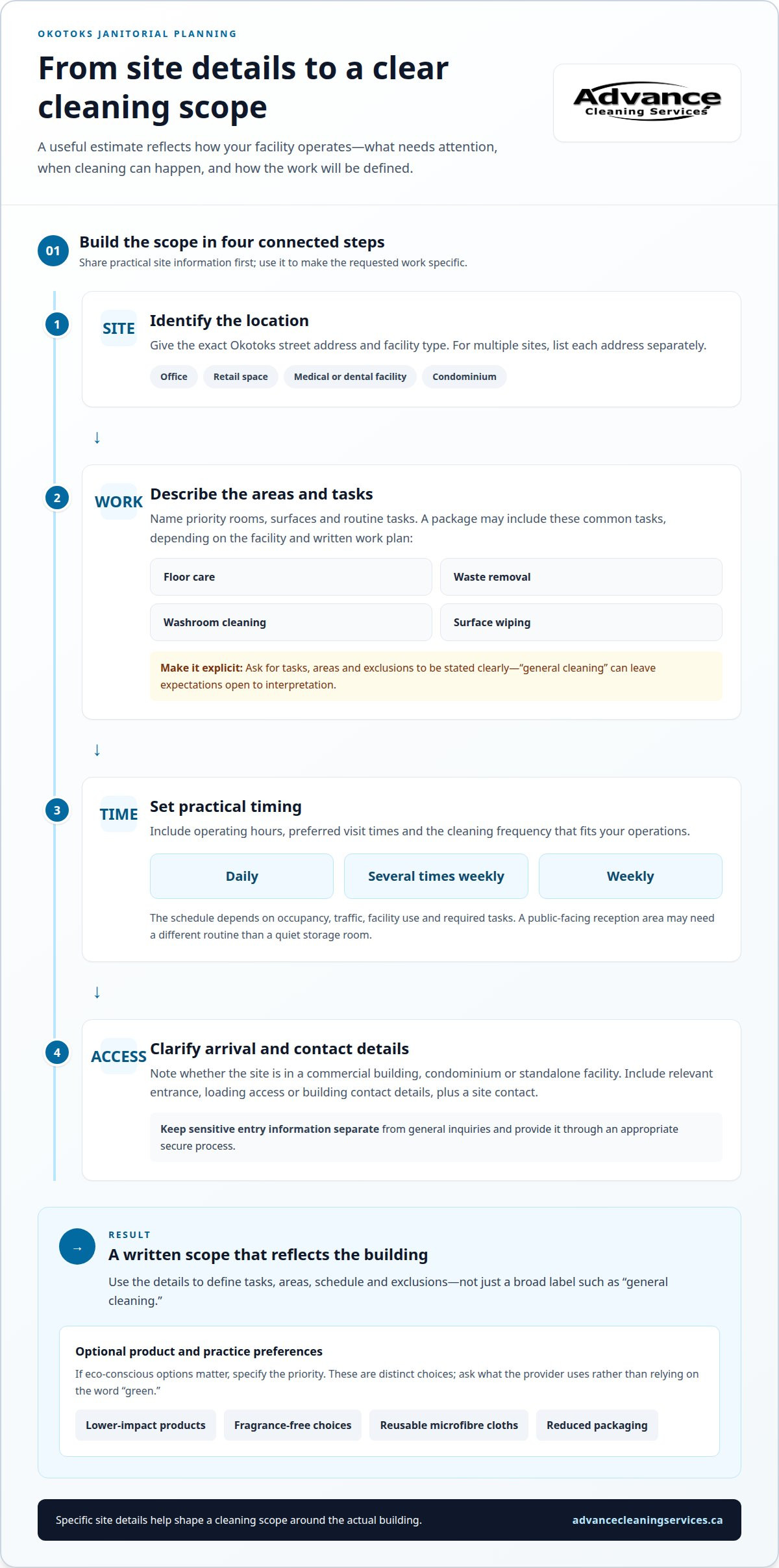
Start with the exact service address in Okotoks, Alberta. A provider’s office location alone doesn’t show which sites it serves. Share the building’s street address, facility type and preferred cleaning times when requesting information. For a business with multiple sites, list each address separately. This helps clarify whether the requested work applies to one location or several.
Location details also help distinguish routine access from special travel or entry arrangements. For example, note whether the site is in a commercial building, a condominium or a standalone facility. Include the main entrance, loading access or building contact process if those details affect arrival. Keep access instructions separate from general inquiries, and provide sensitive entry information through an appropriate secure process.
Contact information should make the next step clear. Look for a named business, a working phone number or email, and a way to describe the facility. In your first message, include the address, approximate areas needing attention, operating hours and requested service start. A concise description, such as “office cleaning for shared work areas and washrooms,” gives the provider useful context.
Commercial janitorial cleaning packages can cover routine tasks such as floor care, waste removal, washroom cleaning and surface wiping. The exact scope depends on the facility and the written work plan. Ask for tasks, areas and exclusions to be stated clearly, so “general cleaning” doesn’t leave expectations open to interpretation.
Businesses can schedule cleaning at a frequency that fits their operations, such as daily, several times weekly or weekly. The schedule depends on occupancy, traffic, facility use and the tasks required. A public-facing reception area may need a different routine than a quiet storage room. State operating hours and priority areas when outlining preferred visit times.
Eco-conscious cleaning options can include lower-impact products, fragrance-free choices, reusable microfibre cloths and reduced packaging. These approaches aren’t interchangeable, and “green” alone doesn’t explain what a provider uses. Request clear product and practice details in the proposed scope. For example, identify whether the priority is reduced fragrance, reusable materials or less packaging.
- Share the site details: Provide each Okotoks address and facility type.
- Describe the work: Name priority rooms, surfaces and routine tasks.
- Set practical timing: Include operating hours and preferred cleaning frequency.
- Clarify contact steps: Use the provider’s stated contact channel and include a site contact.
These details make conversations about location, access and scheduling more specific. They also help shape a cleaning scope around the actual building rather than a broad description alone.
Staff licensing, insurance, bonding, and workers’ compensation
Before work begins, clarify who will enter your premises and how responsibility is handled. Licensing, insurance, bonding and workers’ compensation describe different things and are not interchangeable. Discussing them separately helps you understand which protections and procedures apply to the proposed work.
Ask what licences or training apply to the tasks at your facility. Requirements depend on the work, so a general business licence does not establish every skill. Routine office cleaning differs from work involving specialized equipment or restricted areas. The provider should explain staff preparation in practical terms, including task instructions and site orientation.
Insurance relates to potential loss or damage connected with business operations. Ask for the type of coverage and its scope, then clarify how the named business and service location relate to the documents. A certificate should be current and identify the insured party. If your organization has particular coverage conditions, record them in the agreement before cleaning starts.
Bonding is separate and may address specific risks, depending on its terms. Do not assume that being bonded covers every possible loss. Ask what the bond applies to, who it protects and how a concern should be reported. Keep the response with your vendor records, particularly when several staff members may access the building.
Workers’ compensation concerns workplace injury coverage and responsibilities. Ask how the provider handles staff coverage and what documentation it can supply. This distinction is useful for businesses comparing cleaning arrangements in Okotoks or Calgary. Keep the discussion factual and retain written records.
A janitorial service agreement should identify the parties, facility address, tasks, schedule, access arrangements, supplies and reporting process. It should also explain how changes are handled, along with the fee basis and payment terms. Clear terms provide a practical reference when staffing, site needs or cleaning priorities change.
- Identify the work: Match staff training and any applicable licence to assigned tasks.
- Record coverage: Keep insurance and workers’ compensation documents with vendor records.
- Clarify bonding: Note its scope, protection and reporting process.
- Document expectations: Put duties, access, scheduling and changes in writing.
For a facility planning routine cleaning, a written janitorial service agreement can make responsibilities and service expectations easier to follow.
Use staffing discussions to distinguish the person who performs the work from the business that accepts contractual responsibility. Ask who supervises assigned workers, who receives incident reports, and how substitutions or schedule changes will be communicated. Keep answers alongside the agreement so that insurance, bonding and workers’ compensation records can be considered in context, rather than as stand-alone assurances.
A role-specific listing can help frame questions about duties and staffing, but it does not establish what credentials, coverage or protections apply to a separate cleaning contract. Discuss those details directly with the provider and retain written responses for your facility’s records.
Industries and facilities served
Facility type shapes the cleaning plan. An office, retail shop and medical clinic have different traffic patterns, shared spaces and priorities. For an Okotoks business, describe how each area is used, who enters it and which surfaces need regular attention. These details help define a practical scope instead of treating every building as one standard job.
Offices often include reception areas, meeting rooms, workstations, kitchens and washrooms. A cleaning plan can assign tasks to each area, such as wiping shared surfaces or maintaining floors. A quiet office with limited public access may need a different routine from a busy reception area. Identify sensitive equipment and spaces that require staff access arrangements.
Retail cleaning needs to account for customer-facing areas and changing foot traffic. Entrances, sales floors, counters and staff rooms each serve a different purpose. An entrance may collect tracked-in dirt, while a counter is a shared work surface. A clear scope separates routine cleaning from focused carpet or upholstery cleaning.
Medical and dental facilities need a scope that reflects the rooms and surfaces in use. Medical clinics, dental offices and veterinary clinics may include reception areas, treatment rooms, staff spaces and washrooms. Identify the room types and explain how the facility operates. The plan should state which areas are included and how access is coordinated, rather than relying on a broad label like “clinic cleaning.”
Condominiums combine private residences with shared spaces. Lobbies, corridors, elevators and common rooms may need attention, with schedules reflecting resident traffic and building routines. A day porter service can support visible care in shared areas during the day. Distinguish its tasks from scheduled janitorial work so responsibilities remain clear.
Some properties need work beyond recurring maintenance. Carpet cleaning can address floor coverings in an office or retail space, while post-construction cleaning suits a site after building work. These services are distinct from routine janitorial duties. Separate them in the scope to distinguish periodic projects from regular upkeep.
- Map the site: List rooms, shared areas and restricted spaces.
- Describe facility use: Note customer traffic, resident access or clinic operations.
- Separate task types: Distinguish recurring cleaning from periodic carpet care.
- Set area priorities: Identify entrances, reception spaces and other high-use zones.
For a multi-use property, describe each area separately. A written scope can then connect the building’s actual use with the cleaning tasks, access arrangements and service schedule required.
Sports facilities have their own operating needs, where cleaning may sit alongside facility upkeep. Define upkeep responsibilities clearly so cleaning tasks and other duties are not confused.
On-site consultations and estimates
An on-site consultation helps assess the actual facility, including floor types, washrooms, entrances, shared rooms and access points. For commercial cleaning in Okotoks, this can turn a general request into a defined scope. It also helps distinguish routine tasks from periodic work, such as carpet cleaning.
Before a walkthrough, gather practical details about the property, including its address, operating hours, approximate areas and rooms requiring service. A facility contact can point out restricted spaces, delicate surfaces or priority areas. For example, a clinic’s reception and staff areas may need different task descriptions.
During the walkthrough, the provider can map tasks to locations. A washroom scope might specify fixtures, floors and touchpoints, while an office scope could include desks, meeting rooms and kitchen surfaces. The estimate should describe what gets cleaned, how often, and which supplies or equipment are included. Clear wording helps prevent broad labels from hiding different expectations.
The estimate depends on facility size, cleaning frequency, task scope, floor materials, access needs and specialized work. A building with several floors or mixed surfaces may require a different plan from a single-room office. The estimate should connect those factors to the proposed work, rather than rely on an unexplained total.
After the walkthrough, review the written estimate for scope and service boundaries. Confirm the locations covered, task frequency, start arrangements and any periodic services. Check how changes, such as a newly used room or a shift in operating hours, will be handled. If the property has multiple addresses, make sure each site is clearly identified.
- Prepare site information: Share operating hours, room uses and priority areas.
- Walk the facility: Identify surfaces, access points and spaces needing special attention.
- Review the scope: Match each task to a location and visit frequency.
- Clarify boundaries: Separate routine cleaning from periodic or specialized work.
- Keep the estimate: Use its written details as the reference for agreed service.
A useful estimate gives both sides a workable starting point. It connects the site’s conditions to specific tasks and a schedule. If the facility changes, the written scope gives a clear basis for discussing adjustments without leaving responsibilities vague.
Quality audits and customer reviews
A useful quality review compares completed work with the agreed scope. It should identify the area, task and result rather than rely on a general impression. For example, a washroom check can record whether floors, fixtures and dispensers received attention. A reception-area review might cover floor condition, visible dust and waste removal.
Use a consistent checklist so visits are assessed fairly. Include priority rooms and the tasks assigned to each, then record the review date, location and any missed item. This creates a clear reference for follow-up and helps distinguish a recurring issue from a one-time oversight.
Quality reviews can combine visual checks with service records and feedback. A supervisor might inspect a meeting room and compare findings with the task list. Notes should describe observable details, such as a missed surface or an unemptied bin. Specific records help the cleaning team understand what needs attention.
Set a practical process for concerns before service begins. Identify who receives feedback, how it is recorded and how completion is reviewed. A facility contact, for instance, can report a missed task by naming the room and cleaning date. A follow-up record can note the concern, assigned action and outcome.
Customer reviews offer another perspective, but context matters. A review about an office may not describe the needs of a dental clinic or condominium. Look for concrete examples, such as communication about a missed task or consistency across visits. Specific accounts provide more insight than general praise or criticism.
Look for patterns across comments rather than treating one review as a complete assessment. Repeated mentions of clear communication may point to a useful strength, while several detailed reports about the same issue may merit consideration. Reviews reflect individual experiences, so compare their examples with your facility’s priorities.
- Use a defined checklist: Tie each inspection point to a room and assigned task.
- Record evidence: Note dates, locations and visible results.
- Track concerns: Document the issue, follow-up action and outcome.
- Read reviews for detail: Focus on specific service examples and recurring themes.
Regular, documented reviews turn expectations into observable standards. A clear checklist and feedback route help facility teams discuss service quality with specific examples, rather than relying on memory. Discuss cleaning priorities for your facility and establish what consistent results should look like.
Advance Cleaning Services Inc.
Advance Cleaning Services Inc. helps Okotoks facilities turn cleaning needs into a clear, practical scope. Its Janitorial Services can support routine upkeep, while Office cleaning and Medical Facility Cleaning address different facility types. Carpet cleaning can also be considered when floor coverings need focused care.
Share your facility type, priority areas, operating schedule and cleaning concerns. These details help shape a plan around how the building is used, rather than a generic checklist. An office may prioritize shared workspaces, while a medical facility may need its rooms and access arrangements reflected in the scope.
If you’re ready to discuss cleaning for your facility, contact Advance Cleaning Services Inc.
Set a clear direction for your facility
Turn your cleaning priorities into a workable plan by considering how the space is used, what matters most to staff or visitors and how cleaning should fit around daily operations. A focused conversation can connect those needs with a suitable scope for janitorial services in Okotoks.
Advance Cleaning Services Inc. can discuss your facility’s requirements and help define a practical approach. Share the building type, key areas and current cleaning concerns to begin. Clear priorities make it easier to shape service around the way your facility operates.
Whether you’re arranging cleaning for a new space or refining an existing routine, you can take the next step at your pace. Contact Advance Cleaning Services Inc. to discuss your facility’s cleaning needs and move forward with confidence.
Frequently Asked Questions
What janitorial services are available in Okotoks, Alberta?
Okotoks homes and businesses can arrange janitorial work, office and retail cleaning, and cleaning for medical and dental facilities. Other services include maid service, carpet and upholstery cleaning, condominium services, day porter services and post-construction cleaning. The right combination depends on the property. A retail site may need regular attention to customer areas, while a home may need residential cleaning.
Which janitorial companies serve homes and businesses in Okotoks?
Advance Cleaning Services serves residential and commercial clients in Okotoks. Services include janitorial work for business facilities and maid service for homes, as well as cleaning for offices, retail spaces and medical or dental clinics. Describe whether you need recurring upkeep or a specific task, such as carpet cleaning, so the conversation can focus on your property’s needs.
How do Okotoks janitorial companies compare on reviews and ratings?
Compare reviews by looking for specific examples, not just star ratings. Comments describing communication, consistency or how a concern was handled give more context than general praise. Consider whether the reviewer describes a similar setting, such as an office, home or clinic. Reviews reflect individual experiences, so use them alongside the written service scope and your own priorities rather than treating one rating as a complete assessment.
Are janitorial cleaners in Alberta insured, bonded, and background-checked?
Don’t assume every Alberta cleaning company has all three safeguards. Insurance, bonding and background screening are different matters, and one doesn’t establish the others. For a business with staff or visitors on site, set out the documentation and screening expectations that matter to your organization. Keep relevant records with the service agreement, and make sure the agreement identifies who handles site access and reports concerns.
How can I request and compare janitorial service quotes in Okotoks?
Request estimates using the same written description of your facility and required work. Include the property type, service areas, requested schedule and specific tasks, such as carpet care. Then compare what each estimate includes, excludes and treats as a separate task. A lower total may reflect a narrower scope, so check that the proposed work covers the same rooms and responsibilities before deciding.