
A clinic cleaning request in Vancouver should spell out the areas to be cleaned, the required tasks and the preferred schedule. Medical clinic cleaning services in Vancouver can include sanitizing high-touch surfaces and exam rooms, maintaining washrooms, and handling waste and patient information carefully. The cleaning price depends on the clinic’s needs and is provided after a quote request.
It’s reasonable to want a clear picture of the work before arranging service, especially when cleaning needs to fit around appointments and support infection-control practices. This guide explains how to prepare a request, plan cleaning outside regular clinic hours and understand the factors that shape an indicative price.
You’ll also learn what healthcare-focused cleaning can involve, from waiting-area and examination-room care to sanitation of frequently touched surfaces. By setting out the scope and scheduling needs, you can identify what your clinic requires and take the next step with confidence.
Key Takeaways
- Prepare a clear cleaning request by listing clinic areas, priority surfaces and routine tasks.
- Plan a schedule around appointments and identify which areas need attention between patient visits.
- Understand how disinfection, waiting-room care and examination-room cleaning support infection-control practices.
- See why healthcare facilities may need specialized cleaning beyond routine janitorial work.
- Learn which details shape an indicative Vancouver quote and how to prepare for a pricing discussion.
How can I request Medical Clinic Cleaning in Vancouver?
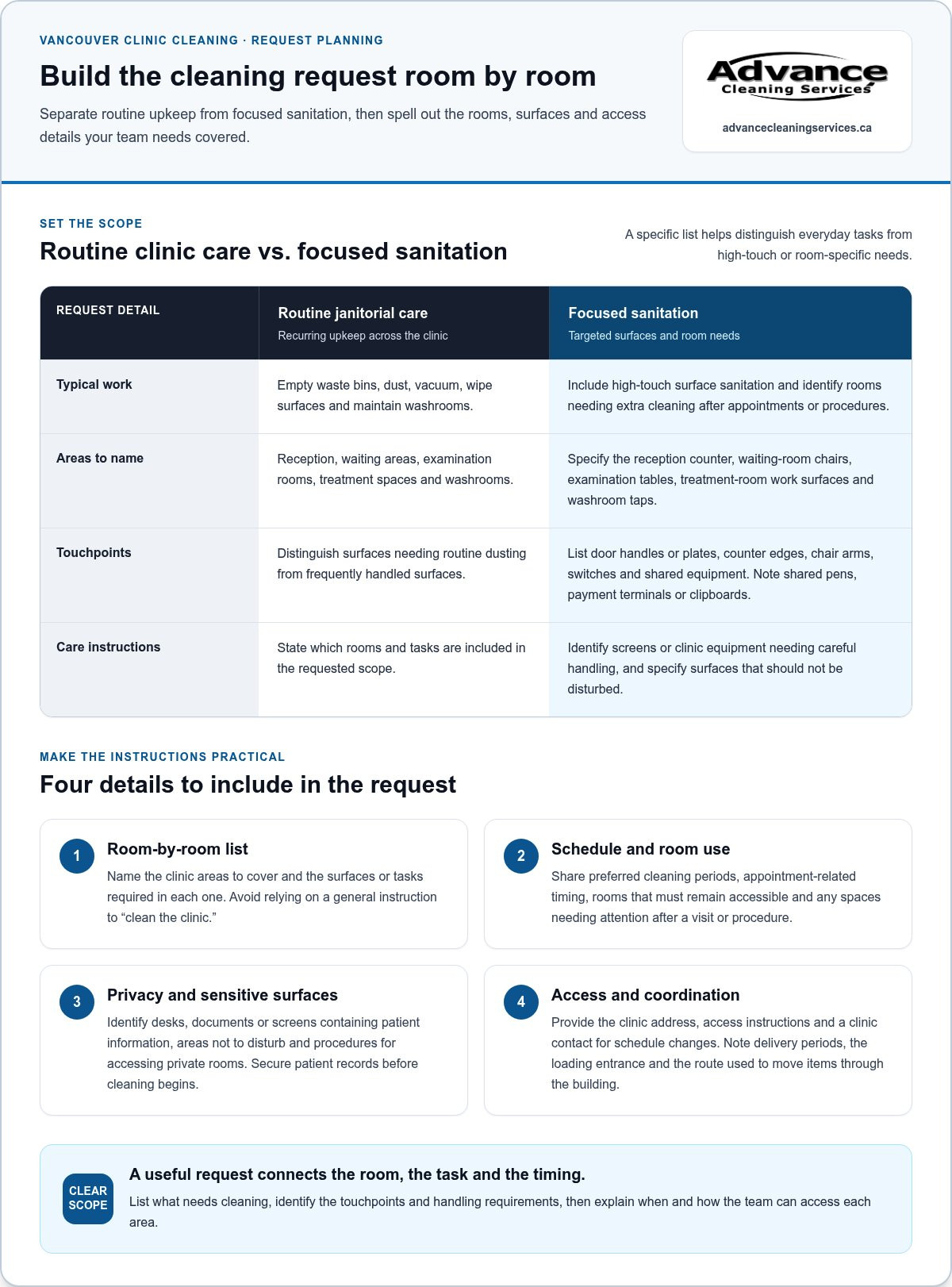
Start by describing the clinic’s rooms, daily use and cleaning priorities. A useful request names reception, waiting areas, examination rooms, treatment spaces and washrooms. Include frequently touched surfaces such as counters, door handles, chair arms, light switches and shared equipment. This gives the cleaning team a clear basis for planning the work.
Separate routine janitorial tasks from focused sanitation needs. Typical clinic cleaning may include emptying waste bins, dusting, vacuuming, wiping surfaces and maintaining washrooms. Specify which high-touch surfaces need attention in reception, waiting, treatment and staff areas. Identify rooms that require additional cleaning after appointments or procedures.
Be specific about the surfaces and rooms to include. For example, name the reception counter, waiting-room chairs, examination tables, treatment-room work surfaces and washroom taps. List shared touchpoints rather than relying on a general instruction to “clean the clinic.” A room-by-room list distinguishes frequently handled surfaces from areas that need routine dusting.
Describe high-touch surface disinfection
List the touchpoints in each clinic area and specify that sanitation is part of the requested scope. Examples include door plates, counter edges, chair arms and frequently handled switches. In examination rooms, name the examination table and nearby work surfaces. In reception, identify the check-in counter and waiting-room seating. These details make the service plan more practical.
When discussing high-touch surface sanitation, clarify which items are shared and how staff use them. A shared pen, payment terminal or clipboard may need different attention from a wall or cabinet. Also identify surfaces that need careful handling, such as screens or clinic equipment. A clear list reduces guesswork and supports consistent cleaning in patient areas.
Include privacy and access details
Medical office cleaning also calls for careful handling of patient information. Tell the cleaning team which desks, documents or screens contain sensitive information, and identify areas that should not be disturbed. For example, a reception workstation may need surface cleaning while papers remain in place. Secure patient records before cleaning begins, and note any clinic procedures for accessing private rooms.
To complete the request, provide the clinic address, room list, preferred schedule and access instructions. Specify whether the work should cover waiting areas, exam rooms, treatment spaces, washrooms or all listed areas. These details help define a focused scope for medical clinic cleaning services in Vancouver, including how high-touch sanitation fits alongside dusting, vacuuming and routine janitorial work.
After-hours and customized scheduling
A clinic schedule should fit patient appointments, staff routines and access needs. Map cleaning periods around the rooms and touch surfaces that need attention.
After-Hours Scheduling
Cleaning outside appointment periods can reduce disruption to reception, offices and treatment rooms. When planning the schedule, identify when staff leave, which entrances cleaners should use and how access instructions will be shared. If a clinic sees evening patients, for example, mark the final appointment period and note which spaces remain in use. This helps avoid interrupting patient care.
Consider which tasks can happen only when a room is empty. Vacuuming a consultation room, for example, may fit after its last appointment, while a public waiting area may need attention during a quieter interval. List rooms that must remain accessible to staff. A hospital and a small clinic have different traffic patterns, so base timing on actual room use rather than copying another facility’s schedule.
Customized Cleaning Schedules
A customized schedule separates recurring tasks from areas needing extra attention. Document each clinic zone, the work expected there and the preferred cleaning period. A sample plan might group reception and waiting-room care separately from examination-room cleaning. Include touch surfaces in the room instructions, so the schedule describes the work rather than simply naming a location.
Protocols should explain how schedule changes are handled. Name the clinic contact who can identify a room that remains occupied or a treatment space that needs cleaning later. If patient appointments shift, update the room plan before the next scheduled visit. Clear instructions help clinic staff and cleaners follow the same priorities without disrupting patient movement.
For custom pickup and delivery schedules, share the clinic’s regular arrival windows for supplies, equipment or other deliveries. Mark the loading entrance and the route used to move items through the building. Cleaning can then be planned around those movements, rather than placing equipment or interrupting access in a delivery path. This coordination matters in shared offices and clinics with busy reception areas.
Build infection-prevention priorities into the schedule by identifying rooms with frequent patient use. Specify when high-contact areas need attention and which surfaces are included, such as door handles, counters and shared chairs. Avoid vague directions like “clean as needed.” Naming the task and room makes the protocol easier to follow and adjust when appointments or clinic operations change.
Before requesting a schedule, prepare a room list, preferred cleaning windows, access instructions and delivery periods. These details help define a practical plan for medical facility cleaning without assuming a one-size-fits-all timetable.
Healthcare-grade sanitation and infection control
Clinic sanitation combines routine cleaning with targeted attention to patient areas. A practical plan covers floors, washrooms and surfaces used during treatment.
Floor and Restroom Sanitation
Floor care starts by removing soil, then cleaning with a method suited to the surface. Reception flooring, dental treatment rooms and washroom floors may need different tools and products. Keep floors clear during cleaning, and allow them to dry before patients or staff walk through.
Washroom cleaning should include sinks, taps, counters, toilets and frequently touched door hardware. Use separate cleaning materials for washrooms and patient-care spaces to avoid carrying soil between areas. Include waste bins and visible spills in the plan, alongside regular surface cleaning and sanitation.
Cleaning Standards and Products
In British Columbia, clinic cleaning protocols should include attention to high-touch surfaces, medical-waste procedures, and regular cleaning of waiting areas and examination rooms. These steps address everyday sanitation needs in healthcare settings. A dental clinic, for example, can map them to reception, treatment rooms and shared washrooms.
For safe, effective use, choose a product whose Canadian label identifies the intended use and surfaces. Follow its directions for application and contact time. A trained cleaner should also match the product to the surface, such as a hard counter rather than delicate equipment. Ozone washing should not replace these specified cleaning and disinfection steps.
No single product suits every clinic surface. The room’s use, material and cleaning task guide selection. A washroom counter and a treatment-room floor, for example, have different needs. Keep product directions accessible so staff can follow the same protocol consistently.
Sharps and Biohazard Risks
Handling a loose needle or other sharp can cause a puncture injury. Blood or other potentially infectious material can also create exposure concerns if left on a surface. Routine janitorial cleaning should not involve handling an exposed sharp as ordinary waste.
Clinics should identify sharps containers and explain the response to a discovered sharp or spill. For example, staff can mark the affected area, keep patients away and follow the clinic’s established handling protocol. Clear instructions help prevent cleaners from moving contaminated material or mixing it with general waste.
When requesting cleaning, identify rooms where sharps or biohazard materials may be present, and explain how the clinic separates them from routine waste. This distinction supports safer work and keeps floor care, washroom sanitation and patient-area cleaning within a clear scope.
Cleaning services for healthcare and medical buildings
Healthcare facilities need cleaning plans shaped around patient care, room use and waste handling. In Vancouver, specialized Medical Facility Cleaning can address the needs of medical, dental and veterinary clinics.
Cleaning Across Healthcare Settings
For a facility with several departments, organize the scope by area rather than relying on one general instruction. Distinguish public waiting spaces from staff offices and patient examination rooms, for example. This sets clear priorities and connects healthcare cleaning to how people move through the building. Include rooms used for procedures, consultations and administrative work.
Healthcare Cleaning Protocols
Protocols should describe which surfaces are cleaned, how patient areas are handled and how waste is separated. Medical office protocols should include attention to high-touch surfaces, medical-waste procedures, and regular cleaning of waiting areas and examination rooms. A room-by-room plan makes these tasks clear to clinic staff and the cleaning team.
Vancouver medical clinics need procedures for separating medical waste from general refuse. The cleaning plan should identify waste streams and designated containers, while clinic staff follow their established handling procedures. This keeps routine cleaning distinct from waste management.
Medical Facility Cleaning supports healthcare settings with a scope tailored to their rooms and cleaning priorities. When comparing service scopes, look for a provider that serves medical settings rather than treating a clinic like an ordinary office. The plan should reflect the facility’s spaces and requirements.
To prepare a practical scope, group rooms by function, list the tasks for each group and identify areas needing extra attention. Note whether the waiting area, examination rooms and washrooms are all included, for instance. Then clarify how medical waste is separated from routine bins. These steps align the cleaning plan with patient flow and facility operations.
Which Vancouver cleaning companies specialize in medical and healthcare facilities? Look for commercial providers that serve healthcare settings and can define a scope for medical, dental or hospital spaces. Compare the proposed tasks with the rooms and protocols your facility needs.
Clear roles matter. Clinic staff should identify waste containers and explain facility-specific procedures; cleaners should follow the agreed scope for surfaces, waiting areas and examination rooms. This keeps healthcare cleaning organized without confusing routine janitorial tasks with medical-waste handling.
Indicative clinic-cleaning price range in Vancouver
The price for clinic cleaning depends on the scope and is provided after a quote request. For a useful estimate, describe the clinic’s size, room types, cleaning frequency and requested tasks. A reception area, several examination rooms and a staff office create a different scope from a compact clinic with fewer spaces. These details determine the work involved.
Room use affects the service required. A treatment room may need focused surface cleaning, while an administrative office may need routine dusting and floor care. Include waiting areas, washrooms, staff spaces and rooms used for procedures. A clear room list distinguishes specialized healthcare cleaning from standard office cleaning.
Frequency is another key factor. A clinic requesting recurring commercial cleaning has a different schedule from one seeking a single visit. Explain which tasks are expected during each visit, such as emptying waste bins, cleaning floors or addressing frequently touched surfaces. If priorities differ by room, state them in the request rather than using one broad instruction for the facility.
Access and timing can also shape the scope. Note whether work must take place outside appointment periods, which entrances cleaners should use and whether some rooms remain in use. For example, a reception desk may need to stay accessible while treatment rooms are being cleaned. Clear access details help define the time and sequence involved.
Describe specialized tasks separately from routine cleaning. Identify carpet or upholstery cleaning, unusual soil and distinct waste-handling procedures. These details help ensure the scope does not treat every area as ordinary janitorial work. The work plan should state which tasks are included, where they apply and how often they are expected.
To prepare a quote request, gather the clinic’s room list, preferred schedule, cleaning priorities and access instructions. Ask for a proposed scope that distinguishes routine work from specialized tasks. This makes it easier to compare the service with your clinic’s actual needs, rather than focusing on a figure without knowing what work it covers.
For a quote based on your clinic’s rooms, schedule and cleaning requirements, request a cleaning quote.
Advance Cleaning Services: Medical Facility Cleaning
Advance Cleaning Services Inc. provides Medical Facility Cleaning for medical, dental and veterinary clinics. Choose this service when your facility needs professional cleaning planned around its rooms and priorities. A clear scope can identify the areas and tasks your clinic wants covered, from patient spaces to staff areas.
For clinics with administrative offices, office cleaning and janitorial services can address routine workplace cleaning needs. Carpet cleaning is also available for clinic flooring. Keep your request focused by listing the rooms, preferred schedule and most important tasks. This gives the cleaning discussion a practical starting point without treating every facility the same.
To discuss medical facility cleaning for your clinic, contact Advance Cleaning Services Inc. today to learn more about our specialized medical clinic cleaning services Vancouver.
Make clinic cleaning part of your operating plan
A clinic’s cleaning plan can evolve alongside its patient services, room use and daily routines. Treat it as a working part of clinic operations: assign a staff contact to share schedule changes, update access instructions when rooms change use, and keep the cleaning scope aligned with current priorities. That gives your team a practical way to maintain continuity as the clinic grows or adjusts its services.
For clinics seeking medical clinic cleaning services in Vancouver, Advance Cleaning Services offers Medical Facility Cleaning, Office cleaning and Janitorial Services. These services support professional cleaning in patient and workplace areas. Share your facility’s needs and preferred approach to begin a focused discussion.
Contact Advance Cleaning Services Inc. to discuss cleaning for your clinic. A clear plan is a constructive next step toward a well-maintained care environment.
Frequently Asked Questions
How do I compare cleaning professionals in Vancouver?
Compare the proposed cleaning scope with your clinic’s rooms and operating needs. Check that the plan distinguishes patient-care areas, staff spaces and shared building areas. A dental clinic, for example, can assess whether reception, treatment rooms and administrative offices are addressed separately. Review the schedule, task descriptions and waste-handling boundaries together to understand what the service covers.
Ready for a Cleaner, Safer Healthcare Environment?
Start by defining the cleaning outcome your clinic needs, then organize the details for a clear service request. Identify the rooms involved, access constraints and tasks your staff want included. Advance Cleaning Services provides Medical Facility Cleaning for medical, dental and veterinary clinics. A focused request starts a practical discussion about your facility’s priorities and the scope that supports its daily operations.
What medical clinic cleaning services are available in Vancouver, BC?
Vancouver clinics can arrange medical facility cleaning for medical, dental and veterinary settings. Advance Cleaning Services offers Medical Facility Cleaning, alongside Office cleaning and Janitorial Services. When outlining your needs, describe your facility type and distinguish patient-facing rooms from administrative areas. This helps define a suitable scope, whether your request centres on clinical spaces, workplace areas or both.
How often should medical clinics clean and disinfect exam rooms and high-touch surfaces?
Set cleaning frequency according to room use, patient flow and the tasks performed in each space. An examination room used throughout the clinic day has different needs from a staff office with limited access. Build a schedule around clinic operations, and include a process for addressing rooms after procedures or unexpected soil. Review the plan when appointment patterns, services or room use change, so priorities remain aligned.
What is included in a medical clinic cleaning service in Vancouver?
A medical clinic cleaning scope can include routine surface cleaning, dusting, vacuuming, washroom maintenance and emptying waste bins. It can also specify attention to frequently touched areas and care for waiting and examination rooms. The precise tasks depend on the areas included in the request. List staff offices separately from treatment spaces, for example, and identify clinic-specific access or privacy instructions.
How much does medical clinic cleaning cost in Vancouver, BC?
The price depends on the clinic’s scope and is provided after a quote request. Factors include the number and type of rooms, requested tasks, cleaning frequency, timing and access requirements. A request covering reception, examination rooms and washrooms has a different scope from one focused on office areas. Provide these details together to receive a quote based on the work your clinic needs.
How can Vancouver clinics verify cleaners’ training, insurance, and infection-control practices?
Set clear onboarding requirements and keep clinic-side records of the information reviewed. Document the infection-control procedures that apply to your facility, including room access, surface priorities and waste separation. Keep staff instructions consistent with those procedures, and record who can approve changes to the cleaning scope. This gives clinic managers a clear reference for coordinating cleaning without disrupting patient care or confusing routine tasks with clinical responsibilities.
How do Vancouver medical clinic cleaning companies compare on services, pricing, and reviews?
Compare the written scope, quote details and review process with your clinic’s needs. Check whether the service description separates medical areas from general office cleaning, and whether the quote explains the tasks and schedule it covers. Reviews can offer context about communication and service consistency, but relate them to the work described. For medical clinic cleaning services in Vancouver, a detailed scope makes comparisons more meaningful than price alone.