In 2026, medical cleaning is no longer just about a tidy appearance. It’s a critical clinical intervention that directly impacts surgical outcomes and patient recovery. You likely feel the weight of responsibility that comes with managing a sterile environment, especially with the pressure of provincial health audits. Implementing effective veterinary clinic cleaning protocols is often difficult when you’re trying to translate complex CSA standards into daily checklists for your team.
At Advance Cleaning Services Inc., we understand the need for consistency and reliability in your sanitation routine. This guide provides the clarity you need to master rigorous protocols that ensure patient safety and maintain full compliance with AHS and BC health authorities. You’ll discover a verified auditing framework designed to reduce the risk of surgical site infections and align with the latest 2026 ABVMA and other leading Canadian veterinary accreditation standards. We’ve organized everything you need to know to turn your cleaning routine into a professional, high-standard operation that protects your patients and your practice.
Key Takeaways
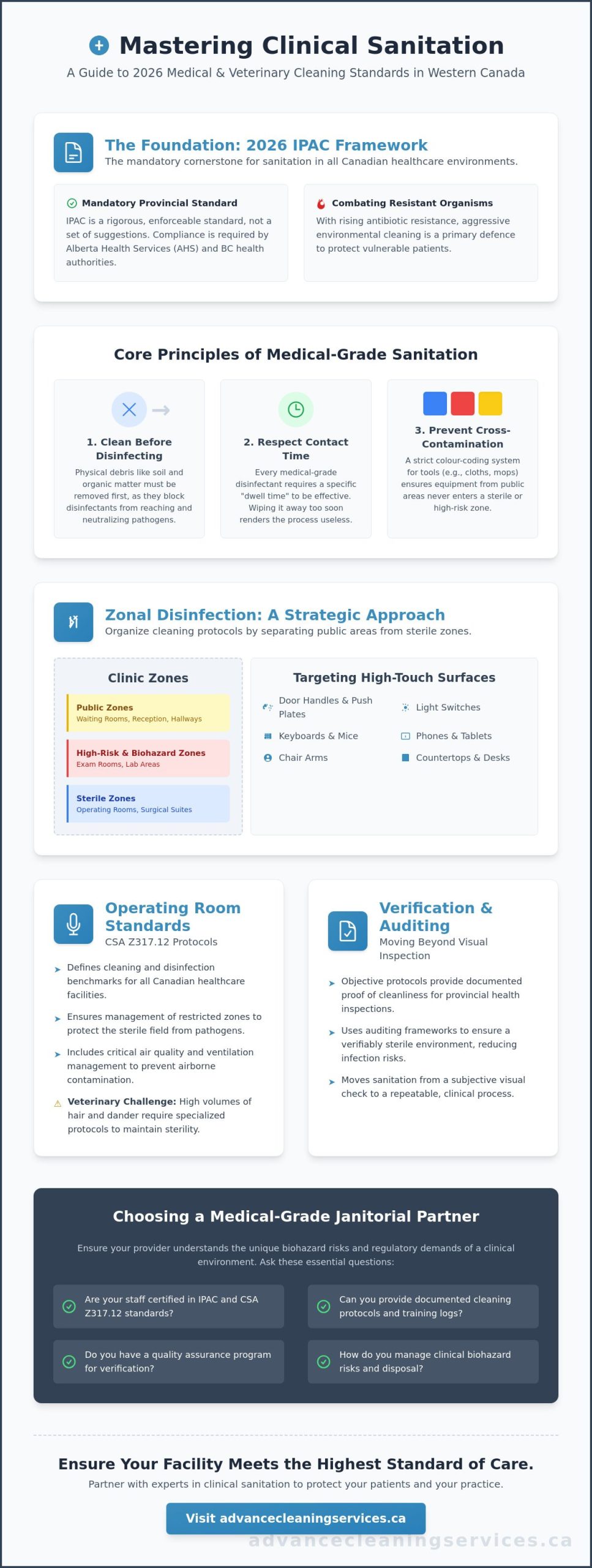
- Understand the 2026 IPAC Framework as the foundation for healthcare sanitation in Western Canada. Learn how rigorous environmental cleaning combats antibiotic-resistant organisms.
- Implement CSA Z317.12 standards to protect the sterile field and manage air quality in surgical suites. These protocols ensure your operating room meets the highest safety benchmarks.
- Adopt a zonal disinfection approach to separate public areas from sterile zones. This method helps you organize veterinary clinic cleaning protocols by targeting the top ten high-touch surfaces.
- Move beyond visual inspections with objective verification protocols. These frameworks prove compliance during provincial health inspections and ensure a truly sterile environment.
- Identify the essential questions to ask when selecting a medical-grade janitorial partner. Ensure your provider understands the unique biohazard risks of a clinical environment.
Medical Clinic Cleaning Standards: The IPAC Framework in Western Canada
In 2026, the Infection Prevention and Control (IPAC) framework serves as the mandatory foundation for all Canadian healthcare environments. It’s no longer just a set of suggestions; it’s a rigorous standard designed to protect vulnerable patients from increasingly resilient pathogens. As antibiotic-resistant organisms become more prevalent, the focus has shifted toward aggressive environmental cleaning. This shift is particularly evident in how we approach medical facility cleaning in Alberta, where protocols must align with strict provincial mandates.
Whether you operate a human surgical centre or a busy animal hospital, following updated veterinary clinic cleaning protocols is essential for maintaining a sterile environment. Both Alberta Health Services (AHS) and the BC Ministry of Health have intensified their oversight. They now require documented proof that cleaning is treated as a clinical necessity rather than a simple janitorial task. This methodical approach ensures that every square foot of your facility supports patient health and safety.
The Core Principles of Medical-Grade Sanitation
Effective sanitation begins with understanding that cleaning and disinfection are distinct processes. You can’t disinfect a surface that hasn’t been cleaned first. Soil, hair, and organic matter create a physical barrier that prevents chemicals from reaching pathogens. We follow the “Contact Time” rule religiously. Every disinfectant has a specific dwell time required to neutralize bacteria and viruses. If you wipe it away too soon, the process fails. To prevent cross-contamination, we use a standardized colour-coding system for all tools. Blue cloths might be for general surfaces, while red is strictly for high-risk biohazard areas. This visual system ensures that tools used in a waiting area never enter a sterile zone.
Regional Regulatory Bodies in Alberta and BC
Regulatory expectations vary slightly depending on your location. In Calgary and Edmonton, AHS Environmental Clinical Guidelines dictate the frequency and methods for surface maintenance. Meanwhile, in British Columbia, Vancouver Coastal Health and Fraser Health set high benchmarks for private surgical centres. These bodies expect clinics to adhere to modern Operating Room Protocols to minimize surgical site infections. Preparing for a provincial health inspector visit in 2026 requires more than just a clean floor. You’ll need accessible, written veterinary clinic cleaning protocols and a clear log of staff training. Inspectors look for evidence of a methodical, repeatable system that prioritizes patient safety above all else.
Operating Room Cleaning Standards: Sterile Field Protocols
Maintaining a sterile surgical environment requires more than a simple wipe-down. In Canada, the CSA Z317.12 standard serves as the definitive benchmark for cleaning and disinfection within healthcare facilities. This standard dictates how restricted zones must be managed to prevent the transmission of pathogens. For these high-risk areas, professional infection control cleaning services are essential. They provide the specialized expertise needed to handle delicate equipment and maintain air quality standards that standard janitorial staff might overlook.
When you establish veterinary clinic cleaning protocols for a surgical suite, you face unique challenges. Animals introduce a high volume of hair, dander, and organic matter into the environment, which can compromise the sterile field. Adhering to Infection Prevention and Control Best Practices is vital for ensuring that your operating room remains a safe space for every procedure. This involves managing not just surface contaminants, but also the air pressure and ventilation systems that keep the room sterile.
The Three Phases of OR Cleaning
A truly sterile environment relies on a three-phase approach to sanitation. Pre-procedure cleaning happens before the first case of the day. This step removes any dust that settled overnight on horizontal surfaces. Between-case cleaning, often called “turnover,” is a rapid but high-intensity disinfection of the immediate surgical area. We focus on the operating table, mayo stands, and any equipment used during the procedure. Finally, terminal cleaning is the comprehensive deep-clean performed every 24 hours. This process involves moving equipment to clean the floor underneath and disinfecting every surface from the ceiling down to the baseboards.
AORN Guidelines for Perioperative Settings
The Association of perioperative Registered Nurses (AORN) provides clear guidelines that we adapt for Canadian clinical settings. These standards emphasize the cleaning of fixed equipment like surgical lights and anesthesia carts, which are often magnets for microscopic debris. Proper disposal of biohazardous waste and sharps is also a critical component of these veterinary clinic cleaning protocols. We also monitor air pressure during the cleaning process. It’s important to keep the OR doors closed to maintain the positive pressure that prevents contaminated air from hallways from entering the sterile zone. If you need help managing these complex requirements, reaching out to a reliable medical cleaning partner can provide the peace of mind you need for your next audit.
Zonal Disinfection: Targeting High-Touch Surfaces and Biohazards
A successful sanitation strategy relies on a risk-based “Zone” approach. We categorize clinic areas into three distinct levels: public zones, clinical zones, and sterile zones. This method ensures that resources are focused where the risk of pathogen transmission is highest. Public areas like waiting rooms require frequent maintenance; however, clinical zones where treatments occur demand medical-grade intervention. Mastering veterinary clinic cleaning protocols means recognizing that a reception desk and a surgical prep table require entirely different levels of disinfection.
In any medical environment, certain items are touched hundreds of times daily. We prioritize these high-touch surfaces to break the chain of infection. The top ten targets in most clinics include:
- Door handles and push plates
- Light switches
- Computer keyboards and mice
- Telephone handsets
- Sink taps and soap dispensers
- Counter edges and reception ledges
- Chair armrests in waiting areas
- Cabinet pulls and drawer handles
- Payment terminals
- Stethoscope and diagnostic tool handles
Implementing professional veterinarian clinic cleaning services ensures these surfaces are treated with Health Canada-approved disinfectants. These products must have a valid Drug Identification Number (DIN). It’s also vital to use HEPA-filtered vacuums and specialized air filtration systems. Standard vacuums often exhaust microscopic allergens and pathogens back into the air; conversely, HEPA systems trap 99.97% of particles as small as 0.3 microns. This is essential for maintaining air quality in clinical settings where dander and hair are prevalent.
Biohazard Remediation and Bloodborne Pathogens
Cleaning blood spills or bodily fluids requires strict adherence to Health Canada safety standards. Our staff uses specific Personal Protective Equipment (PPE) including gloves, gowns, and face shields when working in high-risk zones. This isn’t just about cleanliness; it’s about safety. Biohazard remediation requires specialized training to handle trauma or forensic cleanup effectively. We ensure all staff understand the Biocides Regulations framework transitioning through 2029. This knowledge ensures every spill is neutralized correctly without risking staff or patient health.
Waiting Rooms and High-Traffic Public Zones
Reception areas are often the first point of contact for respiratory viruses. We maintain these zones with a focus on preventing the spread of germs between patients and owners. Floor care is equally important. Medical-grade flooring often requires pH-neutral cleaners to prevent damage to specialized coatings. Using the wrong chemical can strip the finish and create porous areas where bacteria can hide. For soft surfaces like upholstery and carpets, we use deep-extraction methods. These techniques manage allergens and pathogens that settle into fabrics, ensuring your public spaces feel as professional and safe as your clinical ones.
Verification Protocols: Auditing and Quality Assurance
In 2026, “looking clean” is no longer the benchmark for safety. A floor that shines might still harbour microscopic pathogens that threaten patient recovery. Relying on visual checks alone creates a false sense of security. Modern veterinary clinic cleaning protocols require a shift from subjective assessments to objective, data-driven verification. This ensures that your facility doesn’t just look professional but is biologically safe for every surgical procedure.
Subjective auditing relies on an individual’s opinion. It’s inconsistent and often overlooks high-risk areas. Objective auditing uses scientific tools to measure cleanliness. For high-risk surgical environments, we recommend weekly audits to maintain peak standards. This data allows you to identify specific areas where staff may need more training. By tracking these metrics, you can directly correlate cleaning performance with improved patient outcomes and lower infection rates.
Methods of Environmental Cleaning Verification
We utilize three primary levels of verification to ensure your clinic meets provincial standards. Visual assessment is the first step. It catches obvious issues like dust or debris. However, we go further with fluorescent marking. We apply UV-sensitive gels to high-touch surfaces before cleaning. If the gel remains after the shift, the surface was missed. The gold standard is ATP bioluminescence testing. This tool measures organic matter on a surface and provides an immediate “Pass” or “Fail” result. It’s the most reliable way to prove that your veterinary clinic cleaning protocols are working effectively.
Documentation and Compliance Reporting
Proper documentation is your best defence during a provincial health inspection. Alberta Health Services and BC health authorities expect to see detailed cleaning logs. These records should show when a room was cleaned, who performed the task, and the results of any verification tests. If an audit score falls below your established standard, you must implement a Corrective Action Plan (CAP). This plan outlines the steps you took to fix the issue and prevent it from happening again. Transparent reporting builds trust with your stakeholders and shows patients that their safety is your top priority. If you want to ensure your facility is audit-ready, you can request a professional medical facility cleaning assessment to identify and close any gaps in your current routine.
Ensuring Compliance: Choosing a Medical-Grade Janitorial Partner
Standard commercial cleaners often lack the specialized training required to maintain a sterile surgical suite. While they may excel at making an office look tidy, they often fail to meet the rigorous operating room cleaning standards required in 2026. A general cleaner might prioritize a shiny floor over a microbially safe one, which is where veterinary clinic cleaning protocols can break down. Without a deep understanding of cross-contamination, a cleaning team could inadvertently move pathogens from a public waiting area into a restricted clinical zone.
Choosing a partner who understands the nuances of veterinarian clinic cleaning in Calgary ensures your practice remains compliant with the latest ABVMA and AHS standards. This specialized approach offers a significant long-term ROI. By reducing the risk of surgical site infections and ensuring you pass every provincial audit, you protect both your liability and your professional reputation. Before you hire a provider, we recommend asking these essential questions:
- Do you use Health Canada-approved disinfectants with a valid Drug Identification Number (DIN)?
- What specific training does your staff receive regarding bloodborne pathogens and sterile field protocols?
- Can you provide objective verification data, such as ATP bioluminescence test results?
- Do you have a documented process for biohazard remediation and sharps disposal?
Evaluating Training and Certification
Reliability in a medical setting is built on a foundation of rigorous training. Your cleaning partner should provide proof of specific certifications in sterile techniques and biohazard handling. It’s also vital to verify their insurance and WCB coverage to ensure they’re qualified for high-risk environments. For busy clinics, “Day Porter” services are often a necessary addition. These professionals provide ongoing maintenance during your hours of operation, ensuring that veterinary clinic cleaning protocols are maintained even during your most hectic shifts.
Customizing Your Cleaning Specification
Every medical facility has a unique layout and patient volume. A “one size fits all” cleaning contract rarely provides the level of detail needed for a surgical centre. We believe in moving beyond generic templates to create a customized specification for your clinic. This might involve integrating medical-grade carpet cleaning for your reception area or specialized post-construction cleanup after a renovation. By tailoring the service to your specific needs, we ensure that every zone in your facility meets the highest standards of safety. Ready to verify your current standards? Contact Advance Cleaning Services Inc. for a specialized medical facility audit today.
Elevate Your Clinical Standards for 2026
Maintaining a sterile environment is a continuous commitment to patient safety and regulatory excellence. By implementing the IPAC framework and moving toward objective verification methods like ATP testing, you ensure your facility remains audit-ready. These rigorous veterinary clinic cleaning protocols protect your practice from liability while fostering trust with your clients and staff. It’s about more than just passing an inspection; it’s about providing the highest standard of care in every procedure.
We’ve seen how managing these complex standards can be overwhelming for busy medical teams. Our professionals bring specialized medical facility cleaning expertise to every shift, serving clinics across Calgary, Edmonton, and Vancouver. With expert biohazard and remediation training, we act as a reliable partner in your pursuit of clinical excellence. You don’t have to navigate these shifting regulations alone.
Take the first step toward a verified, compliant environment today. Request a Medical Facility Cleaning Consultation from Advance Cleaning Services Inc. to ensure your clinic meets the highest benchmarks for 2026. We’re here to support your mission of health and safety with pride and precision.
Frequently Asked Questions
What is the difference between cleaning, sanitizing, and disinfecting in a medical clinic?
Cleaning is the physical removal of visible soil and organic matter from surfaces. Sanitizing reduces bacteria to levels considered safe by public health standards, while disinfection kills almost all disease-causing pathogens. For effective veterinary clinic cleaning protocols, you must clean a surface before applying a disinfectant. If you don’t remove the soil first, it acts as a physical barrier that prevents the chemicals from reaching and neutralizing the pathogens.
How often should an operating room be terminally cleaned?
An operating room must undergo terminal cleaning every 24 hours during any day it’s used for surgical procedures. This process is a comprehensive deep clean that includes moving all portable equipment to reach every surface from the ceiling to the floor. It ensures that any microscopic contaminants missed during between-case turnovers are thoroughly removed. This daily routine is vital for maintaining a sterile environment and preventing surgical site infections in your patients.
Are there specific cleaning standards for dental or veterinarian clinics in Alberta?
Yes, Alberta clinics must adhere to the Alberta Veterinary Medical Association (ABVMA) Practice Inspection and Practice Standards Bylaw. This regulation requires a written Infection Control Program that’s accessible to all staff members at all times. Similarly, dental facilities must follow the Alberta Dental Association standards. These regional regulations align with Alberta Health Services IPAC guidelines to ensure consistent safety and sanitation across all private clinical practices in the province.
What chemicals are approved for use in Canadian medical facility cleaning?
Only chemicals with a Health Canada Drug Identification Number (DIN) are approved for use in Canadian medical facilities. As of May 31, 2025, these products are transitioning to the new Biocides Regulations framework. You should consult the Market Authorized Biocides Database to verify that your disinfectants remain compliant through 2029. Using non-approved chemicals can lead to audit failures and compromised patient safety during provincial health inspections.
How can I verify that my cleaning staff are meeting IPAC standards?
You can verify compliance through objective auditing methods like ATP bioluminescence testing and fluorescent marking. These tools provide measurable data that a simple visual check cannot offer. Regular audits help you identify gaps in staff performance and provide opportunities for targeted retraining. Maintaining detailed logs of these verification tests is a requirement for meeting IPAC standards during AHS or BC health authority audits.
What should be included in a medical clinic cleaning checklist for 2026?
A 2026 checklist should include specific tasks for high-touch surfaces, dwell time requirements for disinfectants, and zonal separation instructions. It must also feature a section for documenting PPE usage and verification results from ATP testing. Incorporating veterinary clinic cleaning protocols into your daily checklist ensures that staff follow a repeatable, clinical process. This documentation serves as essential proof of compliance during your provincial health inspections.
Is professional carpet cleaning necessary in a healthcare environment?
Professional carpet cleaning is necessary for managing allergens and pathogens that settle into soft surfaces in reception or administrative areas. While clinical zones typically have medical-grade hard flooring, waiting rooms often use carpets to reduce noise. Regular deep-extraction cleaning removes deeply embedded contaminants that standard vacuuming misses. This helps maintain overall air quality and prevents the public areas of your clinic from becoming a reservoir for bacteria.
What are the PPE requirements for cleaning an operating room after a procedure?
Cleaning staff must wear gloves, fluid-resistant gowns, surgical masks, and eye protection when cleaning an operating room after a procedure. These requirements protect staff from exposure to bloodborne pathogens and harsh chemical disinfectants. PPE must be donned and doffed according to strict IPAC sequences to prevent self-contamination. Ensuring your team follows these safety standards is a critical component of any professional medical cleaning program.