Renovation work isn’t finished when the tools leave. Fine dust and debris can still cover the space. Post-renovation cleaning services in Edmonton can include debris removal, detailed dusting, kitchen and bathroom cleaning, interior windows, floor care, and a final inspection. This thorough clean prepares a newly built or remodelled property for handover and everyday use.
It’s helpful to know what to expect before booking, especially when renovation work has changed a space’s condition or layout. This guide explains what post-construction cleaning can cover, how to define the scope, and what affects the work required. You’ll also learn how dust, debris, and project type shape the cleaning plan, plus what to consider when arranging a clean in Edmonton.
Key Takeaways
- Plan a detailed clean after renovation work to address lingering dust and debris, especially in kitchens, bathrooms, and basements.
- Set the cleaning scope around the rooms affected, the surfaces that need attention, and the amount of construction residue left behind.
- Match floor and carpet cleaning methods to the material and the type of dust or debris present.
- Understand that project size, dust levels, debris, and requested tasks all influence the quote.
- Prepare a clear project outline so the cleaning plan can reflect the property’s condition and priorities.
Why Choose Professional Post Construction Cleaning Edmonton ?
Renovation work can leave fine dust in places a quick sweep misses. Post-construction cleaning is the detailed clean before a building is handed over to its owner. After a kitchen, bathroom, or basement renovation, dust may cling to floors, fixtures, window ledges, and cabinet interiors. A careful final clean addresses these areas before the refreshed rooms return to regular use.
Are Edmonton cleaning companies insured and bonded for post-construction work? There’s no city-wide yes-or-no answer: insurance and bonding depend on the company. Treat them as separate, company-specific credentials rather than assuming they’re automatically included.
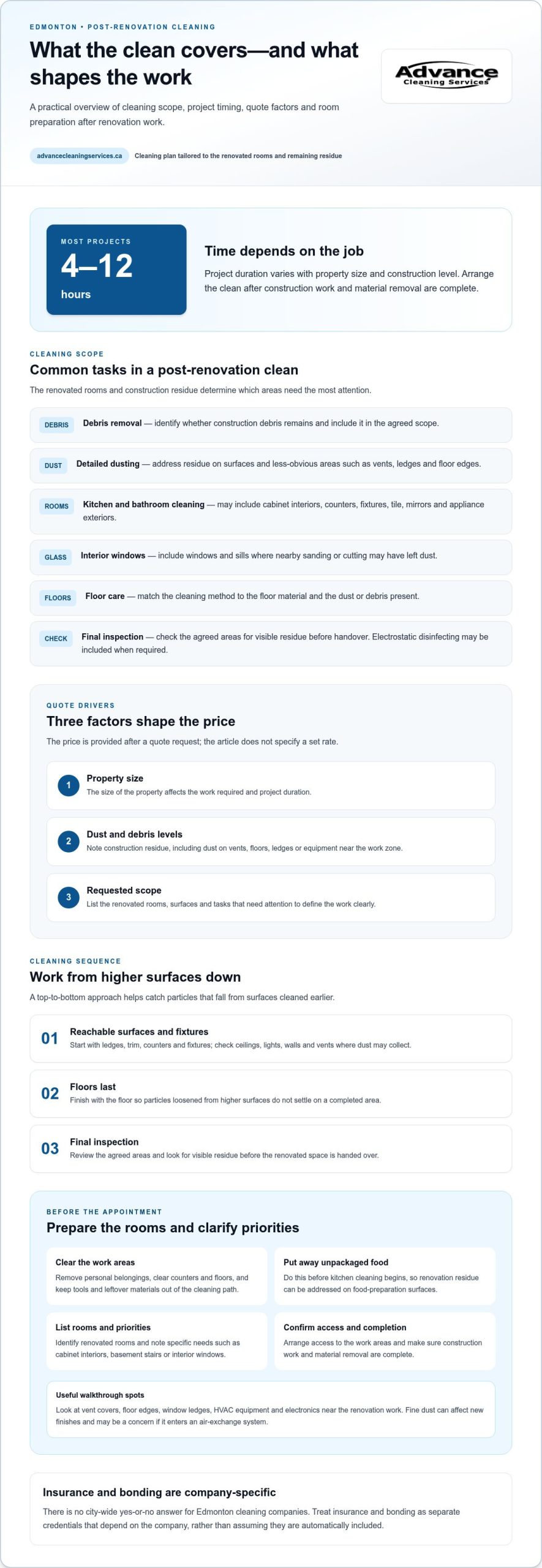
What can a standard post-renovation cleaning service include? The scope may cover debris removal, dusting, kitchen and bathroom detailing, interior windows, floor care, and a final inspection. The renovated rooms and remaining construction residue determine which tasks need the most attention.
Kitchen cleaning takes more than wiping visible counters. Dust can settle inside cabinets and on fixtures, so remove unpackaged food before cleaning starts. Wipe cabinet interiors, shelves, handles, counters, and appliance exteriors, then check corners where fine particles collect. This helps keep renovation residue away from food preparation surfaces.
In bathrooms, focus on tile, counters, mirrors, taps, and other fixtures. Dust can settle on ledges and around hardware, even after the main debris is gone. Clean the surfaces and floor, then check behind the door and around the vanity. A room-by-room checklist makes it easier to spot anything missed during turnover.
Basement renovations often leave dust along baseboards, stair edges, window frames, and flooring. Clean from higher surfaces down, then finish with the floor so loosened particles don’t settle on completed areas. Interior windows and sills also need attention if sanding or cutting took place nearby.
How should homeowners prepare for a post-renovation cleaning appointment? Remove personal belongings, clear counters and floors, and put away unpackaged food before the cleaning team arrives. Keep renovation tools and leftover materials out of the rooms so surfaces are accessible.
Before booking, identify the renovated rooms and note priorities such as cabinet interiors, basement stairs, or interior windows. Make sure renovation work and material removal are complete, then arrange access to the kitchen, bathroom, and basement. These steps help tailor the cleaning scope to the finished space.
Dust can collect on ceilings, lights, walls, vents, and floors. A final inspection checks the agreed areas and catches visible residue before handover. That last pass matters in a newly renovated kitchen, where fine particles on a shelf or fixture can undermine the impression of a finished room.
Hiring post-construction cleaning services in Edmonton
Post-construction cleaning in Edmonton can cover debris and dust removal, floor care, interior windows, and kitchen and bathroom cleaning. Set the scope according to the renovated rooms, remaining construction dust, and surfaces that need attention.
Construction Dust on Surfaces, Vents and Floors
Construction dust can collect on ceilings, lights, walls, windows, floors, vents, and areas around HVAC equipment. During a walkthrough, look beyond open surfaces: check vent covers, floor edges, window ledges, and equipment near the work zone. These locations help identify where dust removal needs to focus.
Fine construction dust can be a concern if it enters an air-exchange system. Dust buildup can also affect HVAC efficiency, IT equipment, and new finishes. Note which vents and equipment are near renovation work, then include those areas in the cleaning scope. For example, basement renovations may leave residue around floor vents and nearby electronics.
Cleaning Services and Pricing
Post-construction and post-renovation cleaning can include debris removal, detailed dusting, kitchen and bathroom cleaning, interior windows, floor care, and a final inspection. When required, the scope may also include electrostatic disinfecting. Identify the renovated rooms and whether construction debris remains before the cleaning team arrives.
Price depends on the property’s size, dust and debris levels, and required scope, and is provided after a quote request. A clear outline of renovated rooms and requested tasks helps define the work and its cost.
Plan the appointment after construction work and material removal are complete. Most projects take 4-12 hours, depending on property size and construction level. You don’t need to be present during cleaning, though you may attend if you prefer. Arrange access to the work areas and keep tools, materials, and personal belongings out of the cleaning path.
Before requesting a quote, make a room-by-room list. Include details such as dust on vents, residue on floors, or debris remaining in a basement. Describe the renovation and identify areas needing close attention. This gives the scope a practical starting point and helps distinguish a targeted clean from a whole-property clean.
For a finished renovation that needs a defined cleaning scope, post-construction cleaning support can be a practical next step. Share the property details and the areas requiring attention to begin planning.
Fine dust can settle on furniture, equipment, carpets, and electronics, making them look dull and potentially damaging them.
Surface, floor, and carpet cleaning
Post-construction cleaning works best when the work follows a top-to-bottom sequence. Start with reachable ledges, trim, counters, and fixtures, then clean floors last. This catches particles dislodged from higher surfaces before they settle on finished flooring. For example, wiping a window ledge after vacuuming could leave fresh dust on the floor below.
Match the cleaning method to each surface. Painted walls, sealed counters, glass, and cabinetry need different care, so identify finishes before choosing tools. A soft cloth can lift loose residue from a finished counter, while a dry method may suit surfaces sensitive to moisture. Don’t spread construction dust with one cloth across several rooms; change it when it becomes soiled.
Interior windows often show fingerprints, fine particles, and contractor residue. Clean the glass, frame, and ledge separately, then inspect from more than one angle for streaks. Window tracks can hold dust that returns to the sill when the sash moves. Include interior glass in the scope, especially beside newly installed cabinetry or flooring.
Floor care starts with identifying the material and residue. Hardwood, tile, vinyl, and laminate each have different finish and moisture considerations. Remove loose particles before damp cleaning, since grit dragged across a floor can leave marks. On newly installed tile, pay close attention to edges and grout lines rather than making a quick pass through the centre.
Hard-floor cleaning and polishing are different tasks. Cleaning removes soil; polishing is suitable only when the floor’s finish and care requirements allow it. Include the floor type in the scope, then review areas contractors used for cutting or material storage. These zones may need closer attention than protected sections.
Carpet can hold fine renovation particles below its visible surface. A careful vacuuming pass across the renovated room helps remove loose dust, while the carpet’s condition and residue guide any further treatment. Keep carpet care separate from hard-floor work so tools and debris aren’t carried from one surface to another.
- List each floor type and room before post construction cleaning begins.
- Identify glass, ledges, counters, and other exposed surfaces requiring attention.
- Point out contractor work zones where residue or grit remains.
Choose equipment to suit the task and surface, not simply the room. Work through rooms in a consistent order, moving from higher surfaces to floors and keeping carpet equipment separate from hard-floor tools. During the final walkthrough, check glass for streaks, ledges for settled particles, and floor edges for debris. This practical review aligns the finished clean with the renovation’s actual condition.
Pricing by square footage, dust level, and project type
Cleaning costs reflect the work required, not just floor area. A finished suite with light dust differs from a renovation with drywall residue, adhesive marks, and construction debris. Square footage helps describe the space, while the renovation type shows which surfaces need attention. A search for “post-renovation cleaning services Edmonton” should lead to a project-specific scope, not a price guessed from area alone.
Dust levels affect the time and cleaning sequence. A light layer on open surfaces calls for a different approach from fine drywall dust across rooms, ledges, and carpet. Hidden residue can also change the scope. For example, cutting work may leave particles on nearby trim and flooring, even when the main work zone looks tidy.
Effective dust removal follows a top-down sequence. Start with higher surfaces, then clean fixtures and lower surfaces before finishing the floors. This keeps loosened particles from settling on areas already cleaned. A final inspection can reveal dust that has reappeared on a ledge or floor after earlier passes.
Fine drywall dust may take multiple passes to remove. The first pass clears loose material from accessible surfaces; later passes address remaining residue as it becomes visible. Use clean cloths or equipment suited to each surface. This staged approach is useful when a finished room has dust on both shelving and carpet.
Project type shapes the cleaning plan. A kitchen update may leave adhesive on cabinet surfaces, while a basement renovation may involve debris across several flooring types. A newly finished office may need attention to work surfaces and equipment areas. “Post-renovation cleaning services Edmonton” can refer to projects with very different layouts, residue, and cleaning needs.
The price depends on the case and is provided after a quote request; key factors include space size, dust and debris levels, residue, and the required scope. To help define the work, provide a room list and identify finished surfaces needing special attention. Include details such as adhesive marks, carpet affected by dust, or debris left after material removal.
A practical assessment can follow these steps:
- Describe the renovated rooms and approximate floor area.
- Identify dust, debris, adhesive, or other visible residue.
- List surfaces and flooring types needing cleaning.
- Separate requested cleaning tasks from completed contractor cleanup.
These details give a quote request a clear basis and help distinguish a focused clean from a broader post-renovation scope. A single finished room with limited residue has different cleaning needs from several connected rooms with dust and debris across multiple surfaces.
Project assessment and customized scope
A useful project assessment turns the renovation’s condition into a clear cleaning plan. Walk through each affected room and note construction debris that remains, drywall dust, visible residue, and surfaces needing careful treatment. A kitchen, for example, may need attention behind an appliance as well as along exposed baseboards.
Do Edmonton cleaners offer rough, final, and touch-up construction cleans? These terms describe different project stages. Contractors typically handle rough cleanup of debris, plaster, dirt, tools, and materials. A final clean prepares the space for handover, while a touch-up addresses areas left after the main clean.
Build the scope around the work that remains, not just the room names. A basement may have dust on stair edges and baseboards, while a renovated kitchen may need cabinet interiors and appliance exteriors cleaned. Note completed tasks too, so the plan distinguishes contractor cleanup from detailed surface cleaning.
A tailored cleaning plan can organize rooms, surfaces, and priorities in a practical sequence. Start with areas where construction activity was concentrated, then list connected spaces where dust may have travelled. If drywall work took place in one bedroom, include the nearby hallway and door trim in the assessment.
A custom cleaning checklist makes the agreed scope easier to follow. Record each room, the surfaces to address, and any specific residue, such as adhesive on a finished floor. A separate task checklist can identify details such as:
- Dust removal behind accessible appliances and furniture.
- Baseboards, ledges, and trim in renovated rooms.
- Visible drywall residue and remaining construction debris.
- Final review of the listed rooms and completed tasks.
Keep the checklist specific. “Clean the basement” leaves the scope open; “address stair edges, baseboards, and dust near the work area” gives each task a clear location. Marking access restrictions or fragile finishes also helps tailor the cleaning sequence to the property.
Use a walkthrough to match the checklist to the finished space. Identify which rooms are ready, where materials remain, and which areas need a final or touch-up pass. Then compare the requested tasks with the project’s condition, including dust levels and scope. This assessment gives the cleaning plan a clear purpose.
For a renovation that needs a clearly scoped clean, plan your post-construction cleaning around the rooms and tasks requiring attention.
Advance Cleaning Services Inc.: Medical Facility Cleaning
Advance Cleaning Services Inc. provides medical facility cleaning for dental, veterinary, and medical clinics. If your renovation is complete and you’re arranging ongoing care for a clinic, this service supports the cleaning needs of a healthcare setting. The company also provides office cleaning, janitorial services, and carpet cleaning for applicable spaces.
Choose a service that fits the property’s day-to-day needs. A clinic may need medical facility cleaning, while an office may need regular office cleaning or janitorial services. Carpet cleaning addresses carpet care as a separate need. These services are relevant once renovation work is finished and you’re arranging routine cleaning for your facility or workplace.
Contact Advance Cleaning Services Inc. to discuss the right cleaning service for your space, or visit advancecleaningservices.ca.
Set Up the Next Stage of Care
A newly renovated space is a fresh start. The next step is keeping it ready for the people who use it. If you’re looking for post-renovation cleaning services in Edmonton, consider how the space will be used after the work is complete. A clinic, office, or shared facility may need an ongoing cleaning plan that fits its daily operations.
Advance Cleaning Services provides medical facility cleaning, office cleaning, and janitorial services. These services can support the transition from a completed renovation to regular facility care. Choose the option that suits your space and ongoing needs, then discuss it with the team.
Take the next step at a pace that works for your property. Contact Advance Cleaning Services Inc. to discuss your cleaning needs and plan forward with confidence.
Frequently Asked Questions
How much does post-construction cleaning cost in Edmonton?
There isn’t one price for every Edmonton renovation. The work required depends on the project. A smaller job with limited dust differs from a multi-room renovation with debris and detailed cleaning needs. When requesting a quote, share the property size, rooms affected, and remaining work so the scope reflects the actual condition, not a general estimate.
What factors affect post-renovation cleaning prices in Edmonton?
Space size, dust and debris levels, and the required scope affect the price. The type of renovation also helps identify the work involved. For example, a bathroom refresh may leave residue on a few surfaces, while extensive drywall work can affect connected rooms. List the areas needing attention, including flooring or carpet, and note any remaining materials or residue to help define the requested work.
How long does post-renovation cleaning take for different home sizes?
Most post-construction cleaning projects take 4-12 hours, depending on property size and construction level. A home’s square footage matters, but the amount of dust, debris, and detailed work also shapes the schedule. A single renovated room and a home with several affected areas won’t require identical cleaning plans. Make sure the team can access each room included in the scope so the work can proceed efficiently.
What dust, debris, and safety risks require specialized post-renovation cleaning?
Fine dust needs careful attention if it has reached vents, air-exchange areas, electronics, carpets, or upholstered furnishings. Dust in an air-exchange system can be a concern, while residue on equipment may interfere with its operation. When added disinfection is needed, post-construction cleaning can include electrostatic disinfecting. Identify affected areas, such as a vent beside drywall work, so the scope addresses the conditions in your space.
When should post-renovation cleaning be scheduled before moving in?
Schedule the clean after renovation work and material removal are complete, but before moving furniture and belongings into the affected rooms. This gives the cleaning team access to floors, baseboards, and other surfaces that boxes or furniture could block. If trades are still working, dust and debris can return after cleaning. Arrange the appointment around project handover so the clean follows completed work.
How do Edmonton post-renovation cleaning companies compare on reviews and services?
Post-renovation cleaning services can include debris and dust removal, kitchen and bathroom detailing, interior windows, floor care, and a final inspection. The scope depends on the rooms, residue, and requested tasks.