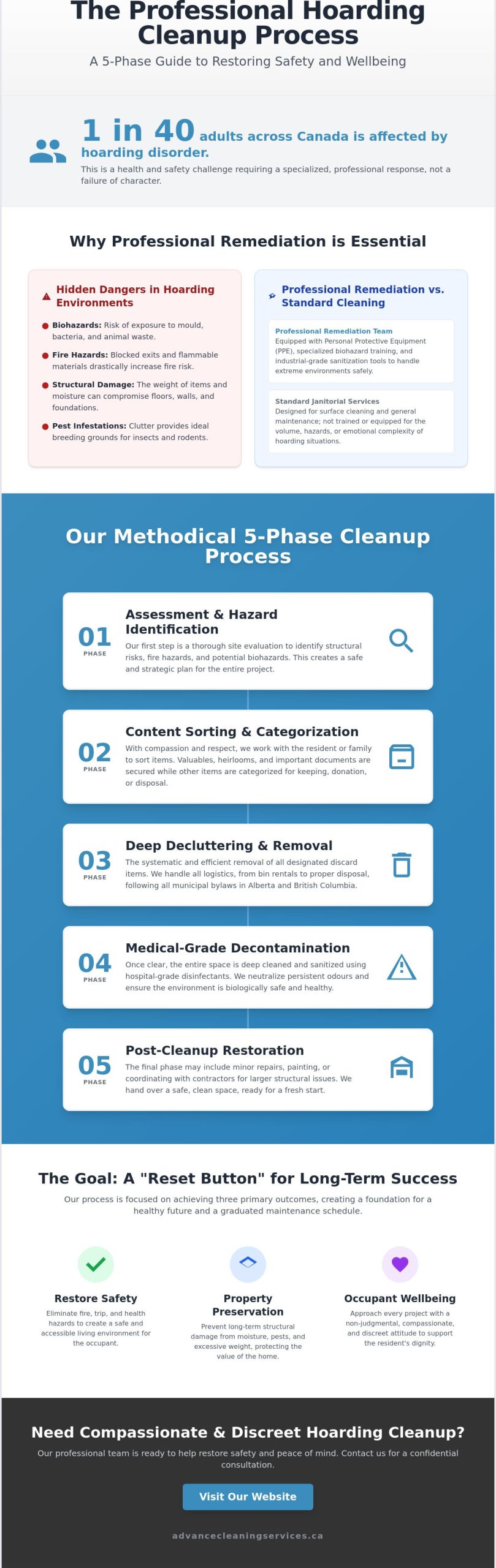
Did you know that hoarding disorder affects approximately 1 in 40 adults across Canada? When you’re standing in the centre of a home filled with years of accumulated items, the situation feels impossible to manage alone. You aren’t just dealing with clutter; you’re facing a complex hoarding cleanup process that involves hidden biohazards like mould and animal waste. It’s natural to feel a sense of fear or judgment, but this isn’t a failure of character. It’s a health and safety challenge that requires a specialized, professional response.
We understand that the emotional conflict with a resident can be just as heavy as the physical volume of items. You need a solution that balances technical expertise with genuine compassion. This guide explains exactly what happens during a professional remediation. We’ll walk you through the essential phases, from the initial compassionate sorting of belongings to the intensive biohazard decontamination required to make the space safe again. You’ll learn how experts transform an overwhelming environment into a restored, healthy home.
Key Takeaways
- Learn why professional remediation is a multi-disciplinary effort that ensures structural safety far beyond the capabilities of standard janitorial services.
- Understand each stage of the hoarding cleanup process, starting with essential hazard identification and moving into compassionate, systematic content sorting.
- Identify the hidden biological risks present in extreme environments and the specialized protective equipment required to manage them safely.
- Navigate the logistics of waste disposal and municipal regulations in Alberta and British Columbia to ensure your project meets all local landfill and bylaw requirements.
- Discover how to use a professional cleanup as a “reset button” by establishing a graduated maintenance schedule for long-term success.
Understanding the Scope: Why Hoarding Cleanup is a Specialized Remediation
Hoarding remediation is a complex operation that goes far beyond simple organization. It is a multi-disciplinary project that merges structural safety, logistics, and medical-grade sanitization. While standard janitorial services excel at maintaining tidy offices or homes, they aren’t equipped for the extreme environments found in these cases. The sheer volume of material often hides structural damage or significant biohazards that require specialized training to manage. Standard cleaners don’t carry the industrial-strength equipment or the protective gear necessary to face these risks safely. It’s a task that demands a professional expert who can handle both the physical labour and the psychological weight of the situation.
The three primary goals of any professional project are clear. First, we restore safety by removing fire hazards and trip risks that threaten the resident. Second, we focus on property preservation to prevent long-term damage from moisture, mould, or pests. Finally, we prioritize occupant wellbeing. Because Hoarding disorder is a recognized mental health condition, the cleanup requires a non-judgmental and steady hand. It isn’t just about the items. It’s about the person living among them. We approach every site with a service-oriented attitude, ensuring the resident feels supported rather than judged.
Hoarding vs. Heavy Clutter: Knowing the Difference
Professionals use the Clutter Image Scale to determine the severity of a situation. This scale helps us categorize environments from Level 1 to Level 5. A key indicator of a true hoarding situation is functional impairment. This occurs when rooms can no longer be used for their intended purpose. If a kitchen is too full to cook in or a shower is inaccessible, the situation has moved beyond “messiness” into a crisis. There are also legal distinctions to consider. While heavy clutter is often a lifestyle choice, squalor involves the accumulation of filth or animal waste. These conditions can trigger municipal health orders or fines in cities like Calgary or Vancouver.
The Role of a Professional Remediation Team
A professional team acts as a bridge between simple junk removal and high-level biohazard experts. We realize that these projects are emotionally taxing for families. Our project managers coordinate with relatives and social services to ensure the hoarding cleanup process remains respectful and organized. Teams like Advance Cleaning Services Inc. also prioritize privacy. Our discreet services use professional conduct to protect the resident’s reputation within their neighbourhood. This disciplined approach ensures the job is done right while maintaining the dignity of everyone involved. We focus on being a reliable partner during a difficult transition.
The 5-Phase Professional Hoarding Cleanup Process
A structured approach is the only way to manage the complexities of a remediation project. Without a clear plan, the sheer volume of items can lead to safety risks or emotional exhaustion. We utilize a methodical 5-phase system to ensure every home is returned to a safe, habitable condition. This hoarding cleanup process is designed to be thorough, efficient, and respectful of the resident’s dignity. By following these specific steps, we transform a hazardous environment into a restored living space.
- Phase 1: Assessment and Hazard Identification. We evaluate the property for structural damage, fire risks, and biological hazards.
- Phase 2: Content Sorting and Categorization. Items are carefully divided into categories: Keep, Donate, Discard, and Valuables.
- Phase 3: Deep Decluttering. This involves the systematic removal of debris and unwanted items.
- Phase 4: Medical-Grade Decontamination. We sanitize the environment and neutralize persistent odours.
- Phase 5: Post-Cleanup Restoration. The final stage involves minor repairs and a formal handover to the client.
Phase 1 & 2: Strategy and Compassionate Sorting
The first two phases focus on preparation and decision-making. We begin with a “triage” method to identify vital documents, family heirlooms, and currency early in the project. This prevents irreplaceable items from being lost during the removal of general debris. The American Psychiatric Association notes that individuals with this disorder often experience significant distress when discarding possessions. To manage this, our team works closely with the family to handle the “Keep” pile effectively. We ensure these items are organized and stored properly so the clutter does not simply shift to a different room. The Sorting Strategy is the foundation of a successful cleanup.
Phase 3 & 4: The Heavy Lifting and Sanitization
Once the strategy is set, we begin the physical removal of items. This must be done systematically to prevent structural collapse or injury from shifting piles. Our technicians are trained to recognize the “Invisible Dangers” often hidden beneath layers of possessions during the hoarding cleanup process. These include pathogens from rotting food, stagnant water, or animal waste. We use industrial-grade disinfectants that meet medical standards to neutralize these threats. To ensure the air is safe to breathe, we utilize HEPA air scrubbers to remove airborne spores and allergens throughout the site. If the situation feels overwhelming, the Extreme Hoarding Cleanup specialists at Advance Cleaning Services Inc. are ready to step in with the right equipment and expertise.
Phase 5 concludes the project with a final inspection. We look for any remaining safety concerns and ensure the home meets all local health standards. This organized handover provides the resident with a clean slate and a safe environment to begin their next chapter.
Safety Protocols and Biohazard Management in Extreme Environments
The hoarding cleanup process is inherently dangerous. While the visible clutter is daunting, the microscopic risks often pose the greatest threat to health. Homes affected by Hoarding Disorder frequently harbour “Invisible Dangers” like E. coli, Salmonella, and various pathogens resulting from rotting food or stagnant water. Because these contaminants are often hidden beneath layers of debris, every project must be treated with forensic-level caution. Safety is never optional. We treat every site as a potential biohazard zone to protect both our staff and the property’s future occupants.
Our technicians utilize mandatory Personal Protective Equipment (PPE) to mitigate these risks. This includes full-body Tyvek suits, puncture-resistant gloves, and P100 respirators to prevent the inhalation of airborne particles. We also remain vigilant for physical hazards such as “sharps” or discarded needles, which are common in high-volume environments. Chemical hazards, including expired household cleaners or industrial fertilizers, also require careful identification and disposal. This level of detail is why we integrate specialized biohazard remediation services into our standard workflow. We have the training to handle hazardous materials that would overwhelm a typical cleaning crew.
Mould and Air Quality Concerns
Managing Animal Waste and Pest Infestations
In cases involving animal hoarding, the decontamination requirements are even more rigorous. Urine can seep into subfloors. It leaves behind salts that cause persistent odours and structural decay if not neutralized correctly. We follow strict protocols for rodent droppings, particularly in Western Canada where Hantavirus is a documented concern. Our team ensures that all affected surfaces are saturated with medical-grade disinfectants before removal. We often coordinate with pest control services to ensure the property remains clear of infestations after our work is complete. This comprehensive approach ensures a permanent, healthy solution for the home.
Logistics of Disposal and Structural Restoration in Alberta and BC
Managing the massive volume of material is a significant logistical hurdle within the hoarding cleanup process. It isn’t just about hauling stuff away; it’s about strict compliance with local landfill regulations. We must carefully distinguish between general debris and hazardous waste to avoid hefty municipal fines. For those beginning to plan a project, reviewing our guide on how much does hoarding cleanup cost is a helpful way to understand how disposal fees and specialized labour impact the total budget. Proper planning ensures the project moves forward without unexpected delays.
Local Disposal Regulations: Calgary to Vancouver
Structural Restoration: Beyond the Surface
The true state of a home only becomes clear once the layers of possessions are removed. We often find hidden damage under old carpets or behind stacked boxes that was previously inaccessible. If moisture or animal waste has reached the subfloor, simple cleaning won’t suffice. We inspect drywall for mould growth and check electrical outlets for fire hazards caused by rodent activity. In severe cases, we utilize a specialized encapsulation process on subfloors to permanently seal and remove deep-seated odours. This step is vital for property preservation and future safety. The team at extreme cleaning services Calgary specializes in this level of forensic restoration. We focus on protecting the property value while making the space habitable again. If you’re facing a complex restoration, contact Advance Cleaning Services Inc. to discuss a reliable solution for your property.
Transitioning to a Managed Space: Post-Cleanup Support and Maintenance
The physical hoarding cleanup process acts as a reset button for the home. It removes immediate hazards and restores the property to a functional, safe state. However, the work doesn’t end when the last bin is hauled away. Long-term success depends on a steady maintenance plan. We recommend a graduated schedule that begins with weekly professional check-ins to ensure the environment remains organized. This transition period is also the ideal time to connect with local mental health resources in Alberta and British Columbia. Because hoarding is a complex condition, physical restoration is most effective when paired with therapeutic support. We act as a reliable partner in this journey, offering ongoing janitorial services Alberta residents can count on to maintain their new standard of living.
Preventing Recidivism: The First 90 Days
The first three months after a remediation are the most critical for preventing a return to old habits. We suggest residents implement a simple daily checklist to manage items that naturally enter the home, like mail and groceries. Establishing a “one-in, one-out” rule for new purchases is another effective way to keep inventory under control. Regular walk-throughs with a trusted family member or a professional expert provide the necessary accountability without feeling like an intrusion. These small, disciplined actions build the foundation for a permanent lifestyle change and ensure the home stays clear of future risks.
Why Professional Aftercare Matters
Routine cleaning does more than just remove dust; it maintains the “standard of clean” that prevents the re-accumulation of clutter. When a professional team visits regularly, they can spot early warning signs of a new hoard before it becomes a safety crisis. This provides immense peace of mind for family members who may not live nearby. They can rest easy knowing a courteous and disciplined team is monitoring the environment. We take our role as a steady hand seriously, ensuring the home remains a healthy place to live for the long term. Our goal is to solve the problem permanently and effectively. If you’re ready to start this journey, contact Advance Cleaning Services for a discreet, professional consultation today.
A restored home is a fresh start. By moving logically from the initial cleanup to a managed maintenance schedule, you can protect the property and the person living within it. We’re here to help you navigate every step of this transition with skill, politeness, and professional conduct.
Restoring Safety and Dignity to Your Environment
A successful hoarding cleanup process is built on a foundation of technical expertise and genuine compassion. We’ve explored how professional remediation transforms a hazardous space into a healthy home through specialized phases, from careful sorting to forensic-level decontamination. You now realize that tackling biohazards and structural restoration requires more than just a standard cleaning crew. It’s about property preservation and, most importantly, the wellbeing of the resident. Managing these complexities alone is overwhelming, but you don’t have to face it without support.
Advance Cleaning Services has served Alberta and Vancouver for over 20 years. We hold specialized biohazard certifications and take pride in our discreet, professional conduct. We’re here to act as your reliable partner, providing a steady hand through every stage of the restoration. We’re confident in our ability to solve problems permanently and effectively, ensuring your home remains a safe sanctuary. When you’re ready to move forward, we’re ready to help you hit the reset button on your living space.
Request a Professional Hoarding Assessment and Quote today. Let’s work together to create a safe, organized, and manageable home for the long term.
Frequently Asked Questions
How long does the hoarding cleanup process usually take?
Most projects are completed within three to seven business days, though the timeline depends on the severity level and property size. A Level 3 situation might take three days, while an extreme Level 5 hoard can require a week or more for full remediation. We prioritize efficiency to minimize disruption for the resident. Our team works methodically to ensure every phase is finished correctly before moving to the next.
Is it safe to clean a hoarder house without professional help?
Cleaning a hoarded environment without professional help is often unsafe due to hidden structural and biological risks. You may encounter unstable piles, sharp objects, or pathogens like mould and animal waste that require specialized respirators and protective gear. Professionals have the training to identify these dangers before they cause injury. It’s best to consult an expert to evaluate the site’s safety before attempting any deep cleaning yourself.
Will the cleaning crew throw everything away?
We don’t throw everything away; instead, we follow a strict sorting process to identify valuables and sentimental items. Our team works with you to categorize belongings into keep, donate, and discard piles. We realize that family heirlooms and vital documents are often buried within the clutter. Our goal is to preserve what matters while removing the debris that makes the home unsafe to inhabit.
Can you provide discreet hoarding cleanup in Calgary without neighbours knowing?
Yes, we provide discreet services in Calgary by using plain vehicles and maintaining a low profile during the hoarding cleanup process. We understand the fear of judgment from neighbours and take every precaution to protect your privacy. Our technicians act with professional conduct and politeness at all times. This ensures the restoration remains a private matter while we work to return the property to a safe condition.
What biohazards are commonly found during a hoarding remediation?
Common biohazards include systemic mould growth, animal waste, and pathogens from rotting food or stagnant water. In many extreme hoarding situations, we also find “sharps” like needles or chemical hazards from expired products. These materials require medical-grade decontamination to ensure the air and surfaces are safe for human occupancy. Our team uses specialized equipment to neutralize these threats permanently and effectively.
Does insurance cover the cost of a hoarding cleanup in Canada?
Insurance coverage for hoarding cleanup in Canada varies depending on your specific policy and the nature of the damage. Most standard policies don’t cover simple cleaning, but they may cover remediation if there is an underlying covered peril like a pipe burst or fire. You should review your policy or speak with your broker to see if biohazard cleanup or structural restoration is included in your coverage.
How do I convince a loved one to start the cleanup process?
Convincing a loved one often starts with a compassionate conversation focused on their safety and health rather than the mess. Emphasize that you want them to live in a comfortable, hazard-free environment. Suggesting a professional assessment can also help, as it removes the personal conflict and introduces a neutral, expert perspective. Focus on small, manageable steps to help them feel in control of the hoarding cleanup process.
What happens to the items that are removed during the process?
Items removed during the process are sorted for disposal, recycling, or donation based on their condition and local regulations. General debris goes to municipal landfills, while hazardous materials are handled through specialized waste streams to ensure compliance. We attempt to recycle materials like paper or metal whenever possible. However, we must discard items contaminated by biohazards or pests to prevent spreading health risks to other locations.